
Lieferung heute & morgen

Qualitätsgarantie

Willkommens-Angebote freischalten: KOSTENLOSE Lieferung | Bis zu 80 % RABATT | Kostenlose 30-Tage-JoyPlus-Testphase
App herunterladen
A coffee machine should suit your drinking habits, kitchen size and preferred level of convenience. However, product names and eye-catching individual specifications often lead to poor purchasing decisions. For example, a high bar rating does not automatically make every espresso better, and a large capacity is not necessarily practical for a one-person household.
This buying guide explains what households, couples, single people and small offices in Germany should look out for. It covers the machine type, capacity, hob compatibility, cleaning and features such as automatic milk frothing.
Manufacturers of an espresso machine or portafilter machine often advertise 15 or 20 bar. This figure describes the maximum possible pump pressure, not necessarily the pressure applied to the ground coffee during every extraction. When choosing a machine, you should also consider the grind size, dosage, tamping, temperature stability and the quality of the filter.
A 20-bar espresso machine may offer interesting features, but it is not automatically the right choice simply because of this figure. Buyers should also check whether the machine works with ground coffee, ESE pods or capsules, and how involved the cleaning process is.
With a moka pot and many espresso machines, cup specifications refer to small espresso cups. A coffee machine for 1 to 2 cups is therefore mainly suitable for short coffee portions. If you want to prepare two large mugs of filter coffee, you will need a different capacity.
For filter machines, 10 to 15 cups usually means a pot capacity of around 1.25 litres. The actual quantity depends on the cup size and the desired coffee strength.
A coffee machine with a milk frother can make it easier to prepare cappuccinos, latte macchiatos or hot milk. However, an integrated milk container needs thorough cleaning after use. Milk residue in tubes, nozzles or containers can pose hygiene problems.
A removable container, an easily accessible steam wand and clear cleaning instructions are therefore more important than having the largest possible number of preset drinks.
For one person, a small 40 ml moka pot or a compact one- to two-cup machine may be sufficient. Couples often benefit from a double-spout pot or a machine with two outlets. For a small office, a coffee machine for 10 to 15 cups or a model with a capacity of 1.25 to 1.5 litres is more practical.
The external dimensions also matter: as well as space for the machine itself, you need room to open the filter holder, remove the water tank or operate the steam wand. A removable tank makes filling it under the tap easier.
A classic aluminium moka pot is often suitable for gas and electric hobs, but not automatically for induction. If you are looking for a coffee machine for induction, or an induction-compatible moka pot, look for a magnetic stainless-steel base or the manufacturer’s explicit statement that it is “suitable for all hob types”.
According to the product description, the Bialetti Moka Induction combines an aluminium upper section with a stainless-steel boiler and is designed for induction, gas, electric and ceramic hobs. A pure aluminium pot such as the Bialetti La Mokina Tricolore, on the other hand, is expressly not suitable for induction.
Look for removable drip trays, water tanks and filter holders. With filter machines, a drip stop, automatic switch-off and a keep-warm function can be useful. However, a warming plate will not keep coffee fresh indefinitely; with a thermal carafe, continuous heating is not required.
Electrical appliances should be operated using a suitable earthed socket. Hot surfaces, steam and water present a risk of burns or electric shock. Before cleaning, unplug the appliance and allow it to cool down. Descaling intervals depend on the water hardness and how frequently the machine is used.
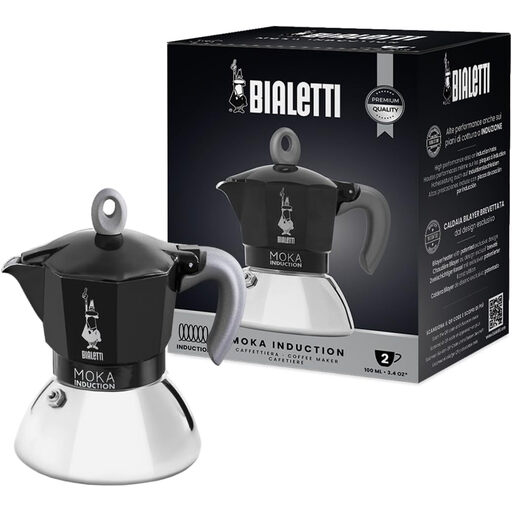
Why this product suits the profile: Manual preparation requires no electricity and is suitable for small households. According to the product details, the model can be used on all common hob types, including induction.
Its induction compatibility is stated explicitly. This helps avoid the common confusion between a traditional aluminium pot and an induction-compatible model.
Capacity for two small portions, a reusable filter and manual operation without electronic components.
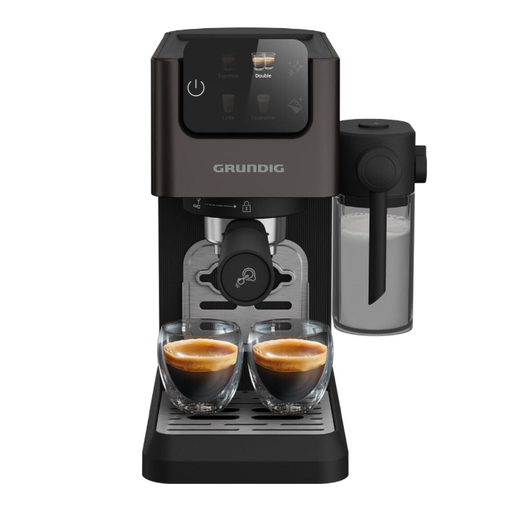
Why this product suits the profile: For users who want to prepare espresso and milk drinks with greater convenience, this semi-automatic machine combines a portafilter with an integrated milk container.
Alongside the stated pressure of up to 20 bar, the product description also lists a 1.1-litre water tank, a double outlet and a removable milk container. These details make it easier to assess the package as a whole.
1628 W power, colour touchscreen, two coffee outlets and automatic milk frothing according to the product details.
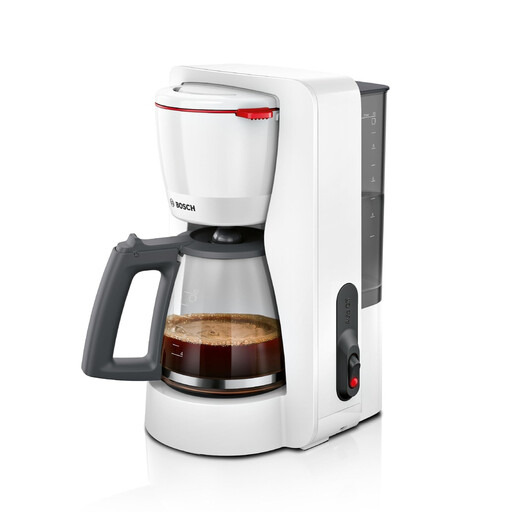
Why this product suits the profile: With a capacity of 1.25 litres, or 10 to 15 cups, this machine is aimed at families, workgroups and small offices that need to prepare several portions at once.
The water-level indicator on both the machine and the pot helps with dosing. Automatic switch-off after the keep-warm period limits unnecessary operation of the hotplate.
1.25-litre glass pot, removable water tank, swivel filter, drip stop and keep-warm function for up to 40 minutes according to the product description.
We have put together a complete, regularly updated list of products that fully meet these strict selection criteria and the safety regulations applicable in the EU.
For one person or a couple, options include a moka pot for 1 to 2 cups, a compact portafilter machine or a filter coffee machine with a capacity of around one litre. The key consideration is whether you want to prepare individual espressos or several mugs of filter coffee.
The service life depends on the machine type, water quality, care and daily workload. Regular descaling, removing coffee residue and handling seals carefully can help maintain the machine’s functionality. It is not possible to give a reliable general service-life estimate without specific warranty and maintenance information.
In addition to the purchase price, you need to consider electricity, coffee, filters, descaler and, for capsule machines, the ongoing cost per portion. A moka pot does not need its own power connection, while filter and portafilter machines require electricity to heat the water. When calculating costs, you should also consider whether a warming plate will remain switched on for a long time.