
Lieferung heute & morgen

Qualitätsgarantie

Willkommens-Angebote freischalten: KOSTENLOSE Lieferung | Bis zu 80 % RABATT | Kostenlose 30-Tage-JoyPlus-Testphase
App herunterladen
Bean-to-cup coffee machines, espresso machines and portafilter machines need different care products. If you simply look for a cheap cleaner, you could easily buy one that isn’t suitable for your machine’s cleaning programme or design. Coffee machine cleaners and descalers should therefore be chosen according to how they’re used, their dosage and the machine manufacturer’s approval.
Coffee oils, coffee grounds and limescale are different types of residue. Coffee machine cleaning tablets primarily remove organic residue from the brewing area. Coffee machine descaling tablets or liquid descaler, on the other hand, are used to tackle mineral deposits in the water circuit.
A product designed for descaling therefore won’t replace coffee oil remover tablets. Likewise, a coffee machine cleaner won’t automatically remove limescale from the heating element and pipes.
The label ‘for bean-to-cup coffee machines’ isn’t always enough. Other important factors include:
Genuine coffee machine care products such as Siemens EQ cleaning tablets, Saeco cleaning tablets or De'Longhi descaler are often designed for specific programmes. If you choose a product from another manufacturer, check that its instructions explicitly confirm it’s suitable for your machine.
A multipack is only worthwhile if you use your machine regularly and can store the product for long enough. Moisture can damage tablets or cause them to clump together. A smaller pack may be more practical for a household that makes just a few cups a day. Multipacks or sets with several doses are often more convenient for a small office.
First, match the care product to the task:
A milk system cleaner such as the JURA Original Cleaner isn’t designed for the brew group. Similarly, coffee oil remover tablets shouldn’t be put into the milk circuit.
Check how many uses a product provides and what dosage is required. For example, the Siemens Multipack TZ80003A contains 10 cleaning tablets and 6 descaling tablets. Liquid products, by contrast, often need to be diluted with a specified amount of water.
Always follow the coffee machine manufacturer’s instructions. Don’t interrupt a programme. After descaling, run the rinse cycles specified by the manufacturer using clean water.
Depending on the product, the label may list ingredients such as citric acid, lactic acid, malic acid or oxygen bleach. These have different uses and safety classifications. Do not mix them, especially with bleach or other cleaning products.
For products with hazard or warning labels, you should:
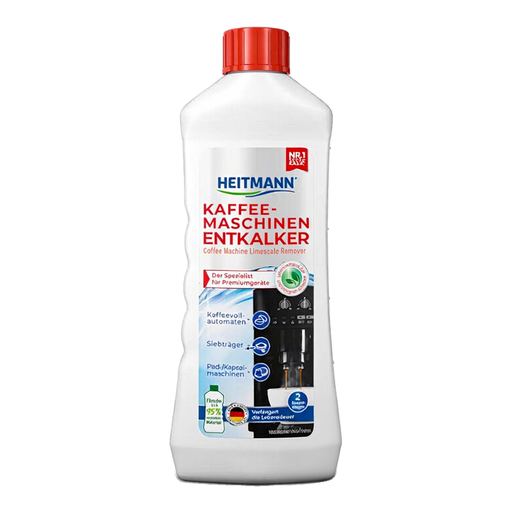
Why it suits this profile: The 250 ml bottle is a good choice for households that prefer a liquid descaler with clear dosing instructions.
The stated mix of 50 ml descaler and 500 ml water helps make dosing clear. However, you should still check your machine’s instructions before use.
250 ml; formula with citric acid, lactic acid and a corrosion inhibitor, according to the product information.
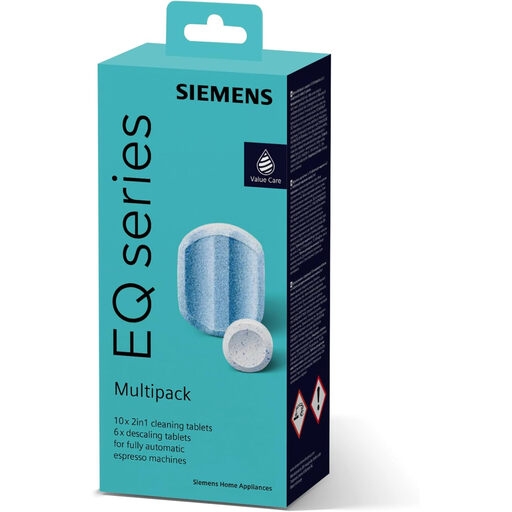
Why it suits this profile: This set is designed for owners of compatible Siemens EQ and built-in bean-to-cup machines who want to take care of both cleaning and descaling.
The two products are clearly designated for cleaning and descaling respectively. Check compatibility with your Siemens EQ machine before you buy.
10 cleaning tablets and 6 descaling tablets; fragrance-free, according to the product information.
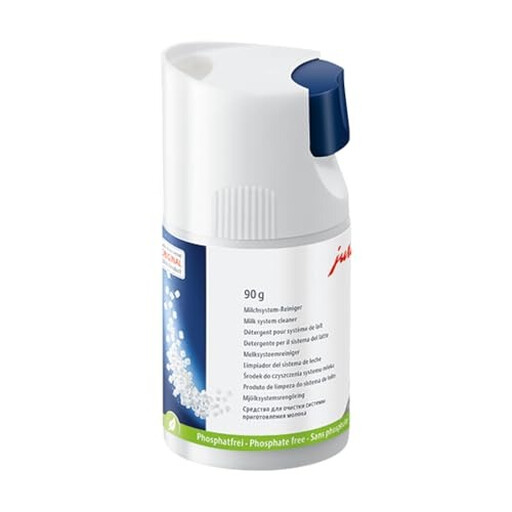
Why it suits this profile: For households or offices that make milk-based drinks regularly, a dedicated product for the milk circuit is a sensible choice.
These mini tablets are designed for cleaning the milk system, so they won’t be mistaken for a general brew group cleaner.
90 g, enough for around 30 cleans according to the product information; integrated dosing bottle.
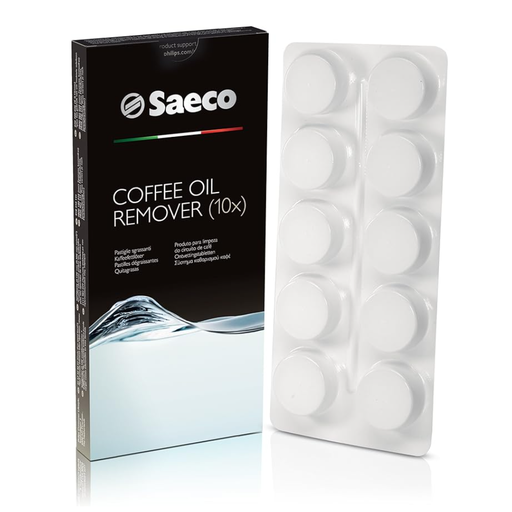
Why it suits this profile: This product is designed to remove coffee oils and residue from the brewing area, making it suitable for regular coffee making.
Use it specifically as a coffee oil remover, not as a descaler. This keeps cleaning and limescale removal as separate tasks.
Tablet format; pack contains 10 tablets; chlorine-free, according to the product information.
We’ve put together a complete, regularly updated list of products that meet these strict selection criteria and fully comply with the safety regulations in force in the EU.
A sensible care routine depends on how often you use your machine, your water hardness and the manufacturer’s instructions. Clean removable brew groups, drip trays and milk containers by hand as well, if the manual recommends it. Cleaning tablets may be suitable for backflushing an espresso machine, but the process differs from that used for a bean-to-cup machine.
Descalers such as Gaggia Decalcifier, De'Longhi EcoDecalk, Philips CA6700/10 or a suitable liquid descaler should only be used according to the relevant dosage instructions. If your water is hard, you may need to descale more often. A water filter or anti-limescale accessory may reduce the amount of minerals entering the machine, but it won’t automatically replace regular maintenance.
Cleaning intervals depend on the model, water hardness and how often you use the machine. Many bean-to-cup machines display a notification when a cycle is due. Follow the notification and the instruction manual. If you use the milk system frequently, clean it more often than the general brewing area.
No. The two products do different jobs, so don’t use them at the same time or mix them together. Run the appropriate programme for each product and rinse the machine as instructed.
Not always. An alternative product may be suitable if its intended use, dosage and material compatibility are explicitly confirmed for your machine. For automatic programmes and specific product ranges, such as Siemens EQ or JURA, genuine products make it easier to check compatibility.