
Lieferung heute & morgen

Qualitätsgarantie

Willkommens-Angebote freischalten: KOSTENLOSE Lieferung | Bis zu 80 % RABATT | Kostenlose 30-Tage-JoyPlus-Testphase
App herunterladen
Limescale, coffee oils and milk or powder residue are among the most common causes of changes to brewing times, error messages and unpleasant smells in coffee machines. If you’re looking for the right coffee machine descalers and cleaning tablets, don’t focus solely on claims such as “fast”, “natural” or “suitable for all machines”. What matters is whether the product is compatible with your machine, how much to use and the recommended cleaning process.
A descaler mainly dissolves mineral deposits in the water system and on the heating element. Cleaning tablets, also known as coffee oil removers, target coffee oils and residue in the brewing unit, pipes or portafilter. So a product used to descale your coffee machine won’t automatically replace regular internal cleaning.
Some products are described as suitable for different types of machine. Even so, the machine manufacturer’s instructions take priority: the manual usually specifies the correct amount, how much water to add and which programme to use. The recommended process may differ for Siemens EQ, Jura, De’Longhi, Philips, Saeco, Sage, Gaggia and Nivona machines.
Terms such as “natural” or “eco-friendly” should be assessed against specific details. These might include biodegradable ingredients, a concentrated formula or packaging made from recycled materials. However, such features don’t tell you whether a product is approved for or suitable for your machine.
First, check whether you need a descaler for a bean-to-cup machine, a descaler for an espresso machine or cleaning tablets. Capsule machines, portafilter machines and kettles may have different instructions for use.
Pack size is only useful if you know how much to use each time. For example, Heitmann Coffee Machine Descaler 250 ml specifies a mixture of 50 ml descaler and 500 ml water. According to the product information, one full 250 ml bottle of Philips CA6700/10 is used for a single descaling cycle. So a larger bottle doesn’t necessarily mean more uses.
Descalers contain acids and may irritate your eyes, skin or airways. Before use, read the label, wear protective gloves and, where indicated, eye protection. Make sure the area is well ventilated. Never mix descaler with bleach, ammonia or other cleaning products. After the programme, it’s important to run the rinse cycles specified by the manufacturer using clean water.
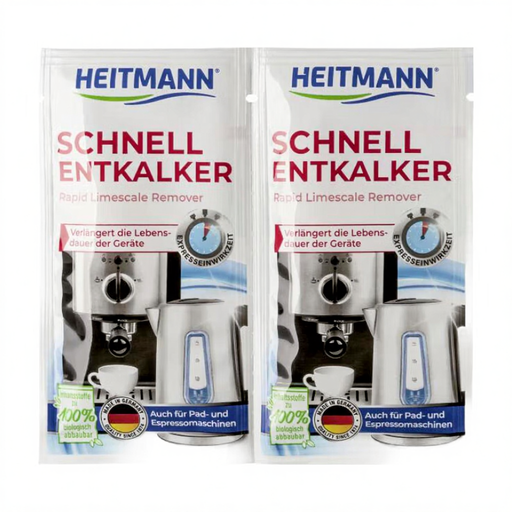
Why this product suits this profile: Two pre-measured 15 g sachets make it easy to get the dosage right for occasional use. According to the product information, the descaler is suitable for coffee machines, kettles and other hot-water appliances.
The individual sachets reduce the risk of significantly over-dosing. The product information says to dissolve 15 g in 500 ml of water; for heavy limescale, use two sachets.
Fruit acids such as citric, malic and tartaric acid, according to the product description; described as biodegradable by the supplier.
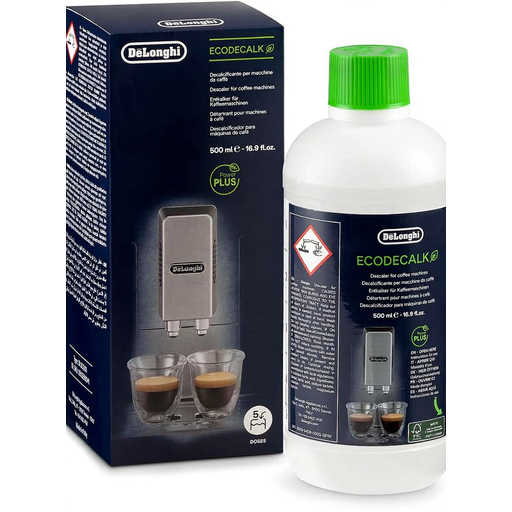
Why this product suits this profile: According to the product information, the 500 ml bottle is enough for up to five descaling cycles and is specially recommended for De’Longhi coffee machines.
The stated 100 ml dose per use makes it easy to work out how many applications you’ll get. Even so, follow your machine’s manual for the programme and amount of water.
500 ml bottle, plant-based lactic acid according to the product description, and a clear dosage of 100 ml per use.
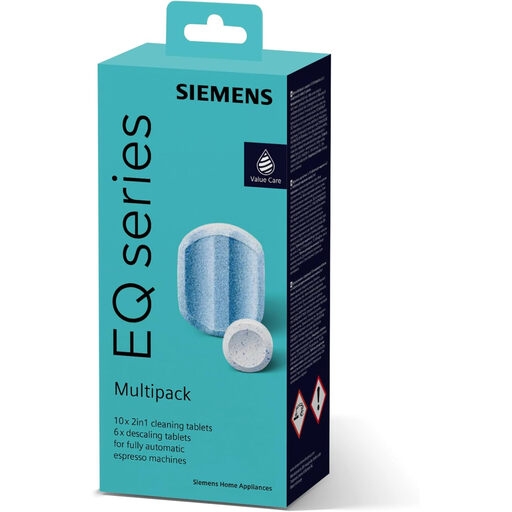
Why this product suits this profile: For compatible Siemens EQ and built-in bean-to-cup machines, this set combines ten cleaning tablets with six descaling tablets.
The set clearly separates the two care tasks. Before buying, check compatibility against the exact EQ model name.
16 items in total; according to the product information, they’re fragrance-free and designed for automatic cleaning and descaling programmes.
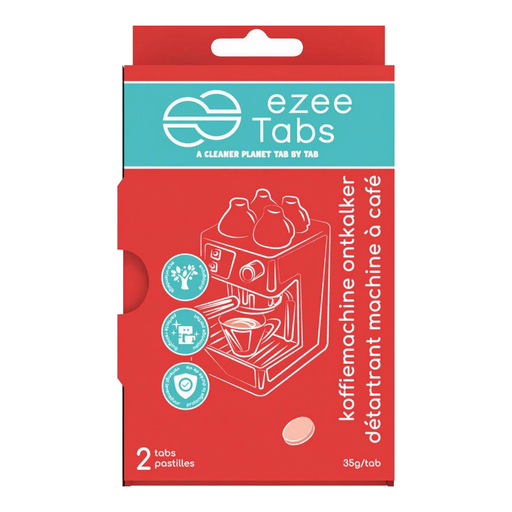
Why this product suits this profile: According to the supplier, the soluble 35 g tablets are vegan, microplastic-free and biodegradable.
The tablet format may reduce packaging and make dosing simpler. Before use, check whether your machine requires the tablet to be added directly or dissolved first.
Two pre-measured tablets, each weighing 35 g; according to the product information, they’re suitable for bean-to-cup and espresso machines.
We’ve put together a complete, regularly updated list of products that meet these strict selection criteria and fully comply with the safety regulations in force in the EU.
For cleaning a bean-to-cup machine, descaling and removing coffee oils should be done separately, using the machine’s relevant programmes. Descale according to your water hardness, how often you use the machine and any on-screen prompts. Cleaning tablets are often used monthly or after a set number of brewing cycles. Always follow the machine manufacturer’s instructions.
After each cycle, rinse the water tank, drip tray and removable parts as directed in the manual. Don’t use home remedies such as vinegar if the manufacturer advises against them. Their acid concentration, smell and material compatibility may differ from those of products designed for machine care.
It depends on your water hardness, how often you use the machine and its model. Hard water or daily use may mean you need to descale more frequently. The machine’s indicator and user manual are the most reliable guides.
Generally, no. Cleaning tablets mainly remove coffee oils and organic residue, while a limescale remover for coffee machines reduces mineral deposits. Each product is designed for a different cleaning task.
“Biodegradable” refers to the stated ingredients and doesn’t replace a compatibility check. You still need to follow the dosage, safety instructions and rinsing guidance carefully.