
Lieferung heute & morgen

Qualitätsgarantie

Willkommens-Angebote freischalten: KOSTENLOSE Lieferung | Bis zu 80 % RABATT | Kostenlose 30-Tage-JoyPlus-Testphase
App herunterladen
A bean-to-cup coffee machine is an investment in your daily coffee ritual. But when the machine displays "Cleaning required" or your coffee suddenly tastes bitter, the search for the right care product begins. The market for cleaning tablets is confusing and full of pitfalls that can lead to unsatisfactory results and unnecessary expense. As your Joybuy Product Recommendation Officer, I'm here to help you cut through the noise and find the right products to ensure your machine's longevity and a consistently rich coffee aroma.
Before you make a purchase, you should be aware of the typical pitfalls that often lead to disappointment.
To avoid a bad buy, focus on these three objective criteria. They are the foundation for effectively maintaining your bean-to-cup coffee machine.
The surest way to guarantee material compatibility and maximum cleaning power is to use the original cleaning tablets from your machine's manufacturer. Products like Siemens cleaning tablets or De'Longhi cleaning tablets are precisely formulated for the components and the software of their respective cleaning cycles. Using third-party products may affect your warranty conditions. Therefore, always check the information in your coffee machine's manual.
Proper machine maintenance requires both types of products, but each for its specific purpose.
Ingredient transparency is a hallmark of quality. Products that clearly declare their active ingredients allow you to make an informed decision. Some manufacturers, like De'Longhi, also offer tablets with ingredients that are stated to be biodegradable. This can be a relevant factor for eco-conscious households. Look for formulations explicitly described as material-friendly and non-corrosive to ensure the longevity of internal components.
Instead of a cluttered list, we present a selection of products tailored to specific user profiles and their requirements.
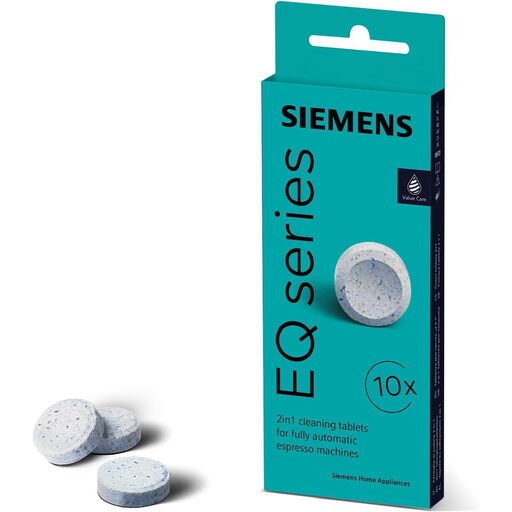
Why it's a perfect match: For users who prioritise maximum compatibility and maintaining their manufacturer's warranty. These tablets are the original accessory for all Siemens EQ series and equivalent Bosch models.
It completely bypasses the "universal" trap, as the formula is precisely tailored to the materials and cleaning process of Siemens/Bosch brew groups.
Ensures residue-free removal of coffee oil and secures the machine's longevity through a perfectly calibrated cleaning performance.
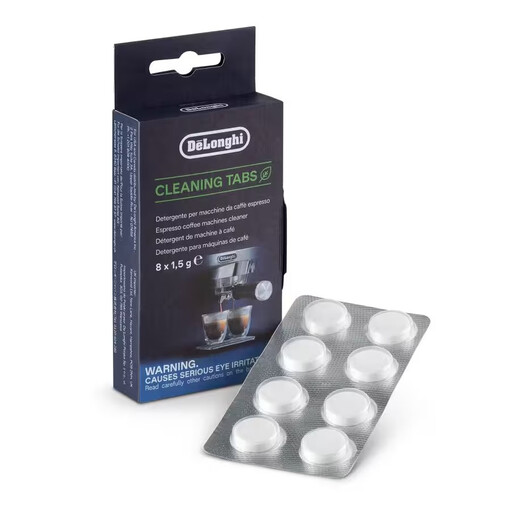
Why it's a perfect match: Ideal for owners of De'Longhi machines who want to combine effective cleaning with a focus on sustainability.
Its clear declaration as a coffee oil remover and the manufacturer's claim of biodegradability create transparency and prevent confusion with descalers.
According to De'Longhi, the ingredients are biodegradable and the formula is non-corrosive, protecting both the machine and the environment.
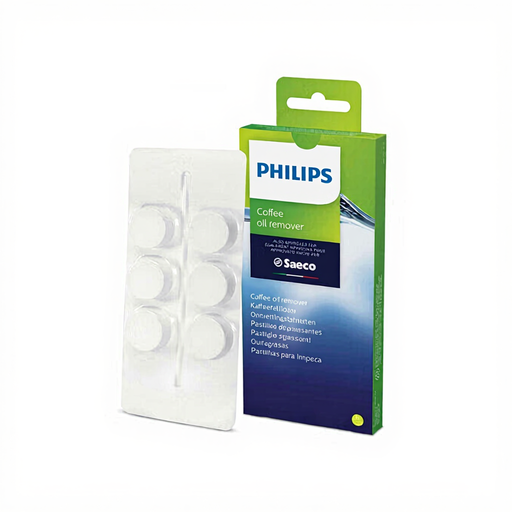
Why it's a perfect match: A reliable option for owners of Philips and Saeco bean-to-cup coffee machines looking for a manufacturer-developed solution to remove coffee oils.
As an original product for Philips/Saeco, it bypasses the compatibility risks of universal cleaners and is clearly declared as a coffee oil remover.
Developed to effectively remove coffee oil residue, thereby preserving flavour and extending the machine's lifespan, according to the manufacturer.
We have compiled a complete, up-to-date list of products that fully meet these strict selection criteria and all relevant safety regulations.
1. How often do I need to clean my bean-to-cup coffee machine? Most modern appliances indicate when cleaning is necessary. As a general guideline, clean after every 200–250 coffees or at least once a month. The frequency heavily depends on usage and the type of coffee beans used—highly oily beans require more frequent cleaning of the brew group.
2. What is the difference between cleaning tablets and descaling tablets? This is a crucial point for proper machine care. Cleaning tablets are coffee oil removers that eliminate oily deposits in the brew group. Descaling tablets use acid to dissolve limescale deposits in the water system (heater, pipes). Both processes are essential for maintaining the machine's value and function, but they are not interchangeable.
3. Can I use household remedies instead of special tablets? Citric acid is sometimes mentioned as an alternative for descaling, but most manufacturers advise against it. Using vinegar is strongly discouraged, as the acetic acid can damage seals and plastic parts. For removing coffee oil, household remedies are completely unsuitable as they cannot chemically break down the oily, waxy residues. Always follow the machine manufacturer's recommendations to avoid damage.