
Lieferung heute & morgen

Qualitätsgarantie

Willkommens-Angebote freischalten: KOSTENLOSE Lieferung | Bis zu 80 % RABATT | Kostenlose 30-Tage-JoyPlus-Testphase
App herunterladen
By Joybuy Product Recommendation Officer, August 28, 2026
Limescale buildup in a coffee machine is more than just a cosmetic issue. It impairs the taste of your coffee, increases energy consumption, and can lead to expensive defects in the long run. However, choosing the right descaler is fraught with often-overlooked pitfalls. The wrong products can attack your machine's sensitive components, while supposed all-in-one solutions often fail to deliver on their promises.
This guide will help you understand the essential criteria for selecting a suitable descaler and highlight the common mistakes you should avoid to ensure the longevity and performance of your appliances.
Before making a purchase, it's important to be aware of common misconceptions that can lead to inadequate results or even damage.
To make an informed decision, you should check three key properties of a descaler. These determine its effectiveness and material compatibility.
The type of acid used is the decisive factor for descaling performance and how gentle it is on the appliance.
The delivery form affects handling and dosage.
Modern descalers do more than just remove limescale. Corrosion inhibitors are an important additive that protects the metal parts inside the machine from the acid. For a complete clean, a coffee oil remover is also necessary, specifically designed to remove oily residues. Some products, especially for cleaning large household appliances, also combine descaling with the removal of grease and odours, which is advantageous for descaling a dishwasher, for example.
Instead of a one-size-fits-all recommendation, we present products tailored to specific needs and appliance types.
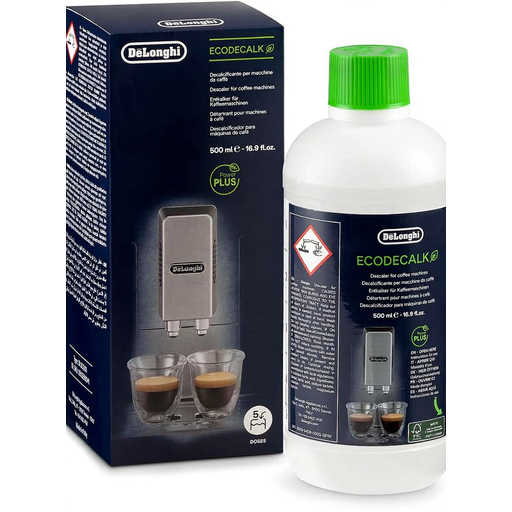
Why it's a great fit: Anyone who owns a high-quality coffee machine from De'Longhi or a similar brand values the machine's longevity. This product was specifically developed by the manufacturer to ensure effective yet gentle descaling.
It bypasses the "all-in-one" fallacy, as its formula, based on natural lactic acid, is precisely tailored to the sensitive components of De'Longhi machines, thus preventing material damage.
According to the manufacturer, the 500 ml bottle is sufficient for up to 5 descaling cycles, offering good value for money for regular maintenance.
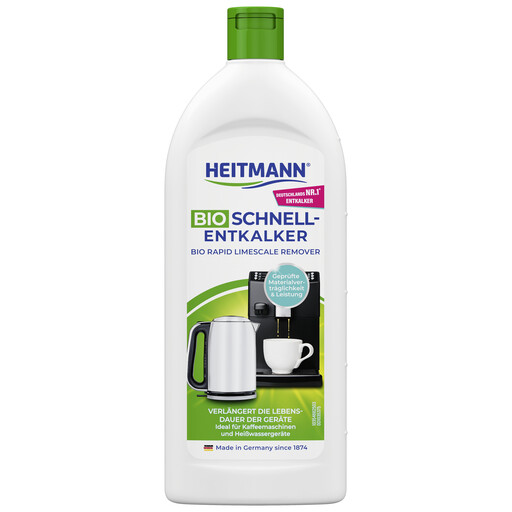
Why it's a great fit: For users seeking a safe, food-grade, and environmentally friendly solution for various appliances like coffee machines, kettles, or egg boilers.
This product avoids the risks of aggressive household remedies. It is based on organic acids, declared food-safe, and fully biodegradable, ensuring safety for both people and the environment.
Its universal applicability for various hot water appliances makes it a practical and versatile choice for the entire household.
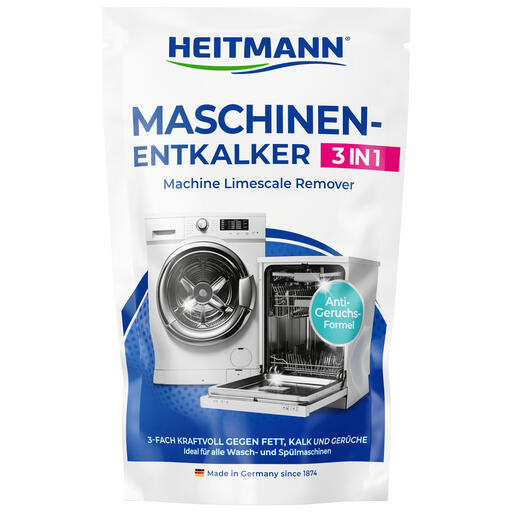
Why it's a great fit: This product is ideal for households looking for a reliable solution for maintaining their dishwashers and washing machines. It demonstrates that specific applications often require dedicated cleaners.
It addresses the problem that a simple coffee machine descaler is not designed for the complex requirements of a dishwasher or washing machine (grease, dirt, odours). The 3-in-1 formula is the appropriate solution here.
The patented formula not only removes limescale but also dirt, grease, and odours, ensuring hygienic freshness and preserving the performance of the machines.
We have compiled a complete, up-to-date list of products that fully meet these strict selection criteria and safety standards. From specialty bathroom cleaners to solutions for tough deposits.
The frequency depends heavily on the water hardness in your area and how often you use it. Modern super-automatic machines typically indicate when descaling is needed. As a general rule of thumb: with average use and medium water hardness, about every two to three months. Always follow the manufacturer's instructions.
This is not recommended. Acetic acid, in particular, can attack and degrade the rubber seals and plastic hoses in modern coffee machines. Specially formulated descalers are designed to effectively dissolve limescale without damaging the appliance's materials.
A descaler is used exclusively to remove mineral deposits (limescale) from the machine's water-carrying parts, such as the heating element and pipes. In contrast, a coffee oil remover, often in tablet form like the Saeco CA6704/99 Coffee Oil Remover Tablets, removes oily residues, grease, and coffee grounds from the brew group and portafilter. Both cleaning steps are essential for an unadulterated coffee taste and a long machine lifespan.