
Lieferung heute & morgen

Qualitätsgarantie

Willkommens-Angebote freischalten: KOSTENLOSE Lieferung | Bis zu 80 % RABATT | Kostenlose 30-Tage-JoyPlus-Testphase
App herunterladen
Limescale can affect water flow, heating time and the taste of your coffee. But if you’re looking to buy a coffee machine descaler, the choice can feel overwhelming. Liquids, powders, tablets, branded solutions and supposedly universal cleaners all differ in how they’re dosed, which machines they’re compatible with and how they’re used.
This often leads to three avoidable buying mistakes:
First, check whether you have a bean-to-cup machine, an espresso machine, or a capsule or pod machine. Manufacturers such as De’Longhi, JURA, Philips and Siemens offer their own care products, designed for their machines’ specific programmes.
For example, a De'Longhi descaler may be measured out as a liquid, while JURA descaler or Siemens descaling tablets are designed for automatic programmes. If you choose a third-party product, check that it specifically states it’s suitable for coffee machines and your type of machine.
Liquid descalers are easy to measure out and are often suitable for manual descaling cycles. Pre-measured bottles make dosing even simpler. Tablets usually need to be dissolved first, but can be convenient for machines with a dedicated tablet programme.
Check the:
A larger bottle isn’t automatically better value. What matters is the number of complete applications it provides.
Citric, lactic, malic or tartaric acid may be among the ingredients in a coffee machine descaler. But the formula alone doesn’t tell you whether a product is suitable for your machine. Only use products whose labels state that they’re intended for coffee machines.
An eco-friendly descaler shouldn’t be judged only by claims about natural or plant-based ingredients. Also check the dosage, packaging, disposal instructions and safety information. Descalers can irritate your eyes or skin. Take precautions seriously: follow the safety instructions, ensure good ventilation and never mix cleaning products.
The products below differ in portion size, brand compatibility and intended use. The details are based on the product information provided.
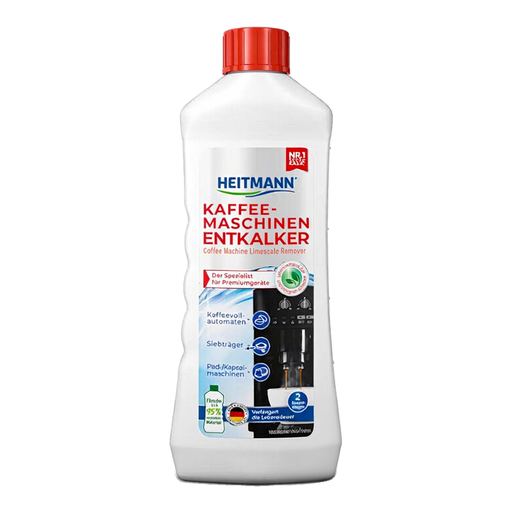
Why it suits this profile: The stated dosage of 50 ml per 500 ml of water is easy to follow at home. It’s suitable for regular care of various coffee machines, provided your user manual permits this type of product.
This is clearly described as a liquid coffee machine descaler, not a bathroom or sanitary cleaner.
250 ml bottle, citric and lactic acid listed in the product information, plus clear instructions to rinse with two full tanks of water.
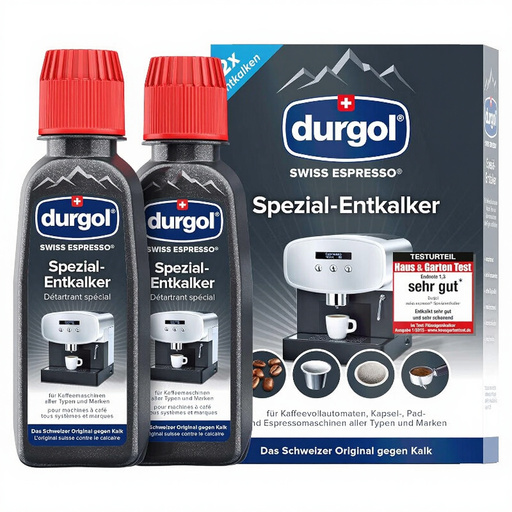
Why it suits this profile: The pre-measured 125 ml bottles are handy for owners of espresso, bean-to-cup, capsule and pod machines who want a precise single dose.
Single-dose bottles reduce the risk of measuring out too much or too little. The product is explicitly described as suitable for several types of machine.
Two pre-measured bottles, an odourless formula and packaging made from recycled plastic, according to the product description.
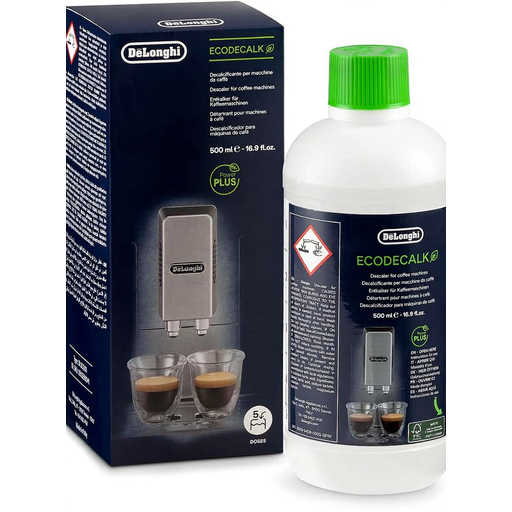
Why it suits this profile: According to the product information, the 500 ml bottle provides up to five descaling cycles and is particularly suited to owners of De’Longhi coffee machines.
The bottle is marked with the 100 ml dose for each cycle. Check the instructions for your specific machine model before use.
500 ml bottle, easy liquid dosing and a formula containing plant-based lactic acid, according to the product description.
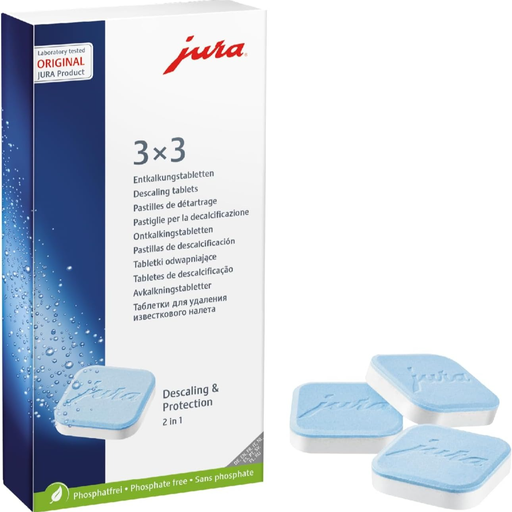
Why it suits this profile: According to the product description, these tablets are designed specifically for JURA bean-to-cup machines. They’re a good fit if you use your machine’s automatic care programme.
The brand and machine compatibility are clearly stated. There’s no need to resort to an unverified sanitary cleaner or a vague universal formula.
Nine tablets, a phosphate-free formula according to the product description, and a clearly explained two-phase application.
We’ve put together a comprehensive, regularly updated list of products that meet these strict selection criteria and fully comply with the safety regulations in force in the EU.
How often you need to remove limescale depends on your water hardness, how often you use the machine and whether you use a filter. The machine’s indicator and maintenance instructions are more reliable than following a fixed schedule.
Only if the manufacturer specifically approves it for use in coffee machines. Bathroom cleaners, toilet cleaners and products for removing limescale from sanitary fittings aren’t designed for internal water systems and shouldn’t go in the water tank.
Neither format is inherently better. Tablets can be convenient for automatic programmes, while liquid descaler is easy to measure out. The key things to check are compatibility, dosage and the machine manufacturer’s instructions.
It depends on your water hardness, how often you use the machine and its recommendations. If the descaling indicator comes on, descale your machine promptly. A water filter can affect how often maintenance is needed, but it doesn’t automatically replace descaling.