
Lieferung heute & morgen

Qualitätsgarantie

Willkommens-Angebote freischalten: KOSTENLOSE Lieferung | Bis zu 80 % RABATT | Kostenlose 30-Tage-JoyPlus-Testphase
App herunterladen
Does your coffee suddenly taste flat or bitter? Is the brewing process taking longer than usual, or has the machine become louder? These are often the first signs of limescale buildup. Hard, mineral-rich water leaves deposits inside your coffee machine that not only impair the taste of your coffee but can also block the heating elements and shorten the appliance's lifespan.
Regular descaling is therefore not an optional maintenance step, but a necessity to preserve your machine's functionality and ensure consistently high coffee quality. As your Joybuy Product Recommendation Officer, I've surveyed the market for coffee machine descalers to give you clear guidance. This guide will help you understand the different options and find the right product for your appliance.
Selecting the right product can be a challenge given the variety of options available. To make the right decision, you should consider three key aspects.
The choice between liquid and tablet form depends on your personal preferences and your machine's requirements.
A descaler's effectiveness is based on acids that dissolve limescale. Common active ingredients include amidosulfonic acid, lactic acid, or citric acid.
Always check the machine manufacturer's recommendations. Using an unsuitable limescale remover for your coffee machine can damage seals and pipes.
Not every descaler is optimal for every type of machine. A descaler for bean-to-cup coffee machines must meet different requirements than a product for descaling an espresso machine. For example, high-end portafilter machines with brass or copper boilers require specially formulated, gentle descalers to prevent corrosion. Capsule and pod machines often have finer tubing that requires a highly soluble and residue-free formula.
Here is a selection of descalers that stand out for their specific properties and applications.
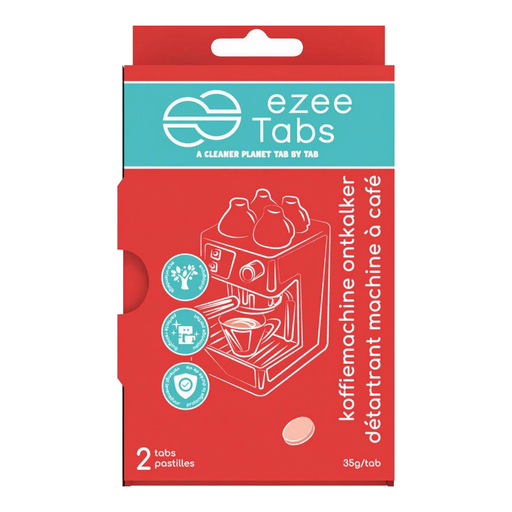
Why It Stands Out: The Ezee Tabs make a clear statement on environmental consciousness. According to the manufacturer, the formula is 100% vegan, free of microplastics, and fully biodegradable. The concentrated tablet form actively helps to reduce CO? emissions during transport and avoid plastic waste.
Advantages:
Who Is It For? For eco-conscious coffee lovers looking for an effective and straightforward solution for descaling their coffee machine while reducing their ecological footprint.
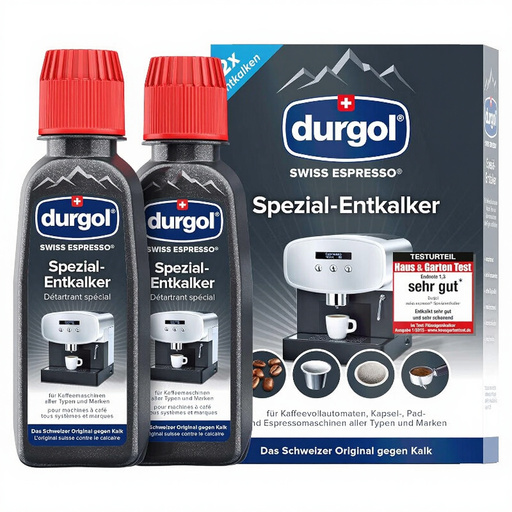
Why It Stands Out: durgol Swiss Espresso is specifically designed for the fast and thorough descaling of high-quality coffee machines of all types. The formula is engineered to work without any additional soaking time. Another plus is the packaging: the bottles are made from 100% recycled plastic, according to the manufacturer.
Advantages:
Who Is It For? For owners of bean-to-cup machines, portafilter machines, and capsule/pod systems who value exceptionally fast, safe, and material-friendly descaling.
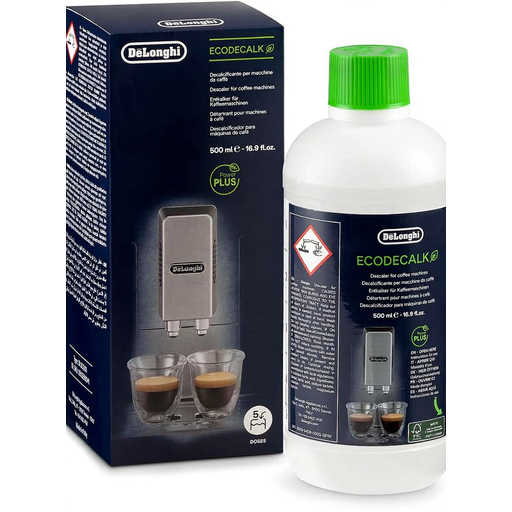
Why It Stands Out: As an original care product from De'Longhi, the EcoDecalk is specially tailored to the materials and technology of De'Longhi coffee machines. The formula is based on purely plant-based lactic acid, which the manufacturer claims makes it particularly gentle on the machine.
Advantages:
Who Is It For? Especially for owners of a De'Longhi coffee machine who want to play it safe and trust the product developed and recommended by the manufacturer. The De'Longhi descaler is the obvious choice to maximise the appliance's longevity.
The products featured cover the most common use cases. If you haven't found the right fit for your specific needs or machine model, there are other alternatives to discover.
Browse our entire range and find the ideal cleaner for your appliance. Discover all coffee machine cleaners here
1. How often should you descale a coffee machine? The frequency depends on the water hardness in your area and how often you use the machine. As a rule of thumb: with average use and medium water hardness, about every two to three months. Many modern bean-to-cup machines automatically indicate when descaling is needed. A look at your machine's user manual will provide the most precise information.
2. Can you use vinegar or citric acid for descaling? Household remedies like vinegar are generally not recommended. The acetic acid can attack and make rubber seals and sensitive metal parts inside the machine porous. Additionally, an unpleasant vinegar taste can linger in the coffee. Pure citric acid can form hard-to-dissolve calcium citrate when heated, which can further clog the pipes. Professional limescale removers for coffee machines are formulated to descale effectively without damaging the materials.
3. What is the difference between a descaler and a coffee degreaser? A descaler is used exclusively to remove mineral deposits (limescale). A coffee degreaser (often in tablet form for the brew group), on the other hand, removes coffee oils and fats that build up over time and can make the coffee taste rancid. For comprehensive care and optimal taste, both cleaning steps are necessary at regular intervals.