
Lieferung heute & morgen

Qualitätsgarantie

Willkommens-Angebote freischalten: KOSTENLOSE Lieferung | Bis zu 80 % RABATT | Kostenlose 30-Tage-JoyPlus-Testphase
App herunterladen
Limescale in the water tank, changes in brewing time or white deposits around the outlet are all typical signs that your coffee machine may need descaling. But simply grabbing the first limescale remover you find could mean spending money unnecessarily or using a product that isn’t suitable for your machine.
Not every descaler is suitable for every use. A coffee machine descaler is generally measured out for internal water circuits and heating systems. A bathroom or kitchen cleaner, on the other hand, is designed for surfaces and may contain surfactants, fragrances or other ingredients that shouldn’t enter a coffee machine’s water circuit.
A kettle descaler may work in a similar way, but that doesn’t automatically mean it’s approved for a bean-to-cup machine, capsule machine or espresso machine. Always check the product packaging and your appliance’s instruction manual.
More acid doesn’t automatically make a product a better choice. The concentration, contact time, dosage and material compatibility all need to be right. Seals, plastic parts, aluminium components and coated surfaces can be particularly sensitive.
A liquid descaler is often straightforward to measure out. Sachets, on the other hand, can provide a set amount for one descaling cycle. Both have practical benefits, as long as you follow the appliance manufacturer’s instructions.
After the descaling programme, rinse the water pipes, tank and outlet thoroughly with clean water. Depending on your appliance, you may need to flush a full tank of water through it or run several rinse cycles. Simply emptying the tank won’t reliably remove any residue.
Before buying, check that the descaler is specifically intended for your type of appliance:
An espresso descaler is often designed for espresso machines, portafilter machines, capsule machines and pod machines. According to its product description, durgol Swiss Espresso Special Descaler is suitable for fully automatic and semi-automatic machines, piston machines, and capsule and pod systems.
Pre-measured products reduce the risk of using too much or too little. According to its product description, one 15-gram sachet of Heitmann Quick Descaler should be dissolved in 500 millilitres of water. Two sachets are recommended for areas with heavier limescale. After use, rinse twice with clean water.
Liquid descalers are handy when your coffee machine needs a specific amount. De'Longhi EcoDecalk DLSC101 is available in a 100-millilitre bottle; according to the product description, this amount is intended for one descaling cycle. Always follow the instructions for your particular appliance.
Citric acid, lactic acid, malic acid or tartaric acid may be ingredients in a limescale remover. However, the formula alone doesn’t tell you whether it’s suitable for a particular appliance. Look for:
An eco-friendly descaler shouldn’t be chosen on the strength of a marketing claim alone. Check the ingredients, packaging information and intended use as well. For example, Heitmann Quick Descaler is described as containing natural fruit acids and being biodegradable. The product’s safety instructions still apply, including those on eye protection.
The selection below groups products by everyday use, appliance type and ease of dosing. It doesn’t replace checking your coffee machine’s instruction manual.
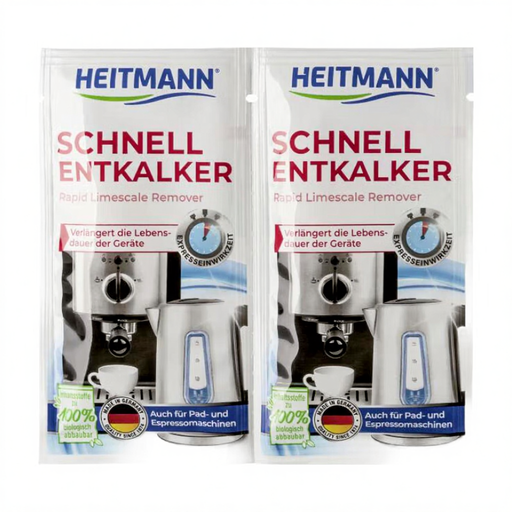
Why it suits this need: The 15-gram sachets make it easy to measure out the right amount for households with a coffee machine, kettle or other hot-water appliance.
The pre-measured sachets reduce the risk of getting the dosage wrong. The product description also gives clear instructions for dissolving and rinsing.
Two 15-gram sachets, a fruit-acid formula according to the product description, and intended use with hot-water appliances.
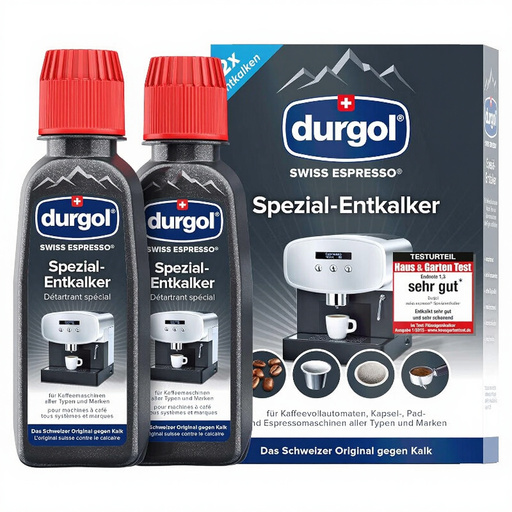
Why it suits this need: The pre-measured 125-millilitre bottles are designed for different types of coffee and espresso machines.
There’s no need to measure the product out of a larger bottle. According to the product description, one bottle is intended for a complete descaling cycle.
Two pre-measured bottles, a formula described as gentle on materials, and compatibility with several espresso machine systems, according to the product description.
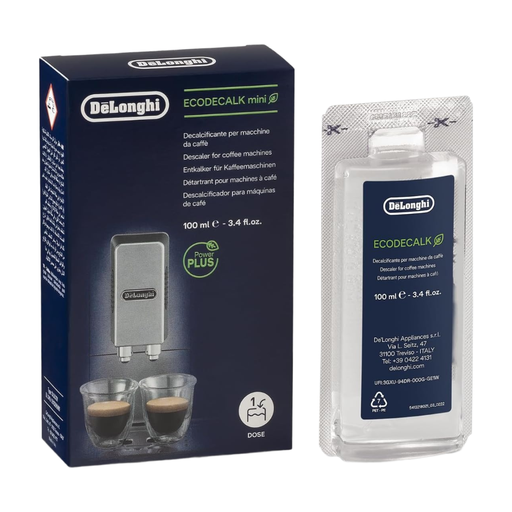
Why it suits this need: The 100-millilitre bottle is intended for regular descaling cycles and is described as having a plant-based formula.
The set bottle size makes it easier to use the product regularly. You’ll still need to check your machine’s manual for the right programme and amount of water.
A 100-millilitre portion, plant-based ingredients according to the product description, and designed for coffee and espresso machines.
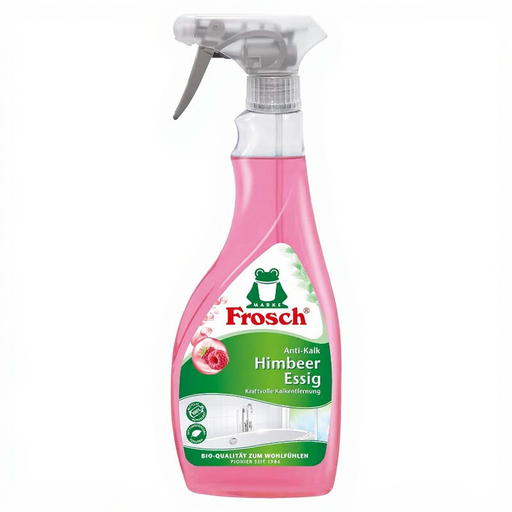
Why it suits this need: The spray is designed to remove limescale and dirt from taps, tiles, showers and baths – not from inside a coffee machine.
Keeping surface cleaner separate from machine descaler helps prevent it being used by mistake in the water circuit.
A 500-millilitre spray bottle designed for kitchen and bathroom surfaces, with guidance on materials that are sensitive to acids.
We’ve put together a complete, regularly updated list of products that meet these strict selection criteria and fully comply with the safety regulations in force in the EU.
There are additional restrictions for surfaces. According to the product information, Frosch cleaner and Antikal Classic aren’t suitable for materials that are sensitive to acids, such as natural stone, marble, terrazzo, gold, silver, copper, aluminium or certain enamel surfaces. It’s a good idea to test the product on an inconspicuous area first.
It depends on your water hardness, how often you use the machine and its model. Many bean-to-cup machines indicate when descaling is due, either through a programme or a display. If yours doesn’t have this feature, follow the instruction manual and check more frequently if your water is hard.
Citric acid is an ingredient in some descalers. However, a pure citric acid solution isn’t automatically suitable for every appliance. The concentration, temperature and material compatibility can vary. It’s best to use a product that’s specifically approved or intended for your coffee machine.
Only if the product says you can. Some products, such as Heitmann Quick Descaler, are described as suitable for coffee machines and kettles. Others are intended only for espresso machines or specific appliance types.