
Lieferung heute & morgen

Qualitätsgarantie

Willkommens-Angebote freischalten: KOSTENLOSE Lieferung | Bis zu 80 % RABATT | Kostenlose 30-Tage-JoyPlus-Testphase
App herunterladen
The search for a coffee machine with a grinder and milk frother often leads through a maze of technical specifications and marketing promises. Whether you dream of a creamy cappuccino in the morning or prefer a strong espresso after dinner, the right machine makes all the difference. The goal of this article is to provide you with objective guidance. As a Joybuy Product Recommendation Officer, I will present objective information and a selection of appliances to help you with your decision-making process.
Before you decide on a model, a few basic considerations are helpful. The following points highlight the most important features that will significantly influence your at-home coffee experience.
The first fundamental decision concerns the level of automation.
The type of milk frother determines the convenience and the result for milk-based drinks like cappuccino or latte macchiato.
The heart of any coffee machine for beans is the grinder. Freshly ground beans are the foundation for a full aroma. Pay attention to the grind size, which should ideally be adjustable in multiple steps. A finer grind results in a more intense espresso, while a coarser grind is suitable for a café crème. The ability to adjust coffee strength and water volume offers additional customisation.
Here you will find a selection of appliances that cover different needs and preferences. The models presented are based on their objective product features.

Why this model stands out: The Melitta CI Touch is a classic fully automatic coffee machine designed for convenience and variety. Its special feature is the dual-chamber bean container with manual bean selection. This allows for an easy switch between two different types of beans, for example, espresso beans for the afternoon and milder beans for the morning coffee.
Advantages:
Who is this appliance for? This model is a great choice for families or shared living spaces where several people with different coffee preferences live and value ease of use.
View details for the Melitta CI Touch
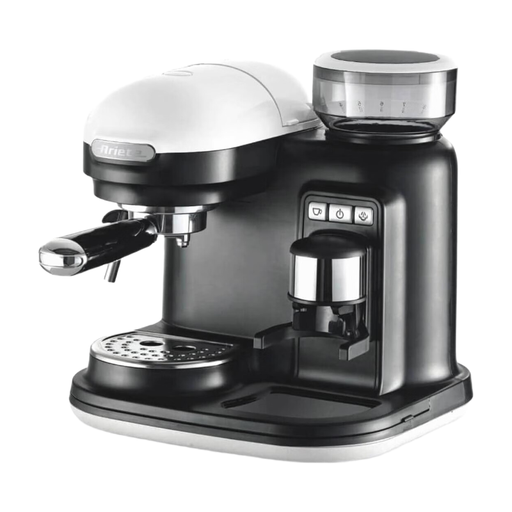
Why this model stands out: The Ariete Moderna combines the classic portafilter experience with the convenience of an integrated coffee grinder. Its distinctive retro design makes it an eye-catcher in the kitchen. It is aimed at users who want to take the coffee-making process into their own hands.
Advantages:
Who is this appliance for? Ideal for design-conscious coffee lovers and aspiring home baristas who want to actively influence the taste of their coffee and appreciate the ritual of preparation.
View details for the Ariete Moderna

Why this model stands out: The Nespresso CitiZ is a deliberate alternative for users for whom speed and minimal effort are paramount. It is a capsule machine and therefore does not have an integrated grinder. Its strength lies in its extremely short heat-up time and simple operation. A separate milk frother can be added if needed.
Advantages:
Who is this appliance for? This device is suitable for people who are looking for a fast, uncomplicated, and clean solution for their daily espresso and prefer the variety of a capsule system.
View details for the Nespresso CitiZ
The selection presented here covers only a small part of the market. If you want to compare more models or discover other types of coffee machines, you can find a broader overview in our main category.
Explore our full range of espresso and coffee machines
1. What is the difference between a fully automatic coffee machine and an espresso machine with a grinder? A fully automatic coffee machine handles all steps—grinding, brewing, milk frothing—automatically at the touch of a button. An espresso machine with a grinder (usually a portafilter) requires manual intervention: you grind the beans, fill and lock the portafilter, and often froth the milk by hand with a steam wand. The fully automatic machine offers convenience, while the portafilter offers more control.
2. How important is the pump pressure in a coffee machine? For preparing a true espresso, a pressure of about 9 bars at the brew head is ideal. Most machines advertise a higher pump pressure (e.g., 15 or 19 bars) to ensure this target pressure is reached even with a fine grind and firm tamping of the coffee grounds. Sufficient pressure is crucial for extracting the aromas and creating a stable crema.