
Lieferung heute & morgen

Qualitätsgarantie

Willkommens-Angebote freischalten: KOSTENLOSE Lieferung | Bis zu 80 % RABATT | Kostenlose 30-Tage-JoyPlus-Testphase
App herunterladen
A coffee machine for a German household or small office should not be chosen based solely on design and advertising claims. The key considerations are its construction, ease of use, cleaning requirements and whether you prefer to work with freshly ground coffee, ESE pods or coffee beans.
Many disappointing purchases result from three common pitfalls:
A coffee machine with 15 bar uses a pump whose maximum value does not automatically correspond to the pressure during extraction. It is therefore relevant for buyers to check whether the manufacturer also offers a coffee machine with a pressure gauge. The pressure gauge can help you monitor the brewing process and adjust preparation more effectively to the grind size and amount of coffee.
A 20-bar pump is not, in itself, proof of quality either. For example, the ochama machine is specified as having a 20-bar high-pressure pump. When choosing, you should also pay attention to the filter size, control concept, heating system and available replacement or wear parts.
A coffee machine for ground coffee gives you greater control over the blend, grind size and dosage. However, you will need a separate grinder or pre-ground coffee. ESE pod coffee machines are easier to use day to day: simply place the pre-portioned pod in the matching filter and dispose of it afterwards.
Models that support both formats are suitable for households with different preferences. According to the product details, the Ariete models in this selection are compatible with ground coffee and ESE pods. Before buying, check that the required filter inserts are actually included in the box.
For small kitchens or offices, a compact coffee machine with a narrow footprint is practical. The Ariete 1381 is described as having a slim design and a width of approximately 14 cm. The Ariete 1380 is specified as measuring 34 × 14 × 29 cm and having a removable 1.1-litre water tank.
Also look for:
A bean-to-cup coffee machine takes care of grinding and dosing for you, but contains more moving parts and water-carrying components. A portafilter machine requires more hands-on preparation, but gives you more individual control over grind size and dosage.
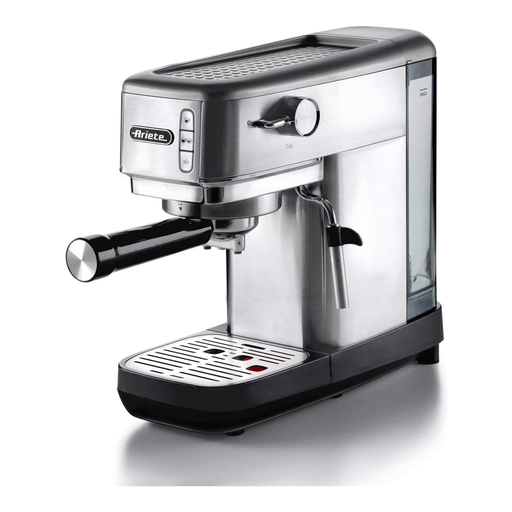
Why this product suits this profile: The semi-automatic espresso machine supports ground coffee and ESE pods, while offering a relatively straightforward set of features for beginners.
The specifications list precise dimensions, a 1.1-litre water tank, automatic switch-off after 25 minutes and a cleaning reminder, rather than focusing solely on pressure ratings.
1300 W, height-adjustable coffee outlet, Maxi-Cappuccino nozzle and reusable stainless-steel filter.
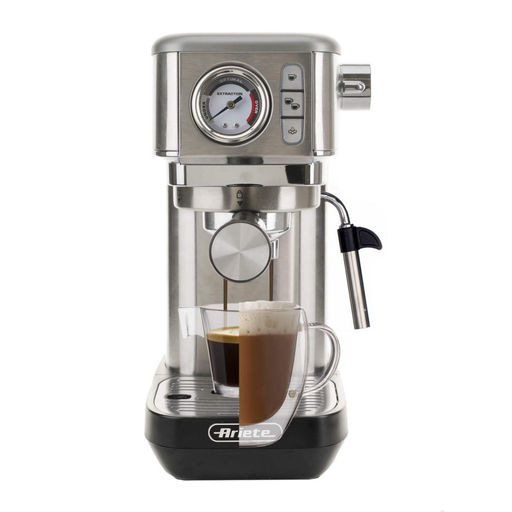
Why this product suits this profile: If you want greater control over the brewing process, this portafilter machine provides a pressure gauge and separate Maxi-Cappuccino attachment.
The pressure gauge complements the stated 15 bar rating and allows you to monitor the pressure visibly during extraction. This prevents the pump rating from being used as the sole selection criterion.
Compatible with ground coffee and ESE pods; hot-water dispensing and an adjustable drip tray are also specified.
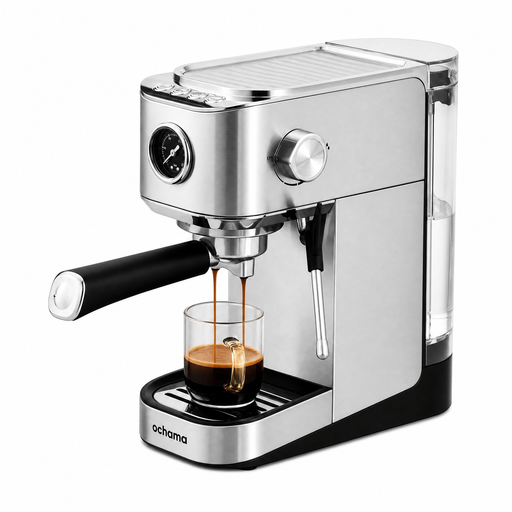
Why this product suits this profile: This model is aimed at users who want to combine a metal construction, pressure gauge, cup warmer and manual milk preparation in one appliance.
Alongside the stated pump rating, the specifications mention a pressure gauge, a removable 0.9-litre water tank and detachable parts for cleaning.
Full metal casing according to the product description, cup-warming function and steam wand for manual frothing.
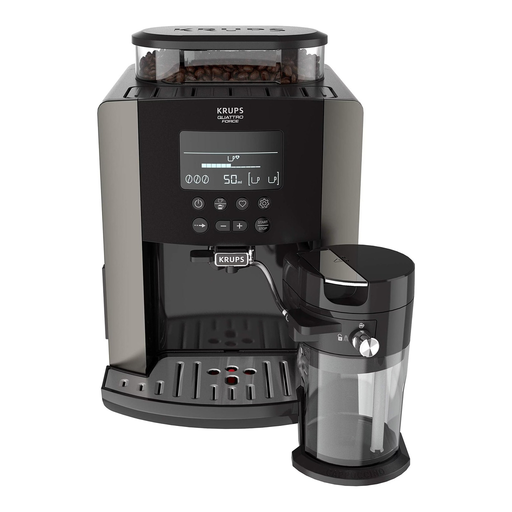
Why this product suits this profile: This bean-to-cup machine handles grinding, dosing and dispensing, making it suitable for several users with different drink preferences.
The selection considers not only the stated 15-bar pump, but also the 1.7-litre water tank, 260-gram bean hopper and integrated cleaning and descaling programme.
Integrated conical stainless-steel grinder, LCD controls, two cups per brewing cycle and separate 600-ml milk system.
We have put together a complete, regularly updated list of products that fully meet these strict selection criteria and the safety regulations applicable in the EU.
A portafilter machine usually involves ongoing expenses for ground coffee or ESE pods. If you use ground coffee, you may also need to factor in the cost of a grinder. A bean-to-cup machine requires beans, a water filter depending on the model, and suitable cleaning and descaling products.
For everyday use, the following checks are recommended:
No. 15 bar generally refers to the pump’s maximum pressure. The result also depends on the grind size, amount of coffee, tamping pressure, brewing temperature and filter. A pressure gauge can make manual control easier, but it does not replace the correct settings.
For manually prepared milk drinks, an espresso machine with a milk frother or steam wand is suitable. If you prefer preparation at the touch of a button, you can choose a bean-to-cup machine with an integrated or separate milk system. With both options, regular cleaning of the milk system is essential.
Its service life depends on water quality, daily usage, cleaning and descaling. Removable components, an accessible brewing unit or a portafilter that is easy to rinse make maintenance simpler. It is not possible to make binding statements about service life without specific warranty and maintenance conditions.