
Lieferung heute & morgen

Qualitätsgarantie

Willkommens-Angebote freischalten: KOSTENLOSE Lieferung | Bis zu 80 % RABATT | Kostenlose 30-Tage-JoyPlus-Testphase
App herunterladen
By Joy, Joybuy Product Recommendation Officer
The desire for a perfectly crafted cappuccino or latte macchiato doesn't have to be limited to a café visit. A coffee machine with a milk frother brings this experience right into your own kitchen. However, the selection is vast, and the differences between machine types are significant. Whether it's a bean-to-cup machine, a capsule machine, or a portafilter machine, each variant has its own specific features. This guide will help you understand how they work and make an informed decision that suits your habits and preferences.
Before you decide on a model, several fundamental aspects should be considered. The type of machine, the milk system, and the technical features are key determinants of the coffee experience and ease of use.
The three most common types of coffee machines with milk frothers offer different advantages and disadvantages:
The type of milk frother significantly impacts convenience and the final result:
Two technical details are particularly noteworthy:
Here, we present three models from different categories that stand out for their specific features and functions.

Why it stands out: The Grundig KVA 8230 is a modern bean-to-cup coffee machine that combines convenience with advanced technology. With a pump pressure of up to 19 bar and a stainless steel grinder with 13 adjustable settings, it is designed for thorough aroma extraction. It is operated via a touchscreen display and can also be controlled via an app or voice assistants like Amazon Alexa and Google Assistant.
Pros:
Who is it for? For tech-savvy users and households who want a wide variety of coffee specialities at the touch of a button and appreciate the convenience of smart control.
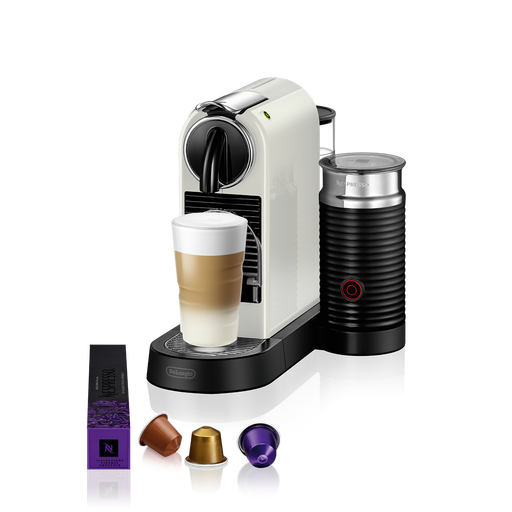
Why it stands out: The CitiZ & Milk combines a compact, retro design with practical functionality. The integrated Aeroccino milk frother prepares hot or cold milk foam at the touch of a button and works independently of the coffee preparation. With a short heat-up time of 25 seconds and a 19-bar pump, the machine delivers espresso and lungo quickly and reliably.
Pros:
Who is it for? For design-conscious coffee drinkers in smaller households who value speed, ease of use, and consistent results without wanting to delve into the details of the brewing process.

Why it stands out: This home espresso machine focuses on manual control and a classic coffee experience. It operates with a high-pressure extraction of 15 bar and features a powerful steam wand for manually frothing milk. This allows for the preparation of cappuccinos and lattes with self-created milk foam, including the possibility of latte art.
Pros:
Who is it for? For aspiring home baristas who want to celebrate the process of coffee making and learn the art of milk frothing to create authentic coffee specialities.
Choosing the right coffee machine is a very personal decision. If the models presented here don't fully meet your expectations, you can find more options in our range.
Browse through our selection of Coffee & Milk Preparation appliances to find the perfect machine for your kitchen.
1. What is the difference between a bean-to-cup machine and a portafilter machine? A bean-to-cup machine handles all steps—grinding, brewing, and often milk frothing—automatically at the touch of a button. A portafilter machine requires manual work: you need to grind the beans separately, fill the portafilter with the grounds, lock it in place, and manually start and stop the extraction. Milk frothing is also done by hand with a steam wand. The bean-to-cup machine offers convenience, while the portafilter offers control.
2. How important is the pump pressure in an espresso machine? The pump pressure indicates the maximum power of the pump. For a good espresso extraction, a constant pressure of about 9 bar on the coffee grounds is ideal. Machines with a maximum pressure of 15 or 19 bar have a pump that can reliably and stably build up this target pressure, which is a prerequisite for even extraction.
3. How do you properly clean the milk system of a coffee machine? Cleaning is crucial for hygiene and function. For integrated systems, the parts that come into contact with milk should be rinsed with hot water daily after use. Many bean-to-cup machines offer automatic rinsing programs for this. The milk container should also be emptied and cleaned daily. For steam wands, wipe the wand with a damp cloth after each use and briefly release steam to clear any milk residue from the nozzle. Always follow the specific cleaning instructions provided by the manufacturer.