
Lieferung heute & morgen

Qualitätsgarantie

Willkommens-Angebote freischalten: KOSTENLOSE Lieferung | Bis zu 80 % RABATT | Kostenlose 30-Tage-JoyPlus-Testphase
App herunterladen
For many, the aroma of freshly ground coffee beans is the epitome of a perfect start to the day. A coffee machine with an integrated grinder promises exactly this experience—cup after cup. However, the market is crowded and full of marketing promises that often fail to deliver. Before you make a decision, it's crucial to understand the common pitfalls that can lead to disappointment and unnecessary expense.
As your Joybuy Product Recommendation Officer, I will help you define objective criteria for your choice and separate the wheat from the chaff.
An investment in a high-quality coffee machine should pay off in the long run. Pay attention to these three points to avoid a bad purchase:
To make the right choice, focus on the technical fundamentals that directly influence the quality in your cup.
The heart of any coffee machine with a grinder is the grinder itself. Two types are common here:
More crucial than the type, however, is the number of grind settings. A high number of adjustment levels (ideally 15 or more) gives you the flexibility to tailor the grind size exactly to the bean and the desired coffee specialty—from coarse for drip coffee to very fine for an espresso machine with a grinder.
The preparation method largely determines the character of your coffee.
There are also differences in the milk system. A manual steam wand (Panarello) requires practice to create perfect microfoam for latte art but offers maximum control. An automatic coffee machine with a milk frother is more convenient but often delivers a less fine foam consistency.
Instead of making blanket recommendations, we have identified products that suit specific user profiles and purposefully avoid the pitfalls mentioned.
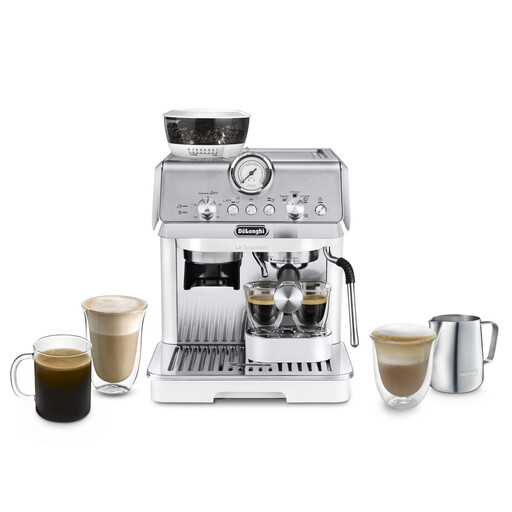
Why it's a good fit: This device is a classic portafilter machine that gives the user full control over the brewing process. Ideal for anyone who wants to learn and perfect the craft of coffee making, rather than relying on automatic programs.
It sidesteps the "all-in-one" trap by focusing on the essentials: excellent espresso. The included barista kit encourages manual control instead of hidden compromises.
A comprehensive barista kit (tamper, milk jug, etc.) is included. 8 grind settings and 3 temperature levels allow for precise customisation.
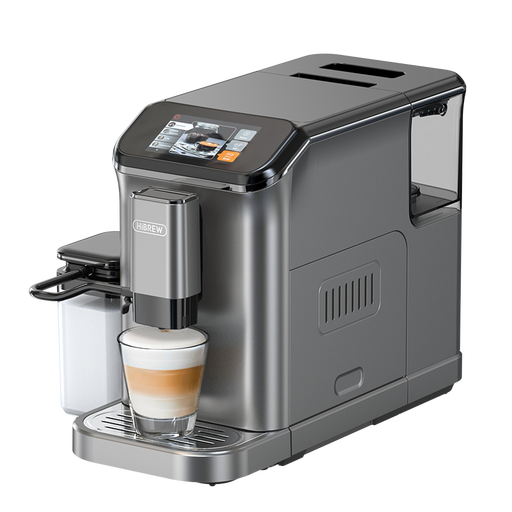
Why it's a good fit: This fully automatic machine is designed for users who want variety and convenience at the touch of a button. With 6 preset drinks and an intuitive touch display, operation is straightforward.
It avoids the trap of inadequate settings with a stainless steel conical burr grinder that features 15 grind settings. This offers remarkable flexibility for a fully automatic machine.
The dual heating system (Dual Boiler) allows for simultaneous preparation of coffee and milk foam without any waiting time. The smart cleaning system simplifies maintenance.
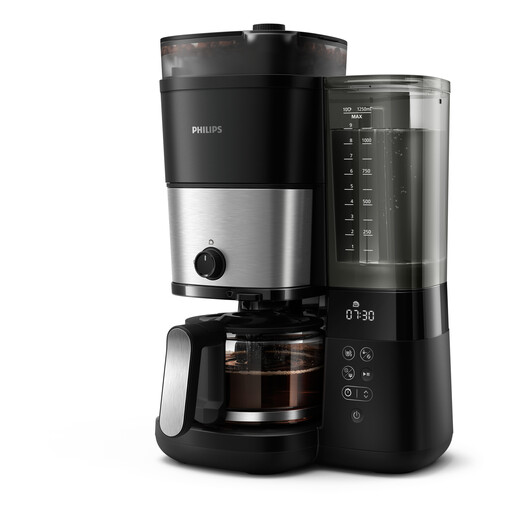
Why it's a good fit: This machine is specially designed for purists who appreciate the taste of freshly brewed drip coffee and can do without espresso functions. It combines the convenience of a drip machine with the freshness of an integrated grinder.
It avoids the compromise of "all-in-one" devices by specialising in a single task: excellent drip coffee. Its features are consistently geared towards this goal.
The Smart Portioning feature automatically adjusts the amount of coffee to the amount of water. The Aroma Twister in the carafe ensures an even distribution of the coffee's aroma.
We've compiled a complete, up-to-date list of products that fully meet these strict selection criteria and rigorous safety standards.
A grinder should be cleaned regularly, about every 1-2 months. Over time, coffee oils and fine particles build up, turn rancid, and negatively affect the taste of the coffee. Furthermore, a clogged grinder can reduce grinding performance. Special cleaning pellets are available for this purpose, or, depending on the model, it can be carefully cleaned with a brush and a vacuum cleaner.
As a rule of thumb:
The choice depends on your priorities.