
Lieferung heute & morgen

Qualitätsgarantie

Willkommens-Angebote freischalten: KOSTENLOSE Lieferung | Bis zu 80 % RABATT | Kostenlose 30-Tage-JoyPlus-Testphase
App herunterladen
A coffee machine with grinder combines two steps in one: coffee beans are ground just before brewing and then brewed immediately afterwards. This saves space and can simplify your daily routine. However, not every machine is suited to every type of coffee. If you mainly drink filter coffee, you will need different features from someone who wants to prepare espresso and cappuccino.
As a Joybuy Product Recommendation Officer, I therefore assess the most important product data according to actual usage profiles. This makes it easier to distinguish marketing claims from verifiable features.
A high number of grind settings may sound convincing at first. What matters, however, is whether the setting suits the brewing method and can be easily replicated in everyday use. For filter coffee, a few clearly distinguishable settings are often sufficient. With an espresso machine with an integrated grinder, finer adjustment can be useful because small changes affect the brewing time.
Buyers should also pay attention to the type of grinder. Several of the models mentioned feature conical grinders. Ease of cleaning is also important, as is whether the bean hopper or grinder can be removed.
Espresso machines often advertise 15 or 20 bar. This figure describes the maximum possible pump pressure and does not mean that the same pressure is applied to the coffee puck throughout the entire extraction. When choosing a machine, you should also consider temperature control, dosing options, portafilter size and ease of use.
If you only want filter coffee, you do not need a pressure pump. A filter coffee machine with grinder uses a different brewing method and should instead be assessed based on its water temperature control, brewing volume and keep-warm system.
Timers, milk frothers and automatic programmes make machines easier to use. At the same time, they add extra parts that need to be cleaned regularly. Milk systems in particular should be rinsed after every use. An integrated grinder also requires care to prevent old coffee residue from mixing with the next portion.
Before buying, check for removable water tanks, accessible grinder areas, cleaning programmes and descaling instructions. An automatic switch-off function is convenient, but it does not replace regular maintenance.
A coffee machine for coffee beans can come in a range of designs:
The grind size should match the type of coffee: coarser for filter coffee and finer for espresso. However, the available settings are only useful if the controls are clearly explained. You should also check the capacity of the bean hopper. Several espresso models specify 250 g; filter machines can also hold larger quantities, depending on their design.
For families and offices, water tanks holding around 1 to 1.25 litres or more are practical. A 10-cup capacity generally refers to smaller standard cups rather than large mugs. Before buying, measure the depth and height of the space available, particularly if the machine will be positioned beneath wall cabinets.
In Germany, make sure the machine is suitable for the 220–240 V mains voltage and place it in a safe, dry location. The relevant manufacturer’s specifications and the supplied instruction manual are decisive.
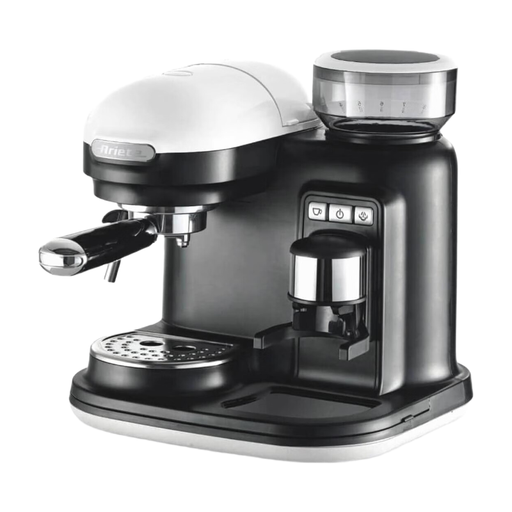
Why this product suits this profile: This machine is designed for espresso and cappuccino and offers straightforward controls for beginners learning to use a portafilter machine.
The selection focuses on specific details rather than vague promises about flavour: an integrated grinder, filters for 1 or 2 cups, a 15-bar pump and automatic switch-off.
Milk frother, 250 g bean hopper and 1- or 2-cup preparation.
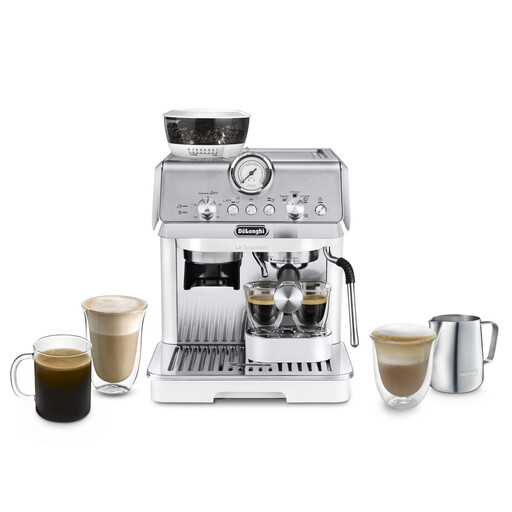
Why this product suits this profile: For users who want greater manual control when preparing espresso, Americano and milk-based drinks.
Rather than focusing on an isolated pressure figure, the key features are 8 grind settings, 3 temperature levels, a pressure gauge and a barista accessory set.
1.5-litre water tank, 250 g bean hopper, steam wand and accessories for dosing and tamping.
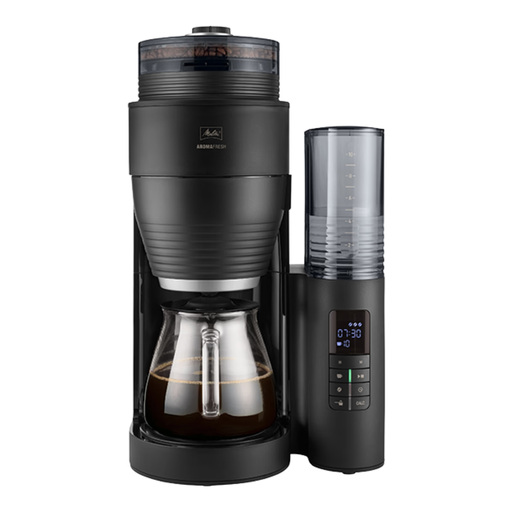
Why this product suits this profile: This filter model is designed for households or workplaces where several cups of aromatic filter coffee are needed one after another.
The buying decision can be based on 11 grind settings, 5 strength levels, a timer and automatic switch-off.
1.25-litre water tank, ceramic grinder, glass carafe and 24-hour timer.
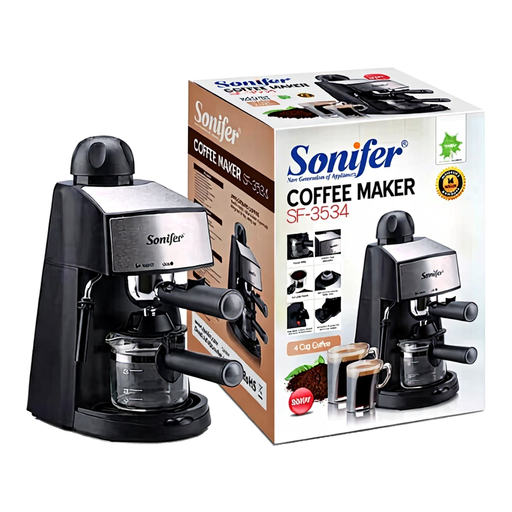
Why this product suits this profile: The combination of an espresso unit and integrated grinder is suitable for users looking for a compact coffee machine for home or the office.
The product description specifies the adjustable grind size and separate water tank. Before buying, check the full connection and cleaning details.
Integrated grinder, espresso preparation and controls that are easy to access.
We have put together a complete, regularly updated list of products that fully meet these strict selection criteria and the safety regulations applicable in the EU.
Freshly ground coffee requires regular care. Empty the drip trays and filter areas as needed, remove coffee residue from the grinder and descale the machine according to the manufacturer’s instructions. With a coffee machine featuring a milk frother, you will also need to clean the steam wand or milk system.
Running costs include not only beans and water, but also paper filters, descaler and, where applicable, replacement parts. A timer does not automatically reduce electricity consumption; an automatic switch-off function can limit standby or operating time. Glass carafes also require careful handling, while thermal carafes work without a permanently heated hotplate.
Yes, provided the coffee type and control system are a good match. Filter models with a timer and just a few grind settings are generally easier to set up. A portafilter machine requires more hands-on preparation, such as dosing, tamping and frothing.
This depends on how often you use it and on the beans. With daily use, visible residue should be removed regularly with a suitable brush. For precise intervals, follow the instructions provided by the relevant manufacturer. Always disconnect the machine from the mains before cleaning.
There is no universal answer, as the roast, brand, pack size and consumption all affect the price. A coffee machine for espresso and cappuccino can offer flexibility through bean-to-cup preparation, but it also involves additional cleaning and maintenance. What matters most is how many cups you actually drink and which preparation method you prefer.