
Lieferung heute & morgen

Qualitätsgarantie

Willkommens-Angebote freischalten: KOSTENLOSE Lieferung | Bis zu 80 % RABATT | Kostenlose 30-Tage-JoyPlus-Testphase
App herunterladen
For many coffee lovers, the aroma of freshly ground beans is the key to a truly exceptional experience. A coffee machine with a built-in grinder promises just that: aroma at the touch of a button. However, the market is crowded, and not every appliance delivers on its promise. Before you make a decision, it's crucial to understand the common pitfalls that often lead to disappointment and unnecessary expense.
As your Joybuy Product Recommendation Officer, I'll help you objectively evaluate technical specifications and find a machine that truly fits your needs. We'll focus on the facts and cut through the marketing hype.
The 3 Most Common Traps When Buying a Coffee Machine with a Grinder:
To make an informed decision, you should focus on the technical features that directly impact coffee quality and the machine's longevity.
The type of grinder is the most important factor for the quality of your coffee. There are clear differences here:
Therefore, always look for "conical burr grinder" or "flat burr grinder" in the product specifications.
The user-friendliness of a machine often only becomes apparent during daily use and cleaning.
A good coffee machine for whole beans gives you control over the final result. Important settings include:
Here are some recommendations tailored to different user profiles that take the aforementioned pitfalls into account.
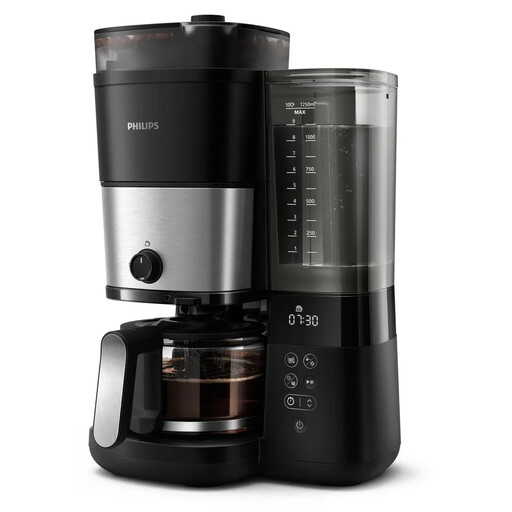
Why This Fits Their Persona: Ideal for households that want the aroma of freshly ground filter coffee without the complexity of a fully automatic machine. Operation is straightforward and reduced to the essentials: brewing good coffee. The integrated timer is a practical extra for the morning.
This machine uses a conical burr grinder, sidestepping the trap of an inferior blade grinder. As a filter coffee machine, it also eliminates the complex cleaning of a brew group or milk system.
Adjustable grind sizes and coffee strength; 24-hour timer for freshly brewed coffee in the morning; option to use pre-ground powder.
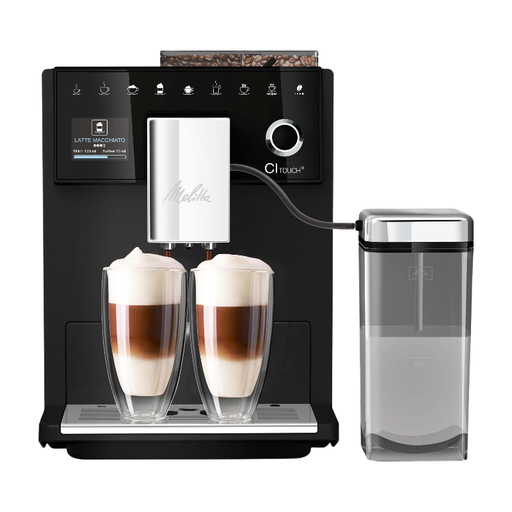
Why This Fits Their Persona: Perfect for anyone who wants to enjoy a wide variety of coffee specialities like cappuccino or latte macchiato at the touch of a button. The memory function for up to four people and the two-chamber bean container offer great convenience for families or small offices.
The appliance features automatic cleaning and descaling programs. The milk system is an external plug-in system, with hoses that are easier to clean than some fully integrated carafes, which defuses the hygiene trap.
10 preset coffee recipes; two-chamber bean container for different types of beans; memory function for individual preferences.

Why This Fits Their Persona: This portafilter machine offers the perfect balance of manual control and automated assistance. It is ideal for users who want to take charge of the brewing process but benefit from an intuitive touchscreen guide and automatic milk frothing.
The ThermoJet heating system ensures a precise and stable brewing temperature, bypassing the high-pressure myth by focusing on optimal extraction. The integrated conical burr grinder guarantees fresh, uniform grounds.
Very fast heat-up time (3 seconds); automatic milk frother with adjustable texture and temperature; intuitive touchscreen operation with memory function.
We have compiled a complete, real-time list of products that fully satisfy these strict selection criteria and UK safety regulations.
The cleaning frequency depends on usage and the type of beans. For oily beans, the grinder should be cleaned every few weeks; otherwise, every 1-2 months. Many machines come with a small brush to remove coffee residue from the grinder. For a more thorough cleaning, special cleaning pellets are available, which are ground through the machine to bind coffee oils and fats. Always disconnect the appliance from the power supply before any manual cleaning.
As a rule of thumb: the shorter the contact time between water and coffee, the finer the grind.
Experiment with your machine's settings to find the perfect grind size for your favourite bean.
From an aroma perspective, the answer is a clear yes. Coffee beans contain volatile oils and aromatic compounds that are quickly released into the air after grinding. Just 15 minutes after grinding, coffee powder has lost a significant portion of its aroma. A coffee machine for whole beans grinds the coffee right before brewing, ensuring maximum freshness and flavour in every cup. In the long run, buying whole beans can also be more cost-effective.