
Lieferung heute & morgen

Qualitätsgarantie

Willkommens-Angebote freischalten: KOSTENLOSE Lieferung | Bis zu 80 % RABATT | Kostenlose 30-Tage-JoyPlus-Testphase
App herunterladen
Anyone looking to buy a coffee machine or coffee maker will find many appliances and pots with similar product claims. However, there are clear differences between filter coffee machines, French presses and pour-over coffee filters when it comes to operation, capacity, cleaning and keeping coffee warm. Making an informed choice helps you avoid unsuitable purchases.
A 1.25-litre pot does not automatically hold ten large mugs. Manufacturers often calculate capacity using smaller portions. According to the product description, the Aigostar Filter Coffee Machine’s 1.25 litres corresponds to around five to seven standard cups. For its 1.5-litre capacity, the ProfiCook PC-KA 1330 specifies approximately twelve to fourteen cups.
For everyday use, you should therefore consider:
A thermal and keep-warm function can keep coffee warm on the hotplate for a certain period after brewing. The Aigostar specifies 30 minutes; after a total of 40 minutes, the appliance switches off automatically. This is practical for breakfast or a short break at the office, but it does not mean the coffee will remain unchanged for several hours.
If you want to store coffee for longer, consider a suitable thermal carafe or a coffee maker with a double-walled construction. With a hotplate, it is also important that the carafe is positioned correctly and that the surface is allowed to cool after use.
With a dishwasher-safe coffee carafe, you need to check which individual parts can actually go in the dishwasher. According to the product description, the glass of the Secret de Gourmet Double-Walled Glass Cafetiere is dishwasher-safe, but the remaining parts should be cleaned by hand. The same applies to filter machines: a reusable coffee filter is not automatically suitable for cleaning in the dishwasher simply because the appliance body is.
The main unit, mains cable and plug of an electric coffee machine must not be immersed in water. This instruction applies regardless of whether the carafe or filter holder can be cleaned in the dishwasher.
A filter coffee machine automatically heats the water and runs it through the coffee grounds. It is suitable for homes and offices where several cups are needed with as little manual effort as possible. Depending on the model, it uses either a paper filter or a washable filter mesh.
A pour-over coffee filter is placed manually on top of a pot or cup. Water is poured over the coffee grounds in a controlled manner. This method requires more attention, but usually needs only a dripper, a suitable coffee filter and a pot.
With a French press, coarsely ground coffee and water are mixed directly in the pot. After steeping, the coffee grounds are held back with the plunger. This brewing method does not require a paper filter. However, a fine-mesh or damaged plunger can make cleaning more difficult and leave more coffee particles in the cup.
Glass allows you to monitor the amount of coffee visibly, but it is sensitive to sudden changes in temperature. A hot glass coffee carafe should not be placed on a cold or wet surface. Borosilicate glass is specified as the material for several products, including the double-walled French press and the Timemore dripper.
You should also look for:
A removable filter holder makes daily cleaning easier. The Aigostar has a washable high-density filter mesh; according to the product details, it should be cleaned in the top rack of the dishwasher or by hand. The ProfiCook machine is designed for paper filters, while a French press should be cleared of coffee grounds and the plunger after every use.
Before buying, it is worth checking which replacement carafes, filters and seals are available. Particularly with a frequently used coffee machine, replaceable accessories can make continued use easier.
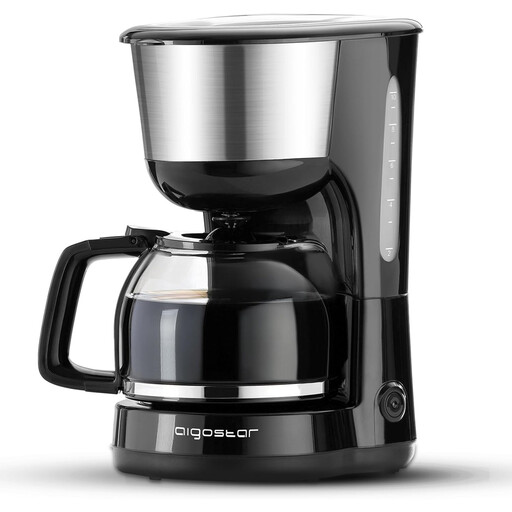
Why this product suits the profile: This automatic filter machine offers a manageable size for smaller households and straightforward everyday operation.
The details for 1.25 litres, 30 minutes of keep-warm time and 40 minutes until switch-off make the operating time easy to understand.
Glass carafe, drip stop, reusable filter mesh, plus overheat and dry-boil protection.
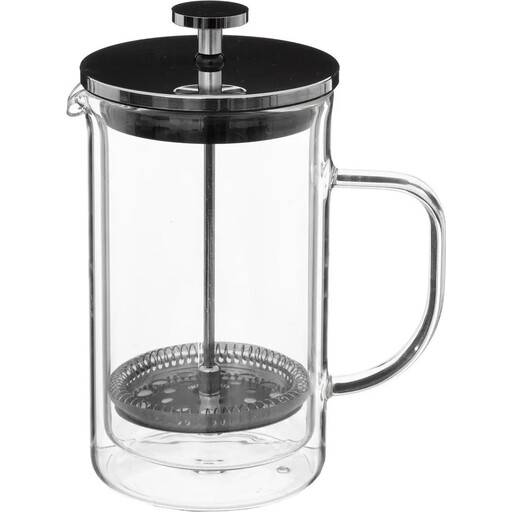
Why this product suits the profile: This French press is made from double-walled borosilicate glass and is designed for people who want to prepare coffee without electrical equipment.
The product details clearly distinguish between dishwasher-safe glass and the other parts, which must be cleaned by hand.
600 ml capacity and double-walled glass for longer heat retention, according to the product description.
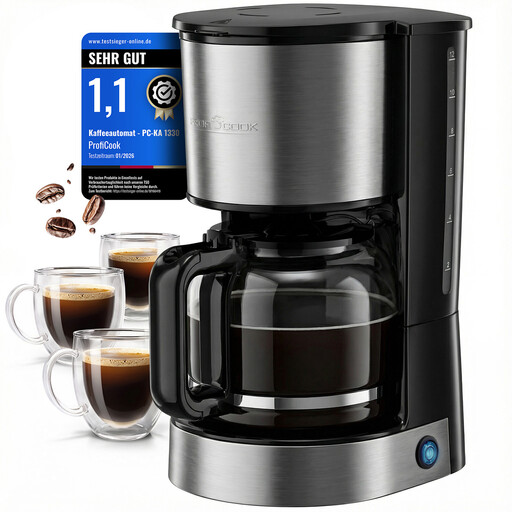
Why this product suits the profile: With approximately 1.5 litres and a stated capacity of twelve to fourteen cups, this model is aimed at larger households and offices.
The fill-level indicator, drip stop and automatic switch-off make it easier to monitor brewing and keeping the coffee warm.
1.5-litre glass carafe, 800-W heating element and hotplate with automatic switch-off, according to the manufacturer’s details.
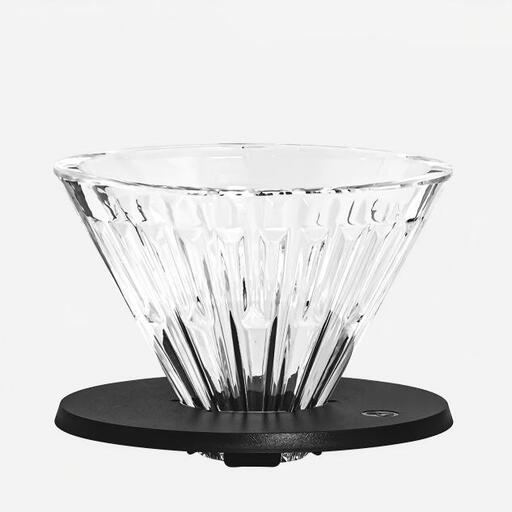
Why this product suits the profile: This dripper is designed for one to two cups and suits people who want to measure and brew pour-over coffee manually.
The stated serving size prevents a small pour-over filter from being mistakenly planned for larger groups.
Borosilicate glass and concave ridges are listed as design features in the product name.
We have put together a complete, regularly updated list of products that fully meet these strict selection criteria and the safety regulations applicable in the EU.
This depends on the markings on the carafe and the portion definition used for the particular model. For a small household, 600 to 750 ml may be sufficient. For several people or an office, models with capacities of 1.25 to 1.5 litres are more practical. You should also check the stated cup and mug capacities.
Not every glass coffee carafe can be placed fully in the dishwasher. The material, handle, lid and seals are all important. In the product description, look specifically for the term “dishwasher-safe” and for any restrictions applying to individual components. Strong changes in temperature should be avoided with glass.
A filter machine using paper filters creates regular costs for filter paper and coffee grounds. A reusable filter mesh reduces the need for paper filters, but must be cleaned after every use. Pour-over drippers and French presses generally do not require electricity; with a French press, however, replacement parts such as the filter or seal may become relevant. The actual ongoing costs depend mainly on the amount of coffee used, grind size and frequency of use.