
Lieferung heute & morgen

Qualitätsgarantie

Willkommens-Angebote freischalten: KOSTENLOSE Lieferung | Bis zu 80 % RABATT | Kostenlose 30-Tage-JoyPlus-Testphase
App herunterladen
Whether you prefer ground coffee in the morning, Italian coffee from a portafilter machine or a cappuccino at the touch of a button, there is a huge choice of coffee and coffee machines. However, many purchasing decisions go wrong not because of taste, but because features are incorrectly assessed. For example, a high bar rating does not automatically mean that every machine is suitable for your needs. Even inexpensive capsule systems can become more costly than expected due to ongoing expenses and limited compatibility.
This buying guide explains which criteria matter when choosing coffee beans, espresso, ground coffee and coffee machines for the home, office or when you are out and about.
Espresso machine manufacturers often advertise 15 or 20 bar. This figure usually refers to the maximum pump pressure. However, several factors are important for the actual brewing process: the brewing temperature, even water distribution, grind size and dosage. A 20-bar machine is therefore not automatically more suitable than a 15-bar model.
A capsule coffee machine may support different systems, but the capsules are not interchangeable. Before buying, check whether the appliance works with your preferred capsule types, ESE pods or ground coffee. Adapters can also create additional cleaning work.
Milk systems, brewing units, water tanks and drip trays require regular care. With a bean-to-cup machine, descaling intervals and the cost of coffee beans, filters or cleaning tablets also form part of the ongoing expenses. A portafilter machine also requires a separate grinder if you want to grind coffee beans fresh.
The right machine depends first and foremost on your preferred coffee format:
A sufficiently large water tank and bean hopper are useful if several people will be using the machine. However, a compact appliance with a 600 ml tank may be more suitable for a small household or an office with limited worktop space. Before buying, measure not only the width but also the depth and the clearance above the appliance, as water tanks and bean hoppers are often removed from the top.
A coffee machine with milk frother expands your choice of drinks, but requires more care than a machine without a milk system. Look for removable milk containers, automatic rinsing programmes and easily accessible components. A steam wand on a portafilter machine offers flexibility, but requires practice and manual cleaning after use.
The following products meet a range of different requirements. Technical specifications are based on the respective product descriptions.
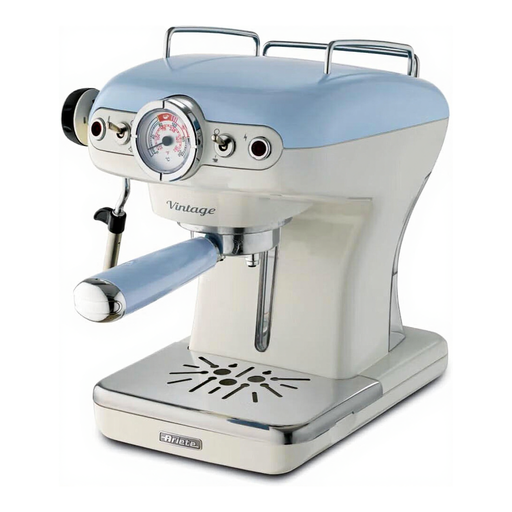
Why this product suits this profile: This espresso machine works with ground coffee and ESE pods, and prepares one or two cups. This keeps your coffee format options flexible without requiring a bean-to-cup machine.
Using ESE pods or ground coffee reduces your reliance on a single capsule system. The removable 0.9-litre water tank and drip tray make maintenance easier.
15-bar pump, Maxi-Cappuccino steam wand and filters for 1–2 cups; the product variant also specifies an automatic switch-off function.
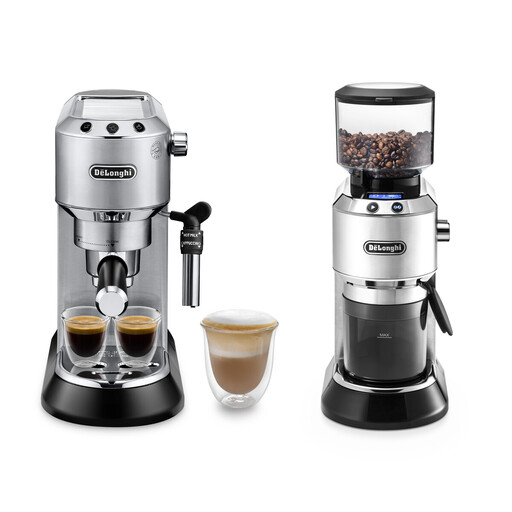
Why this product suits this profile: This set combines a slim portafilter machine with a separate coffee grinder and accessories for preparing espresso manually at home.
The grinder offers 18 grind-size settings. This allows you to adjust the grind to suit the beans, drink and brewing method, rather than relying solely on pre-ground coffee.
15-bar pump, thermoblock heating system, adjustable milk-frothing nozzle and metal housing; the set includes, among other things, a tamper, milk jug and knock box.
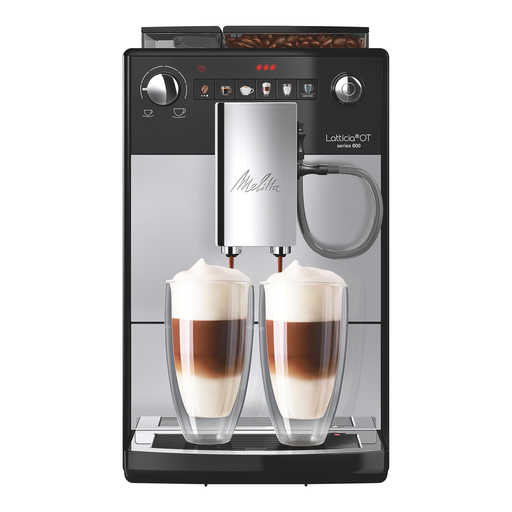
Why this product suits this profile: For households or offices with regular demand, this bean-to-cup machine offers one-touch functions and a Latteperfection milk system.
The removable brewing unit, together with the automatic cleaning and descaling programmes, makes regular maintenance easier to plan.
1.5-litre water tank, 250-gram bean hopper, two cups at once and height-adjustable spout.
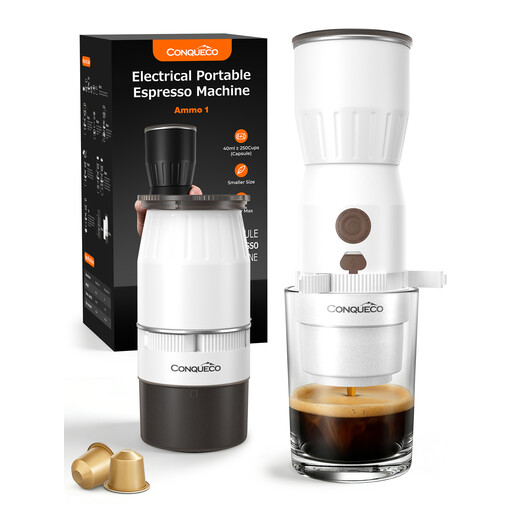
Why this product suits this profile: This portable espresso machine is designed for use on the go and, according to the product name, supports ground coffee and NS capsules.
The product description explicitly states that the machine has no self-heating function. You will therefore need to plan a suitable source of hot water when using it.
160-ml cup capacity and battery operation; suitable for situations where a traditional espresso machine is not available.
For a portafilter machine, espresso blends with a grind size suited to the machine are a good choice. According to the product information, Lavazza Crema e Gusto Classico consists of 70% Robusta and 30% Arabica and is described as a strongly roasted blend. Lavazza Qualità Oro is specified as 100% Arabica. Bialetti Perfetto Moka Pregiato is also listed as a 100% Arabica coffee with a light roast and an intensity rating of 5.
For filter coffee, a mild ground coffee such as Dallmayr Prodomo Mild may be suitable. If you prefer to grind your coffee fresh, match the coffee beans to the grinder settings. With ESE pods, make sure that the espresso machine’s filter holder explicitly supports this format.
We have put together a complete, regularly updated list of products that fully meet these strict selection criteria and the safety regulations applicable in the EU.
In addition to the purchase price, you should factor in coffee, electricity, water filters and cleaning products. Capsule machines can result in higher running costs when used every day, while bean-to-cup machines use coffee beans and require regular maintenance. Compare the cost per cup, not just the price of the appliance.
Service life depends on usage, water hardness, maintenance and the availability of spare parts. Regular descaling in line with the manufacturer’s instructions, emptying the drip tray and cleaning the brewing unit or milk system can help maintain reliable operation. A machine’s general durability cannot be determined from its bar rating.
A portafilter machine with a milk frother gives you manual control over both espresso and milk froth. A bean-to-cup machine with a one-touch milk system is more convenient if you want to prepare several drinks quickly. The key considerations are your cleaning routine, tank capacity and the level of control you want over grind size and milk texture.