
Lieferung heute & morgen

Qualitätsgarantie

Willkommens-Angebote freischalten: KOSTENLOSE Lieferung | Bis zu 80 % RABATT | Kostenlose 30-Tage-JoyPlus-Testphase
App herunterladen
A coffee machine for your home or office should suit your everyday needs. However, anyone who focuses only on the bar rating, design or a low price can easily overlook important ongoing costs and limitations. Three purchasing pitfalls in particular often lead to disappointment: an unsuitable brewing method, insufficient capacity and components that are difficult to access during cleaning.
Espresso machine manufacturers often advertise 15 or 20 bar. This figure primarily describes the maximum possible pump pressure. The result also depends on the grind size, amount of coffee, water temperature, brewing time and how evenly the coffee grounds are tamped. A coffee machine with 20 bar is therefore not automatically more suitable for every user than a model with a lower stated pressure.
Pressure is also prominently advertised for capsule machines. Here, however, capsule compatibility is the key consideration. A Nespresso Original machine, such as the CitiZ or Essenza Mini, is designed for the relevant capsule system. Third-party capsules will not necessarily fit reliably.
A large coffee machine does not just take up more space on the worktop. The water tank, bean hopper and glass carafe must also remain easy to access in everyday use. For a small kitchen, a compact coffee machine with a capacity of 0.6 or 0.9 litres may be more practical than a larger appliance.
With a filter coffee machine, carafe capacity is more important. According to the product details, the Aigostar model holds 1.25 litres and is designed for approximately five to seven standard cups. A smaller machine with a capacity of 600 or 750 millilitres, on the other hand, is more suitable for individuals or a small office.
Coffee oils, milk residue and damp coffee grounds can put strain on components and cause unpleasant odours. Before buying, check the following:
A coffee machine with a milk frother offers more drink options, but requires regular care of the steam wand, milk container or tubing. With a French press or moka pot, cleaning is easier, but preparation is manual.
The manufacturer’s stated number of “cups” does not always mean a large mug of coffee. With a moka pot, for example, three cups correspond to only around 130 millilitres of prepared coffee in the Bialetti Moka Express. For six small portions, the Secret de Gourmet aluminium moka pot offers a capacity of approximately 300 millilitres.
The following guidelines can help you plan for your daily needs:
Look for automatic shut-off, a stable base and a sufficiently long power cable. Appliances for German households should be designed for 220–240 volts. Follow the manufacturer’s instructions when handling hot surfaces, steam and glass containers.
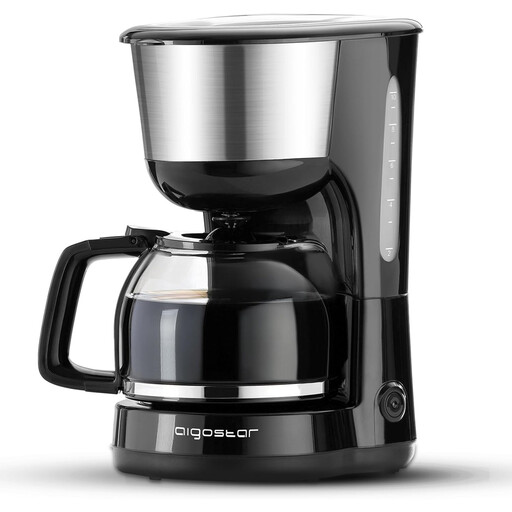
Why this product suits the profile: Automatic filter brewing is ideal for preparing several cups without complicated settings.
The stated 1.25-litre capacity reduces the need for frequent refilling. The washable filter eliminates ongoing paper filter purchases.
Glass carafe, drip-stop function, 30-minute keep-warm function and automatic shut-off.
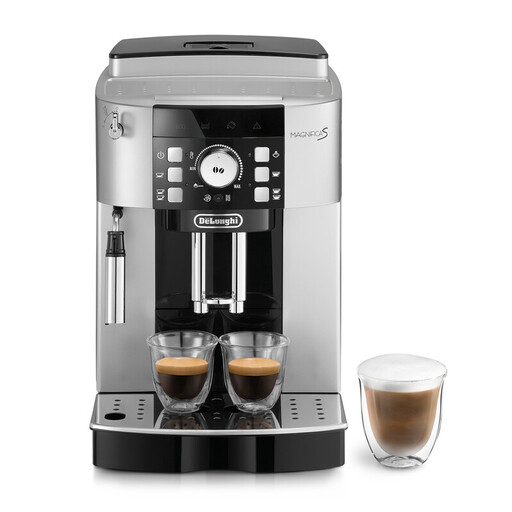
Why this product suits the profile: This bean-to-cup machine combines bean grinding, adjustable quantities and a hot-water function in one appliance.
The 1.8-litre water tank and 250-gram bean hopper are designed for regular use. The removable brewing unit makes maintenance easier.
13-setting conical grinder, programmable coffee and water quantities, plus a milk frother.
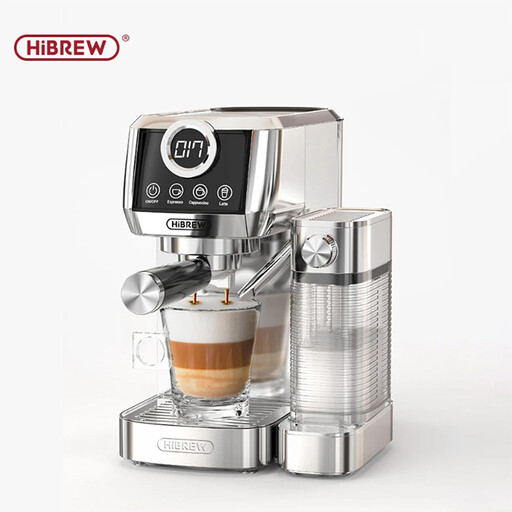
Why this product suits the profile: This semi-automatic espresso machine is aimed at users who want to prepare espresso, cappuccino and latte with ground coffee.
The choice of different modes and three temperature settings makes operation adaptable without tying you to a capsule system.
20-bar pump rating, 1.3-litre water tank, 700-millilitre milk container and dual-boiler specification.
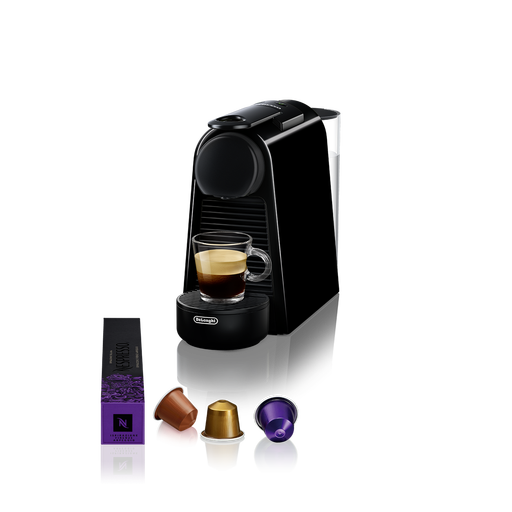
Why this product suits the profile: Its slim design and two programmable cup sizes are ideal for small kitchens and quick preparation.
According to the product details, its footprint measures 11 × 20.5 × 32.5 centimetres. However, the capsule system limits your choice to compatible capsules.
0.6-litre water tank, stated heating time of approximately 25 seconds and automatic shut-off.
We have put together a complete, regularly updated list of products that fully meet these strict selection criteria and the safety regulations applicable in the EU.
A compact capsule machine usually requires very little worktop space. A small filter coffee machine or a French press may also be a practical choice. In addition to the appliance’s dimensions, check whether the water tank can be removed from the side or upwards. An appliance should not be placed under a wall unit if the tank can only be removed from above.
Its lifespan depends on usage, water hardness, cleaning and construction. Descale electrical appliances according to the operating instructions and remove coffee residue regularly. With a bean-to-cup machine, the brewing unit, milk system and coffee grounds container also require routine care. A moka pot should be washed by hand once it has cooled and dried thoroughly.
A French press and a moka pot do not require capsules and generally only need ground coffee. A filter coffee machine with a reusable filter eliminates the need for paper filters. With a capsule machine, consider the cost per portion and how the relevant system is recycled. In addition to beans, a bean-to-cup machine involves regular costs for descaler, cleaning products and, where applicable, water filters.