
Lieferung heute & morgen

Qualitätsgarantie

Willkommens-Angebote freischalten: KOSTENLOSE Lieferung | Bis zu 80 % RABATT | Kostenlose 30-Tage-JoyPlus-Testphase
App herunterladen
The right coffee machine should do more than complement your kitchen visually. Brewing method, capacity, cleaning requirements, footprint and the level of control you want over your coffee all matter. A single-person household has different needs from a family or office.
Many purchasing decisions are shaped by marketing claims that explain technical specifications only partially. The following points help you compare models objectively and avoid common mistakes.
Espresso machines often prominently advertise 15 bar or 20 bar pressure. This figure generally refers to the pump’s maximum pressure. However, grind size, coffee dose, tamping pressure, water temperature and portafilter design also influence the actual brewing process.
A 15-bar coffee machine or 20-bar espresso machine may therefore offer suitable technical specifications, but pressure alone is not a meaningful basis for evaluation. Also consider ease of use, water tank capacity, steam wand and cleaning options.
A stated cup capacity does not always correspond to a large cup or mug. Filter coffee machines often use smaller serving sizes as their reference. For example, a 10-cup machine may have a capacity of 1.25 litres.
Always check the water tank or carafe capacity in litres. For an office or larger household, 1.2 to 1.5 litres is often more practical. Singles and smaller kitchens are generally better served by a compact coffee machine with a capacity of around 0.5 litres.
An integrated grinder, milk frother or automatic milk system expands the range of drinks available. At the same time, these features add components that need to be emptied, rinsed or descaled regularly.
With a coffee machine with grinder, consider the grind settings, bean hopper and access to the grinder. For a coffee machine with milk frother, removable components and an easily accessible steam outlet are particularly important.
A filter coffee machine is a good choice when you want to prepare several cups in a single brewing cycle. Check the following:
A portafilter machine is designed for people who want to control grind size, dosage and extraction time themselves. It does require some practice and usually a separate coffee grinder if no grinder is integrated.
Before buying, pay attention to the following parameters:
A fully automatic coffee machine grinds beans, brews coffee and, depending on the model, prepares milk-based drinks at the touch of a button. Pay attention to the bean hopper capacity, water capacity, number of drink programmes and whether the brewing unit can be removed.
For multiple users, saved profiles and a two-cup function are useful. An automatic milk system should be cleaned after every use in accordance with the manufacturer’s instructions. If you mainly drink black coffee, you may not need a complex milk module.
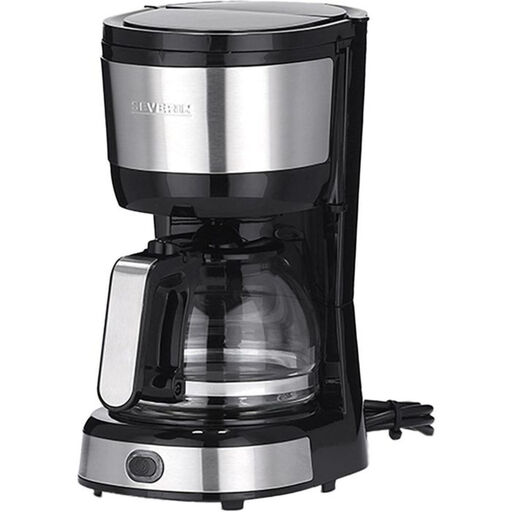
Why it suits this profile: Ideal for singles, small households or travellers who want to prepare up to four cups of filter coffee while keeping their worktop clear.
The 500 ml capacity is clearly specified. The permanent swing-out filter eliminates the need for ongoing paper filter purchases; drip stop and automatic shut-off are also included.
750 watts, water-level indicator, cable storage and keep-warm function in a machine approximately 14 cm wide.

Why it suits this profile: For users who want to combine freshly ground beans, hands-on control and touchscreen operation.
The conical grinder, dosage control and adjustable parameters provide a more meaningful picture of the machine’s capabilities than a pressure rating alone.
2-litre water tank, integrated milk frother, five programmes and memory slots for up to eight individual settings.
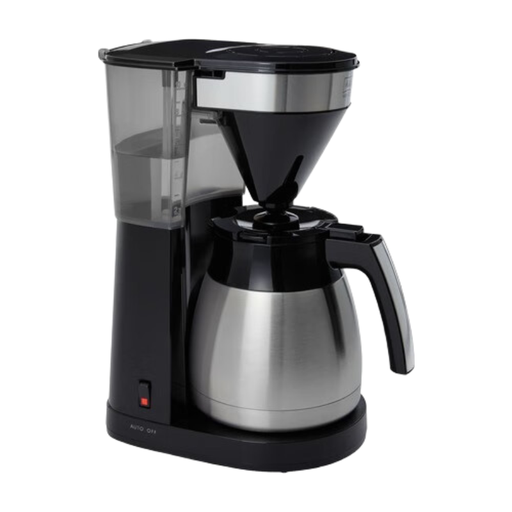
Why it suits this profile: For households and teams that need up to 10 cups, or 1.25 litres, of filter coffee in a thermal carafe.
The litre capacity is listed alongside the cup count. The filter holder is removable and, according to the product specifications, dishwasher-safe.
Double-walled stainless-steel carafe, Easy-Click lid, drip stop, automatic shut-off and external water-level indicator.
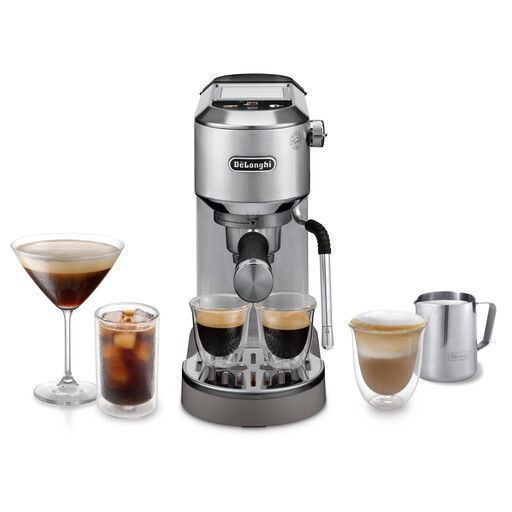
Why it suits this profile: For smaller kitchens and households that want to prepare espresso, cold brew and milk-based drinks with a manual steam wand.
The machine specifies 15 bar pump pressure, a 1.1-litre water tank and a width of 14.9 cm. This makes the relevant footprint and capacity details easy to verify.
Thermoblock heating system, automatic descaling indicator, ESE pod compatibility and adjustable drip tray.
Our complete selection includes coffee machines in a range of designs, capacities and feature sets for households and offices in Germany.
Power consumption depends on wattage, brewing time and the duration of the keep-warm period. A hotplate continues to use energy while operating; a thermal carafe can reduce the amount of time the coffee needs to be kept warm. Every machine also involves ongoing costs for beans or ground coffee, paper filters, descaler and, where applicable, water filters.
Descale the machine according to the water hardness in your area and the manufacturer’s recommendations. In regions with hard tap water, more frequent maintenance may be necessary. Milk systems should be cleaned after every use. Use only suitable cleaning and descaling products, following the procedure specified in the manual.
For an office, a large filter coffee machine with a capacity of 1.2 to 1.5 litres or a fully automatic coffee machine with a large water tank and bean hopper is an obvious choice. Usage frequency, cleaning requirements and whether several people want to select personalised drinks are the key considerations.
A fixed service life cannot be guaranteed. It depends on the machine type, usage, water quality and maintenance. Regular descaling, emptying collection containers and cleaning removable components can help preserve the machine’s intended performance for longer.
That depends on serving size, bean prices, beverage volume and power consumption. Filter coffee is often easier to budget for when preparing several cups. A fully automatic machine offers greater variety, but it also includes additional components and maintenance procedures. Compare not only the purchase price, but also consumables and maintenance requirements.