
Lieferung heute & morgen

Qualitätsgarantie

Willkommens-Angebote freischalten: KOSTENLOSE Lieferung | Bis zu 80 % RABATT | Kostenlose 30-Tage-JoyPlus-Testphase
App herunterladen
A coffee mug needs to do more than simply hold a hot drink. It should feel comfortable to hold, suit your existing tableware and offer the capacity you need. Unclear product details, unsuitable materials or impractical designs can quickly lead to a purchase you regret.
These are the three most common pitfalls:
Ceramic mugs and stoneware are suitable for many homes, offices and hospitality settings. They’re sturdy and available in a range of sizes and glazes. Don’t continue using a mug if it has visible cracks, chips or damaged glaze.
Glass offers a transparent look and, depending on the design, can be used for hot or cold drinks. Double-walled glasses can help insulate the outside from the drink. Even so, always check whether the specific model is suitable for hot liquids, the microwave or the dishwasher.
Look for clear, verifiable manufacturer information about whether a product is suitable for contact with food. In the EU, Regulation (EC) No 1935/2004, among other legislation, applies to products that come into contact with food. This information doesn’t replace checking the individual product carefully, but it does provide useful guidance.
A classic coffee usually needs around 200 to 300 ml. If you prefer milky coffee, tea or larger servings, use these sizes as a guide:
A 400 ml coffee mug is a practical middle ground for many people. For a household with several people or a meeting room, a set of coffee mugs with four or six matching pieces can make it easier to top up your supply.
If you use your mug regularly, look for clear care instructions. Dishwasher-safe mugs make cleaning easier, while microwave-safe mugs let you reheat coffee or tea. However, both features depend on the specific product, so don’t assume they’re suitable based on the material alone.
Even with ceramic or glass products approved for these uses:
For mugs for the office and home, stackable shapes, a secure handle and clearly stated capacity are also worth considering.
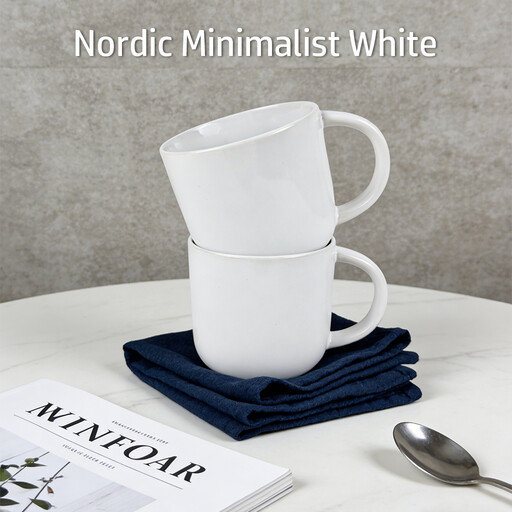
Why this product suits this profile: Four white ceramic mugs, each with a 415 ml capacity, are a good fit for households, small offices or shared breakfasts. Their matching look makes them easy to pair with your existing tableware.
The capacity, number of mugs and care instructions are clearly stated. According to the product details, the set is microwave- and dishwasher-safe.
415 ml capacity, four matching mugs, a white design and lead-free ceramic, according to the product description.
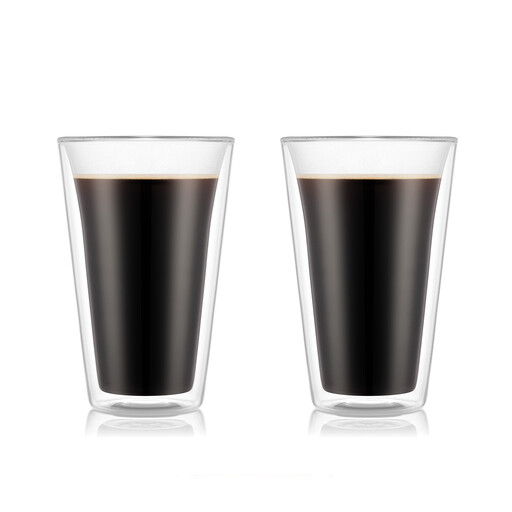
Why this product suits this profile: This set of two is designed for anyone who wants to serve coffee and tea in transparent, double-walled glasses.
The double-walled design offers a way to enjoy the look of a visible drink without compromising on comfortable handling. Check the product details for the specific temperature limits before buying.
Two glasses with a 0.4 l capacity, with a double-walled design for hot and cold drinks, according to the product description.
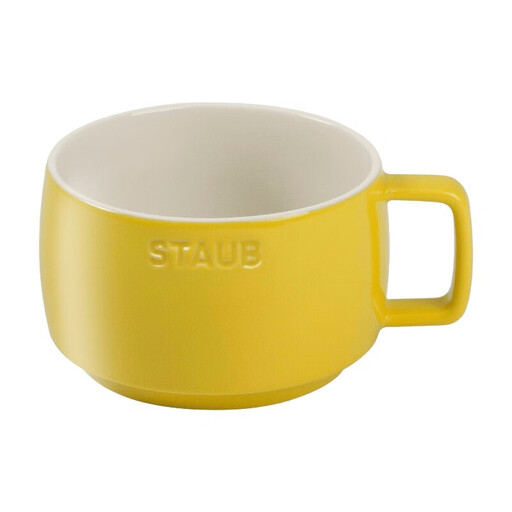
Why this product suits this profile: This 500 ml mug is made for generous servings of tea or hot chocolate, as well as other uses such as individual oven-baked dishes.
Its suitability for use in the microwave, oven and dishwasher is clearly explained. However, avoid sudden temperature changes and direct heat sources.
500 ml capacity, ceramic construction and an ergonomic handle, plus oven, microwave and dishwasher suitability according to the product details.
We’ve put together a complete, regularly updated list of products that meet these strict selection criteria and fully comply with the safety regulations in force in the EU.
Yes, this size works well for large coffees, milky coffee, tea or hot chocolate. The key is whether 400 ml refers to the maximum capacity or the amount the mug is designed to hold in practice. For everyday use, you’ll want to leave a little room for stirring and carrying.
It depends on the individual model. Ceramic mugs with the relevant manufacturer’s instructions are often suitable for both. Check the product description especially carefully for glass, decorative finishes, metallic details or double-walled designs.
There’s no single answer. A mug’s lifespan depends on its material, glaze, cleaning cycle, knocks and changes in temperature. For safety reasons, stop using any mug that’s damaged.