Pour-over drinkers short on time in the morning
When I make coffee before work, I want to keep an eye on the amount of coffee and the brewing time without using a separate timer.


If you’re simply portioning out beans or ground coffee in the morning, focus on the tare function, readability and increments in the weight range that matters to you. You don’t necessarily need a built-in timer. A timer is handy when you’re making pour-over coffee on the scales, as long as the platform and capacity can accommodate your vessel and the full brewing setup. An stated increment of 0.1 g alone doesn’t prove independently measured accuracy.
When I make coffee before work, I want to keep an eye on the amount of coffee and the brewing time without using a separate timer.
When I weigh out beans or ground coffee for one serving, the tare function and an easy-to-use weighing function matter more to me than extra brewing modes.
When I make espresso or have limited worktop space, I make sure the scales and vessel will fit together in the space available.
A good fit if: You portion out beans or ground coffee in advance and time the brewing separately.
The trade-off: Without a built-in brewing timer, they’re less convenient for timed pour-over; with the Beurer KS 36, you should also bear in mind its small weighing platform.
A good fit if: You want to monitor both the coffee and the water you pour on the same scales when making pour-over.
The trade-off: Check that your jug, filter and water fit on the platform and stay within the maximum load.
A good fit if: You make espresso or weigh coffee on a small worktop. TIMEMORE describes the Basic 2.0 as having brewing functions, while Acaia positions the Lunar as espresso scales.
The trade-off: A small platform may not suit a larger jug. Extra features don’t offer a general benefit if you only portion coffee in advance.
| Priority | What to check when buying | Who is this most relevant to? |
|---|---|---|
| Amount and brewing time when making pour-over | Check the timer, tare function, platform size and capacity against your complete brewing setup. | When I make pour-over before work, I want to keep an eye on the amount of coffee and brewing time on the same scales. Around 36% of consumers would prioritise monitoring the amount and brewing time when making pour-over. |
| Portioning small amounts of coffee | Compare the increments, stated start or minimum weight, and tare function with your usual serving size. | When portioning in advance, I want to weigh beans or ground coffee using the tare function and check the increments in the relevant weight range. Around 29% of consumers would rank dosing as their top priority. |
| Weighing other ingredients too | Take into account the capacity, including the vessel, and the usable platform area. | If I want to use the same scales for other ingredients, capacity and enough space matter to me. Around 21% of consumers would prioritise versatile kitchen use. |
| Space and power supply | Measure the base of your vessel and the platform, and check the batteries or charging options. | When space is limited, I want to check before buying that the vessel and scales will fit together, and that using batteries or charging will suit my morning routine. Around 14% of consumers would place the greatest importance on space or power supply. |
The increments describe the weight steps shown on the display, not the result of an independent accuracy test. The instructions for the Tchibo coffee scales also specify a starting weight of 1 g.
Compare the increments and stated measuring range separately, and check that both suit your usual serving size.
The vessel, filter and poured water all add to the load on the scales. Tchibo states that its coffee scales have a maximum load of 3 kg; according to Beurer, the KS 36 has a smaller weighing platform.
Before buying, check the base of your vessel, the platform and the maximum permitted load.
A timer and flow-rate display are for the brewing process. If you only prepare beans or ground coffee, scales with a tare function may already offer everything you need.
First decide whether you’ll brew directly on the scales or simply weigh out a portion.
According to Tchibo, its coffee scales with timer are designed for pour-over and jug brewing, as well as weighing other food.
According to Beurer, the KS 36 is a precision scale for small quantities of ingredients, suited to those who prioritise portioning in advance over a built-in brewing timer.
The V60 Drip Scale VSTN-2000B combines weighing and timing for pour-over coffee.
According to TIMEMORE, the Basic 2.0 is worth considering if you want brewing functions as well as weighing.
Acaia specifically positions the Lunar as compact espresso scales.
This selection includes coffee scales for pour-over and espresso, with weighing functions and, depending on the model, features to monitor the brewing process.
 No image available
For pour-over drinkers who want to monitor water flow as well as weight while pouring.
The product name lists a timer, water flow rate, coffee-to-water ratio and a switch between ounces and kg.
 No image available
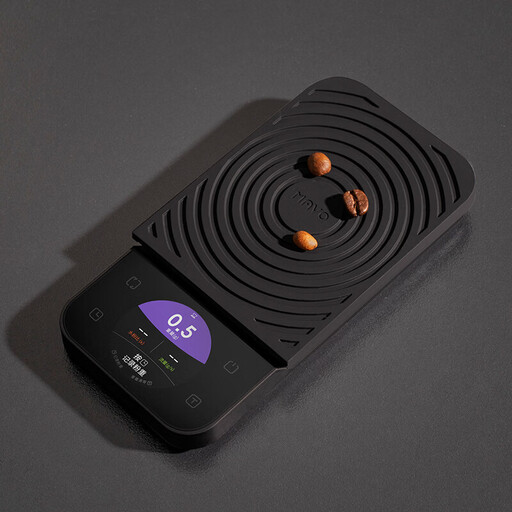
For pour-over or espresso, if you want to keep an eye on time and water flow while brewing.
The product name lists a timer, water flow rate, coffee-to-water ratio and a switch between ounces and kg.
 No image available
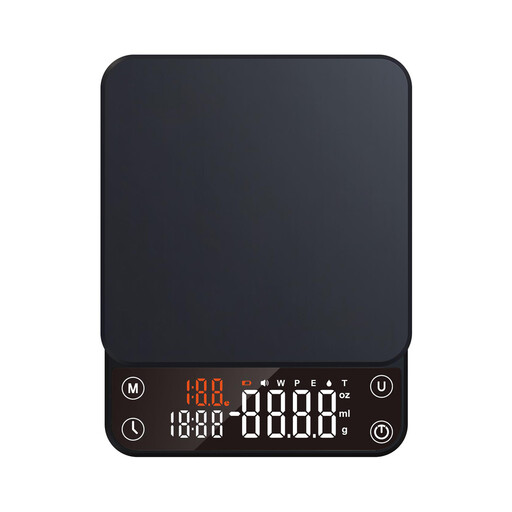
For anyone looking for digital scales for making pour-over coffee.
The product name describes it as digital coffee and kitchen scales for pour-over.
 No image available
For anyone looking for scales with several brewing modes and a rechargeable battery.
The product name lists an LED display, timer, ratio and volume display, as well as auto-tare and a rechargeable battery. According to the product details, the maximum capacity is 3,000 g; do not immerse the scales in water.
 No image available
For pour-over drinkers who want to track weight and brewing time on compact scales.
The product details list 0.1 g increments, a capacity of 2,000 g, an automatic timer, a flow-rate function and USB-C charging. Do not immerse in water; clean with a damp cloth, as instructed.
Yes, as long as they display your portion in the stated measuring range using increments that work for you, and your vessel fits on the platform. Beurer lists a tare function and 0.1 g increments for the KS 36; this does not mean its absolute accuracy has been independently verified.
Put your vessel on a flat surface, tare the scales and weigh out the coffee. If the brewing setup stays on the scales, you can tare them again before pouring if needed, then use the timer. Make sure you stay within the maximum permitted load. Tchibo describes a tare function and stopwatch for its coffee scales, and gives a maximum load of 3 kg.
According to Tchibo, its coffee scales use two AAA batteries; the manufacturer lists a rechargeable battery for the TIMEMORE Basic 2.0. Depending on the model, plan for battery replacements or regular charging, and follow the instructions for your model when cleaning it or dealing with moisture.
Your statutory rights for faulty goods are against the seller and are separate from any voluntary guarantee. If a fault occurs, the first step may be a repair or replacement. The Verbraucherzentrale explains that the seller is responsible for the necessary transport, labour and material costs.
No. Under the German disposal rules explained by the Federal Environment Agency, electrical waste must not go in household rubbish; local collection points accept it free of charge. Remove any batteries that can be taken out before handing in the scales, and dispose of them at a battery collection point.