
Lieferung heute & morgen

Qualitätsgarantie

Willkommens-Angebote freischalten: KOSTENLOSE Lieferung | Bis zu 80 % RABATT | Kostenlose 30-Tage-JoyPlus-Testphase
App herunterladen
A coffee table is often the centerpiece of the living room. It's more than just a surface for remote controls and drinks; it unifies the seating area, makes a style statement, and can serve practical purposes. However, choosing the right model can be a challenge given the variety of shapes, materials, and features available. This guide is designed to help you make an informed decision by presenting objective criteria and a selection of models for different needs.
Before you decide on a model, it's helpful to consider a few fundamental aspects. These considerations will ensure that the table not only looks great but also fits your home functionally.
The most important question is: what will you primarily use the table for? Will it serve purely as a surface, or do you need additional features? A coffee table with storage, whether through drawers or open compartments, helps maintain an uncluttered space. For those who occasionally work on a laptop or eat on the sofa, a height-adjustable coffee table is a particularly practical solution.
The size of the table should be proportionate to your seating and the room. A common recommendation is that the coffee table should be about the same height as your sofa's seat (usually 40–50 cm). Ideally, its length should be about two-thirds of the sofa's length. Plan for enough space around it—about 45 cm from the sofa for ample legroom.
The material determines not only the look but also the durability and maintenance required. A modern living room table might be made from a combination of metal and engineered wood, while a designer coffee table often features unique shapes or materials like glass or a striking marble-effect coffee table top.
A round coffee table can be a great choice for smaller rooms, as it appears less bulky and has no hard corners, which can be an advantage in households with children. Pay attention to the surface finish: lacquered or coated surfaces are generally easier to maintain than untreated solid wood.
Here, we present three models that stand out for their distinct features and cater to different needs.
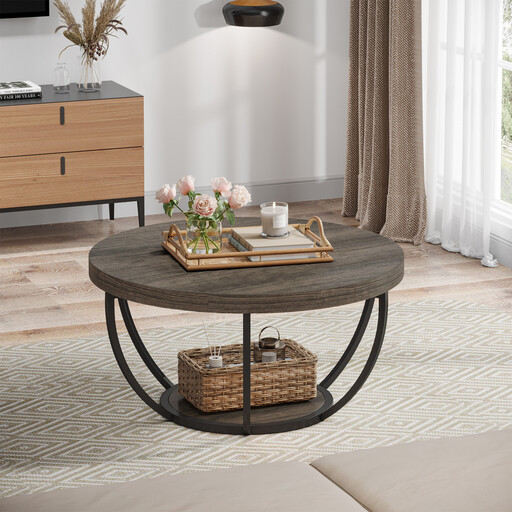
What Makes This Model Stand Out This round coffee table from Tribesigns combines a clean, modern design with high functionality. The second tier offers generous storage space for magazines, books, or baskets, helping to keep the main tabletop clear and tidy.
Advantages
Who is this model for? This model is ideal for those looking for a practical yet stylish coffee table. It fits well in living rooms, offices, or reception areas where additional, easily accessible storage is needed.

What Makes This Model Stand Out This designer coffee table stands out with its unusual, flower-shaped tabletop and elegant marble-effect coffee table finish. It is a clear statement piece that combines functionality with artistic flair.
Advantages
Who is this model for? This model is aimed at style-conscious buyers looking for a focal point for their living room. It's an excellent choice for anyone who wants a piece of furniture that functions as both a table and a decorative element.

What Makes This Model Stand Out This height-adjustable coffee table from URBAN MEUBLE is a prime example of multifunctional furniture. The tabletop can be lifted, transforming the coffee table into a raised work or dining surface.
Advantages
Who is this model for? This model is the solution for anyone who wants to flexibly work, eat, and live in their living room. It is especially suitable for smaller apartments where furniture must serve multiple functions, or for anyone who appreciates the comfort of a raised table surface.
The models presented here offer a glimpse into the variety of coffee tables available. If you want to explore more designs and features, you can find a wider selection in our category.
? Explore more models, like the contemporary round coffee table with storage, here.
The ideal height for a coffee table is based on the seat height of your sofa. As a rule, the tabletop should be at the same level as or a few centimetres below the seat cushions, which usually corresponds to a height of 40 to 50 cm. A height-adjustable coffee table offers the greatest flexibility, as it can be adapted to different situations.
For comfortable use, the distance between the edge of the sofa and the coffee table should be about 40 to 50 cm. This ensures sufficient legroom. A clearance of at least 75 cm should be left to other furniture or walls to allow for unimpeded movement in the room.
Materials with sealed, smooth surfaces are generally the easiest to clean. This includes tables made of engineered wood with a melamine or lacquer coating, metal, or tempered glass. Such surfaces can usually be wiped clean with a damp cloth. A marble-effect coffee table often features a low-maintenance coating that provides the look of real stone without its demanding upkeep.