
Lieferung heute & morgen

Qualitätsgarantie

Willkommens-Angebote freischalten: KOSTENLOSE Lieferung | Bis zu 80 % RABATT | Kostenlose 30-Tage-JoyPlus-Testphase
App herunterladen
A coffee machine should perform reliably in everyday use and suit your preferred brewing style. Anyone who drinks several cups a day will look for different features than someone who prepares espresso at the weekend or wants to froth milk manually for cappuccino. Fully automatic coffee machines, portafilter machines and automatic filter coffee makers differ significantly in terms of operation, cleaning and beverage preparation.
That is why searching for the “best coffee machine” does not automatically lead to the right appliance. The decisive factors are objective criteria such as the grinder, water tank, milk system, footprint and cleaning requirements.
Many espresso machines advertise 19 or 20 bar. However, you should not assess a machine solely by its maximum pressure rating. What matters is how consistently the water is passed through the coffee grounds during extraction. Pressure alone says little about grind size, dosage, temperature control or the result in the cup.
A 20-bar espresso machine may be appealing to beginners, but it should also offer intuitive controls, a suitable portafilter and an easily accessible steam wand.
A fully automatic coffee machine with a milk system often offers a wide range of recipes at the touch of a button. However, components that come into contact with milk must be rinsed and cleaned regularly. Check whether the milk container, brew group and drip tray can be removed, and whether automatic cleaning programmes are available.
A coffee machine with a grinder eliminates the need to purchase a separate grinder. Nevertheless, the number of grind settings, the size of the bean hopper and access for cleaning are all important. If you want to switch between different bean varieties, also look for separate hoppers or a compartment for pre-ground coffee.
Conical burr grinders are common in many fully automatic coffee machines and combination espresso machines. Multiple grind settings allow you to adjust the preparation for espresso or longer coffee drinks. For households with several coffee drinkers, a bean hopper holding around 250 grams or more is practical. Two separate bean hoppers, as found on the Melitta Barista T Smart, make it easier to switch between different varieties.
With a portafilter machine, the ground coffee is usually added separately. Here, the most important factors are a well-matched tamper, a sturdy portafilter and precise dosing.
A tank holding 1.1 to 1.2 litres may be sufficient for individuals. Families and shared households will generally benefit from 1.7 to 1.9 litres. Larger tanks reduce the need for refilling but require more space.
Before buying, measure the available footprint as well as the clearance above the machine. On a fully automatic coffee machine, the bean hopper and water tank often need to be opened from above or behind. Also consider the distance to the power socket and kitchen wall.
A coffee machine with a milk frother may feature a steam wand, an integrated milk container or a milk hose. A manual steam wand gives you greater control over milk foam consistency, but it requires practice. An automatic system is more convenient for everyday use, but it demands thorough cleaning after use.
Look for:
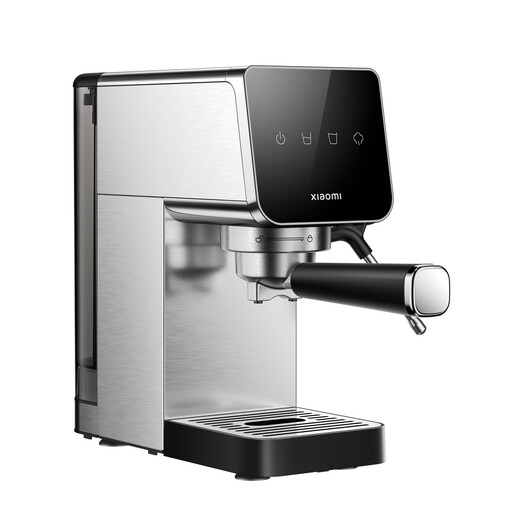
Why it suits this profile: This compact espresso machine is ideal for small kitchens and users who want to prepare espresso and milk-based drinks with manual control.
In addition to the 20-bar pump, the product specifications list NTC temperature control, a pre-infusion function and a separate steam attachment.
Compact design, 0.9-litre tank, single and double shots, plus a steam wand for milk frothing.
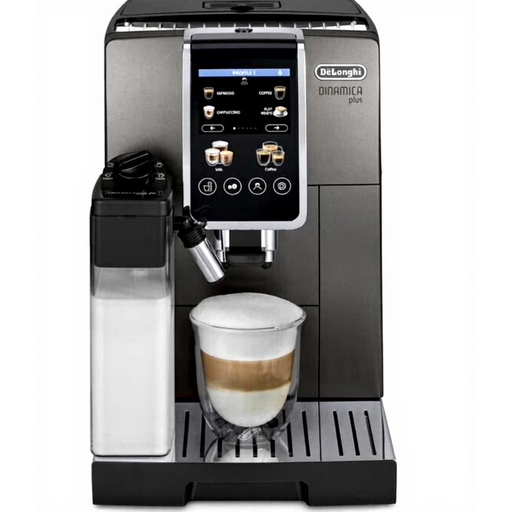
Why it suits this profile: Families and shared households get a fully automatic coffee machine with numerous one-touch beverages and multiple user profiles.
According to the product specifications, the automatic LatteCrema milk system rinses itself after every use. The milk components still require regular care.
24 recipes, a 1.8-litre water tank, a 300-gram bean hopper and up to four user profiles.
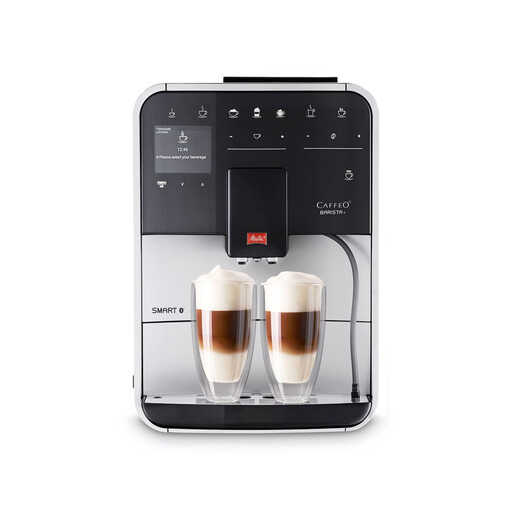
Why it suits this profile: Anyone who prepares a variety of coffee and milk-based drinks every day benefits from an extensive beverage selection and separate bean hoppers.
Alongside up to 18 beverages, the machine offers automatic rinsing, cleaning and descaling programmes. These features do not eliminate the need for regular maintenance.
Two bean hoppers holding 135 grams each, four user profiles, five grind settings and app control.
A portafilter machine is suited to users who want to handle dosing, tamping and milk frothing themselves. It offers greater control over the brewing process, but requires either a separate coffee grinder or an integrated grinder, as well as some time to master the technique.
A fully automatic coffee machine with a milk system takes care of grinding, dosing and brewing. This is convenient for preparing several cups a day and accommodating different beverage preferences. However, you should also consider operating noise, cleaning requirements and the ongoing cost of descaler and cleaning tablets.
A conventional automatic filter coffee maker is generally simpler to use and well suited to preparing larger quantities of black coffee. However, it should not be equated with an espresso machine in terms of its pressure system or brewing method.
Our complete selection makes it easier to compare coffee machines by design, features, cleaning functions and intended use.
Service life depends on usage, water quality and maintenance. Regular descaling, emptying the drip tray and cleaning the brew group or milk system can help ensure reliable operation over time. Warranty terms and the availability of replacement parts are also important factors.
In addition to electricity, you will need to budget for coffee beans, ground coffee, milk, water filters, cleaning products and descaler. Fully automatic machines may also require additional care products. For this reason, do not compare only the purchase price. Consider the tank capacity, maintenance requirements and consumables as well.
It can be a good choice if you want to prepare espresso manually and froth milk with a steam wand. However, a 20-bar rating alone does not guarantee a particular flavour profile. Grind size, coffee dosage, temperature, tamping pressure and regular cleaning must also be matched to the machine and the beans being used.