
Lieferung heute & morgen

Qualitätsgarantie

Willkommens-Angebote freischalten: KOSTENLOSE Lieferung | Bis zu 80 % RABATT | Kostenlose 30-Tage-JoyPlus-Testphase
App herunterladen
A coffee machine should work reliably every day, suit your preferred type of coffee and be easy to clean without too much effort. However, filter coffee machines, espresso machines, capsule machines and bean-to-cup machines differ considerably in terms of operation, ongoing costs and space requirements.
Many purchasing decisions do not fail because features are missing, but because promises are misjudged. If you focus only on high bar figures, a long list of programmes or an eye-catching casing, you can easily overlook important details.
Figures such as 15, 19 or 20 bar may sound meaningful. However, coffee preparation depends on the interaction between pressure, water temperature, grind size, coffee quantity and brewing time. A portafilter machine with multiple pressure settings is not automatically more suitable than a model with straightforward operation.
You should also check:
A coffee machine with a milk frother, integrated grinder and numerous drink options offers more possibilities, but it usually also requires more care. Milk lines, nozzles, drip trays and grinders need to be cleaned regularly. Automatic rinsing and descaling programmes reduce the workload, but they do not completely replace manual maintenance.
Look for removable components, clear operating instructions and – where specified by the manufacturer – dishwasher-safe parts.
With a compact coffee machine, you need to consider more than just its footprint. A water tank that is removed upwards can be impractical beneath wall units. The space in front of the machine is also important if you need to remove the portafilter or drip tray.
Before buying, measure:
A filter coffee machine is suitable for making several cups at once and is practical for households or offices with regular coffee requirements. Models such as the Braun KF47WH use a glass carafe, drip stop and a capacity of up to ten cups, according to the product specifications.
A capsule machine is designed for individual portions. According to the product description, the Nespresso CitiZ EN167.W takes around 25 seconds to heat up, offers two programmable cup sizes and has a 0.9-litre water tank. With a 0.6-litre water tank and compact dimensions of 11 × 20.5 × 32.5 cm, the Essenza Mini EN85.B is designed for smaller kitchens. With capsule systems, you should factor in long-term costs and the availability of compatible capsules.
If you want to prepare espresso, cappuccino and latte macchiato flexibly, you can choose an espresso machine, a bean-to-cup machine or a coffee machine for espresso and cappuccino. A portafilter machine requires more manual steps, but gives you greater control over dosing and extraction.
A coffee machine with a grinder grinds beans immediately before brewing. The number of grind settings is not the only relevant factor. You should also consider how easy the grinder is to clean, the size of the bean container and whether ground coffee can be added separately.
According to the manufacturer’s specifications, the Ninja Luxe Premier ES601EU has an integrated conical burr grinder with 25 grind settings, built-in scales and programmes for espresso, cold brew and filter coffee. Even with an integrated grinder, switching between different types of beans can still be less quick than with a separate appliance.
A coffee machine with a milk frother should suit the way you prefer to use it. A traditional steam wand gives you manual control, but requires practice and cleaning after every use. Automatic milk systems make drink preparation easier, but add extra tubes and containers.
Basic safety rules apply to every design: do not touch hot outlets or steam nozzles, disconnect the appliance from the mains before cleaning and only clean the parts specified in the instructions with water. Regular descaling is necessary, with water hardness and frequency of use affecting the intervals.
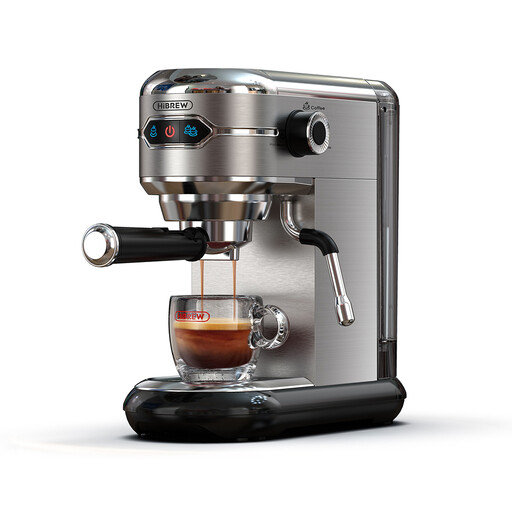
Why this product suits this profile: The semi-automatic espresso machine supports ground coffee and ESE pods, while its dimensions of 12 × 29 × 28.5 cm take up comparatively little space.
Alongside the 19-bar pump, the listed features include a removable 1.1-litre water tank, precise temperature control and automatic shut-off.
Three-hole steam nozzle, removable drip tray and a stated preheating time of 25 seconds.

Why this product suits this profile: If you are looking for several preparation methods in one appliance, the product data lists espresso, cold brew and filter coffee, as well as an integrated milk frother.
The specifications are clearly quantified: 25 grind settings, a 1.5-litre water tank and four milk-frothing settings.
Built-in scales, Barista Assist functions and accessories including a portafilter, tamper, cleaning kit and water hardness test.
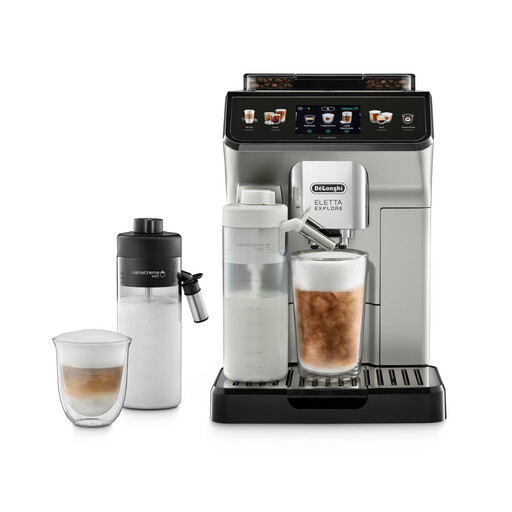
Why this product suits this profile: This bean-to-cup machine is designed for households with frequently changing drink preferences and, according to the product description, offers hot and cold milk drinks.
Maintenance is supported by automatic rinsing, cleaning and descaling programmes, as well as removable dishwasher-safe parts.
40 listed recipes, a 1.8-litre water tank, a 300-gram bean container and two milk systems for hot and cold preparation.
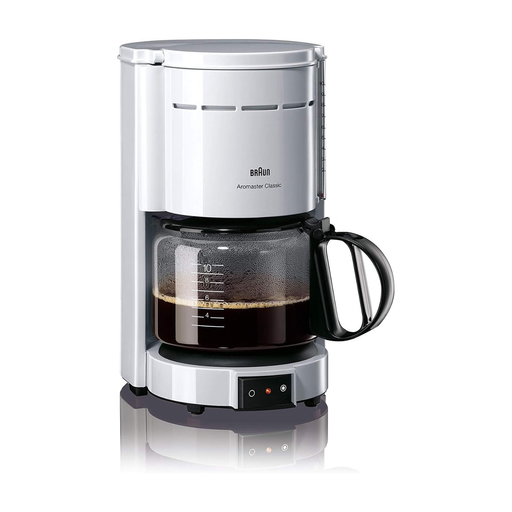
Why this product suits this profile: This filter coffee machine is designed for larger quantities and has a glass carafe with a stated capacity of ten cups.
Capacity, drip stop and automatic shut-off after 40 minutes are listed as specific features.
Removable filter basket, water-level indicator and, according to the product specifications, a dishwasher-safe carafe, lid and filter basket.
We have put together a complete, regularly updated list of products that fully meet these strict selection criteria and the safety regulations applicable in the EU.
Alongside the purchase price, a coffee machine involves additional expenses. Filter coffee requires paper filters or a reusable filter. Capsule machines incur ongoing capsule costs and, depending on the system, create packaging waste. Bean-to-cup and portafilter machines require coffee beans, descaler and, where necessary, cleaning tablets.
For trouble-free operation, we recommend:
For making several cups at once, a filter coffee machine with a glass or thermal carafe is usually a practical choice. A capacity of around one litre or more reduces the need for frequent refilling. For different individual drinks, a bean-to-cup machine with a two-cup function may be more suitable.
The lifespan depends on the design, water quality, intensity of use and maintenance. Regular descaling, cleaning the milk system and brewing unit, and using suitable coffee beans or capsules can support proper operation. Without specific information from the manufacturer, it is not possible to give a reliable fixed lifespan.
Running costs consist of electricity, coffee, water, filters or capsules and cleaning products. Filter coffee is often easy to budget for when making larger quantities. With capsule machines, you should consider the price per portion. Bean-to-cup and espresso machines give you greater control over your choice of beans and dosing, but require regular maintenance and accessories.