
Lieferung heute & morgen

Qualitätsgarantie

Willkommens-Angebote freischalten: KOSTENLOSE Lieferung | Bis zu 80 % RABATT | Kostenlose 30-Tage-JoyPlus-Testphase
App herunterladen
Fully automatic coffee machines, portafilter machines, capsule machines and pod machines require different types of care. If you choose based only on pack size or a low price, you can quickly end up with a product that is unsuitable for the cleaning programme, dosage or machine. Coffee machine cleaners and descalers also perform different tasks: one removes coffee oils and residues, while the other reduces limescale deposits.
Coffee oils build up mainly in the brewing unit, portafilter or internal lines. Cleaning tablets for fully automatic coffee machines or a coffee oil remover are designed for this purpose. Limescale, on the other hand, is caused by minerals in the water and affects heating elements and water pathways, among other components. This is where descaling tablets for coffee machines or liquid descalers are used.
A descaler therefore does not replace a cleaning tablet. Conversely, a coffee oil remover does not remove limescale deposits.
A liquid descaler may be suitable for different types of machine. Nevertheless, the required quantities, contact times and programme sequences vary from one appliance to another. The instructions in the user manual are decisive. For certain models, such as those from Siemens, JURA, De’Longhi or Philips, an original product may make compatibility clearer.
Using more product does not automatically provide more thorough care. Too little product can leave the cleaning process incomplete, while overdosing may result in additional rinsing or put extra strain on materials. Specified portion sizes, gram measurements and bottle markings make correct application easier.
First, assign the product to a specific task:
For machines with an automatic cleaning programme, the product should be explicitly suitable for that process. This applies, for example, to original cleaning products for Siemens EQ machines, as well as special JURA, Nivona, Saeco or Philips products.
Check the model range, manufacturer and design. A Siemens EQ fully automatic machine, a De’Longhi La Specialista and a manual Gaggia espresso machine may have different cleaning instructions. The recommended dosage is also important for capsule and pod machines.
Look out for:
Depending on the dosage, a 500-ml descaler may be sufficient for several applications. The De’Longhi EcoDecalk DLSC500, for example, contains 500 ml; according to the product information, it is intended for up to five descaling cycles, with 100 ml used each time. The Philips CA6700/22 is offered as a pack containing two 250-ml units.
Cleaning and descaling products are not intended for consumption. Read the label before use, keep children away and follow the safety instructions. For products that may cause irritation or burns, use the protective gloves and eye protection specified. Products must not be mixed with one another or with bleach.
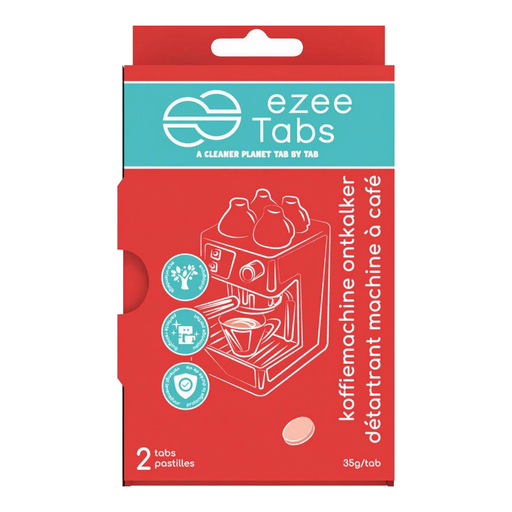
Why this product suits the profile: The two pre-portioned 35-g tablets are practical for users looking for a manageable pack for occasional descaling.
The tablet format reduces the risk of measuring liquid incorrectly. The instructions for the particular machine nevertheless remain decisive.
Two soluble tablets; according to the product information, vegan, microplastic-free and biodegradable.
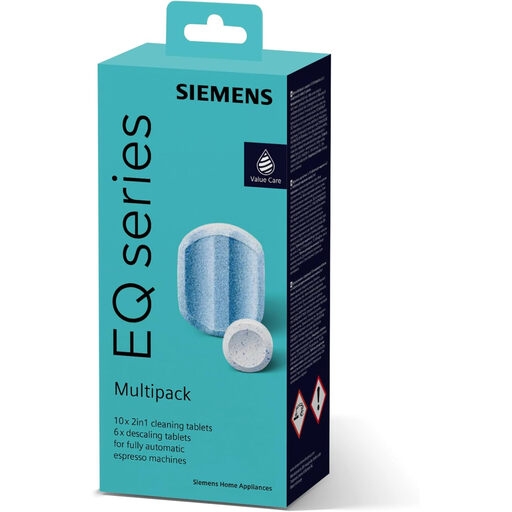
Why this product suits the profile: Owners of compatible Siemens EQ and built-in fully automatic machines receive cleaning and descaling tablets in one pack.
The separate quantities of 10 cleaning tablets and 6 descaling tablets help prevent the two care tasks from being confused.
16 tablets in total; according to the product information, fragrance-free and intended for several EQ model ranges.
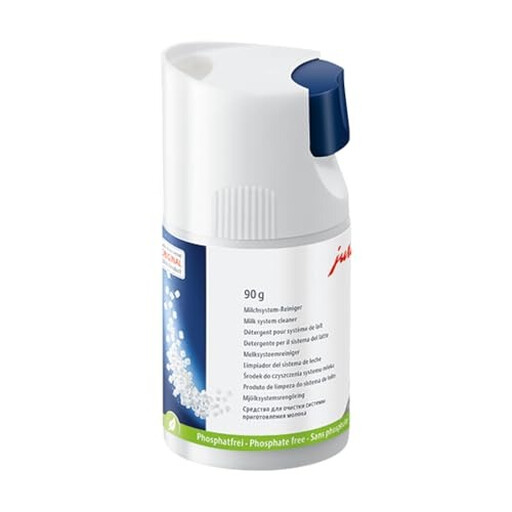
Why this product suits the profile: For JURA users who prepare milk drinks frequently, a specially dosed product for the milk circuit is particularly useful.
It is clearly identified as a milk system cleaner and is not mistakenly used as a replacement for a descaler or coffee fat cleaner.
90 g for approximately 30 cleaning cycles according to the product information; integrated dosing system and phosphate-free formula according to the product description.
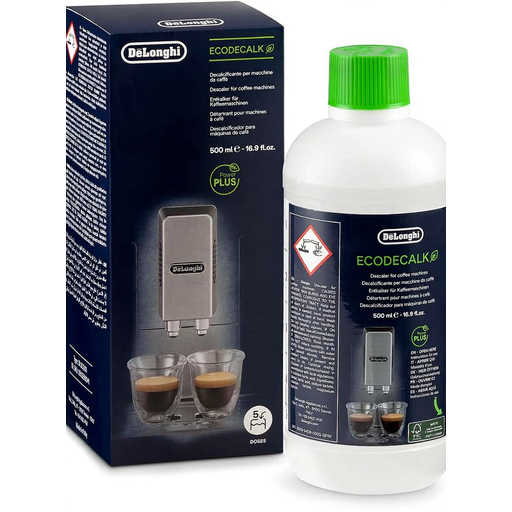
Why this product suits the profile: The 500-ml bottle is ideal for households that regularly descale a De’Longhi coffee machine and want to keep enough product in stock for several applications.
The side dosing scale helps you measure a precise 100 ml per cycle. The appliance’s instructions take priority.
500 ml contents; according to the product description, recommended for De’Longhi coffee machines and formulated with plant-based lactic acid.
We have put together a complete, regularly updated list of products that fully meet these strict selection criteria and the safety regulations applicable in the EU.
For a safe process, follow the appliance’s user manual:
For a milk system, cleaning at shorter intervals is often advisable than descaling. The exact frequency depends on water hardness, the quantity of drinks prepared, use of milk and the machine model. A general monthly or quarterly rule does not replace the machine’s indicator or the user manual.
This depends mainly on the local water hardness and how often the machine is used. Many appliances automatically indicate when the process is required. With frequent use or hard water, descaling may be needed sooner. Use the dosage specified by the manufacturer and then complete all rinsing cycles.
No. The two products have different purposes and should not be mixed. Run the programmes separately and follow the machine’s instructions. A multipack such as Siemens TZ80003A contains both product types, but they are still used in separate processes.
The choice depends on the machine and how you use it. Liquid descalers can be measured directly using a clear dosing scale, while tablets are often pre-portioned and save space. The decisive factors are compatibility, dosage, quantity and approval for the particular machine programme – not simply the product format.