
Lieferung heute & morgen

Qualitätsgarantie

Willkommens-Angebote freischalten: KOSTENLOSE Lieferung | Bis zu 80 % RABATT | Kostenlose 30-Tage-JoyPlus-Testphase
App herunterladen
Freshly ground coffee made directly from whole beans sounds like a straightforward solution. In practice, however, coffee machines with grinders vary considerably when it comes to drink preparation, operation, cleaning and space requirements. If you only look at the number of programmes or a high bar rating, you may overlook important details.
A bean-to-cup coffee machine can offer a wide range of recipes, while an espresso machine with grinder is more focused on espresso and manual preparation. A large selection of programmes is therefore only useful if it includes the drinks you actually want.
Check the following before buying:
A coffee machine with milk frother is suitable for cappuccino and latte macchiato, but it usually requires additional cleaning steps.
Figures such as 15 or 20 bar primarily describe the pump’s maximum output. For espresso preparation, grind size, dosage, brewing temperature and the actual pressure during extraction also matter. A higher number alone is therefore not a reliable indicator of quality.
With a bean-to-cup espresso machine, an adjustable grinder and customisable coffee strength are often more important than the maximum pressure rating. If you want greater control over preparation, you could consider an espresso machine with grinder and portafilter. However, dosing, tamping and cleaning are more time-consuming.
Coffee residue, fine grounds and milk components require different types of care. Look for:
A machine whose accessories are difficult to access may create more work in daily use than expected. The information in the instruction manual is decisive; cleaning intervals depend on water hardness, usage and the beans.
A conical burr grinder is integrated into many machines. What matters is whether the grind size can be adjusted in sufficiently fine increments. Product specifications may list 13, 25 or 30 grind settings. More settings allow finer adjustment, but they are not automatically necessary for every household.
When it comes to capacity:
A coffee machine for whole beans should also offer an option for pre-ground coffee if you occasionally want to use decaffeinated varieties or a different roast.
A bean-to-cup coffee machine usually prepares coffee at the touch of a button. Models with a touchscreen or saved user profiles are appealing for families and offices. A filter coffee machine with grinder, on the other hand, is designed for larger quantities and suits households where traditional filter coffee is the preferred choice.
Also consider the container sizes. Water tanks holding between 1.5 and 2.2 litres reduce the need for refilling, but take up more space and need to be emptied or cleaned regularly.
A bean-to-cup coffee machine with a milk system can prepare milk-based drinks automatically. Check whether the milk container is removable, dishwasher-safe and easy to clean after every use. A steam wand gives you more manual control, but you must wipe and rinse the wand immediately after frothing.
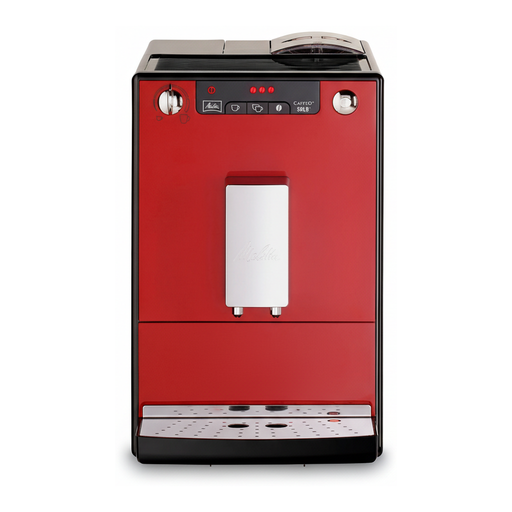
Why this product suits this profile: This slim bean-to-cup machine is 20 cm wide and focuses on espresso and café crème. It is ideal for small kitchens and households that do not need an extensive milk system.
The streamlined selection of drinks means you do not pay for programmes you do not need. The brewing unit is removable, while automatic cleaning and descaling are also provided.
Compact 20 cm width, three coffee strength levels, height-adjustable spout and 1.2-litre water tank.

Why this product suits this profile: This portafilter machine combines an integrated conical burr grinder, touchscreen and automatic microfoam function. It is aimed at users who want to prepare espresso manually and save their preferred settings.
Adjustable milk temperature and texture, together with dose control, give you more control than a simple one-touch bean-to-cup machine. Automatic cleaning of the milk wand supports daily maintenance.
250-g bean hopper, five preset recipes, up to eight saveable settings and 2-litre water tank.
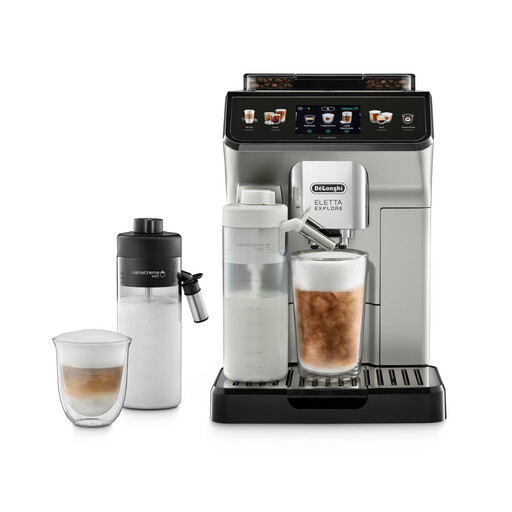
Why this product suits this profile: This bean-to-cup machine is designed to offer a wide range of drinks and supports both hot and cold milk-based beverages. That makes it appealing to families, offices and households with different preferences.
Separate LatteCrema systems for hot and cold preparation make the intended use clear through specific functions. Automatic cleaning and descaling programmes address the greater maintenance requirements.
40 listed recipes, 300-g bean hopper, 1.8-litre water tank and to-go preparation for cups up to 16 cm high.
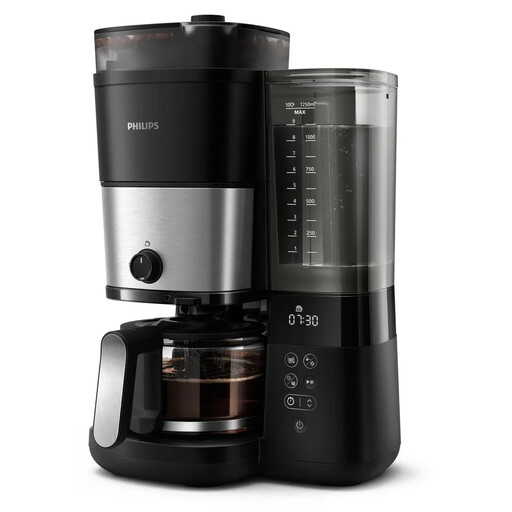
Why this product suits this profile: This filter coffee machine with grinder is designed to make up to ten cups and can brew into a glass carafe, cup or travel mug.
This machine is not designed for espresso or milk programmes. That keeps the selection focused on your actual needs, while still allowing you to adjust the grind size and coffee strength.
1.25-litre water tank, 24-hour timer, three coffee strength levels, removable bean hopper and keep-warm function for up to five hours.
We have put together a complete, regularly updated list of products that fully meet these strict selection criteria and the safety regulations applicable in the EU.
The drip tray, coffee grounds container and milk wand should be emptied and rinsed regularly, depending on usage. With milk systems, cleaning after every preparation is standard practice. The brewing unit, grinder and water circuits require maintenance according to the manufacturer’s instructions. Descaling is also necessary depending on the hardness of the water.
The service life depends on how intensively it is used, water quality, bean residue and maintenance. A household making several drinks every day puts greater strain on the grinder, brewing unit and milk system than an occasional user. Regular descaling, using suitable beans and following the cleaning programmes can help maintain reliable operation.
Power consumption depends on the machine’s output, heating time, standby duration and automatic switch-off function. Models with a thermoblock or short heating phase may operate differently in everyday use from machines with a permanently activated keep-warm function. Ongoing costs also include bean consumption, filters, descaler and milk-system cleaning products.