
Lieferung heute & morgen

Qualitätsgarantie

Willkommens-Angebote freischalten: KOSTENLOSE Lieferung | Bis zu 80 % RABATT | Kostenlose 30-Tage-JoyPlus-Testphase
App herunterladen
A coffee machine with a milk frother can prepare espresso, cappuccino or latte macchiato conveniently at home. However, not every machine is right for every household. Buyers often focus on the display, pump pressure or a long list of drinks, even though other factors are more important in everyday use.
Many models advertise 15 or 20 bar. However, when it comes to brewing coffee, what matters is not only the pump's maximum pressure, but also how the machine applies pressure during extraction. A high figure alone therefore says little about flavour, ease of use or maintenance requirements.
A fully automatic coffee machine with a milk system can prepare drinks at the touch of a button. However, milk residue can collect in tubes, nozzles or containers. So look for automatic rinsing programmes, removable milk containers and components that are explicitly marked as dishwasher-safe.
A long list of recipes may sound appealing, but not every household needs it. If you mainly drink espresso and cappuccino, you may not need an extensive menu structure. The key features are easy-to-access settings for coffee strength, volume, temperature and milk froth.
A coffee machine with a grinder grinds the beans immediately before brewing. Check the following:
A capsule machine, on the other hand, is easy to use and generally leaves less coffee residue inside the appliance. However, users are tied to compatible capsules and have less control over the grind and dosage.
With automatic milk frothing, milk is fed through a container or tube. This is suitable for households where cappuccino or latte macchiato is prepared regularly. Look for:
An espresso machine or portafilter machine with a steam wand requires more manual preparation. In return, you can control the milk texture yourself. This suits home baristas who see tamping, dosing and frothing as part of the brewing process.
Measure the available space, including the clearance needed for filling and cleaning. Compact appliances may be narrow, but they might require additional room to remove the water tank. For several people, a water tank of around 1.7 to 1.9 l and a bean hopper holding at least approximately 250 g are practical everyday guidelines.
A fully automatic coffee machine with a touchscreen generally offers clear menu navigation. Buttons and rotary controls can be more useful if you want to operate the machine quickly without navigating through submenus.
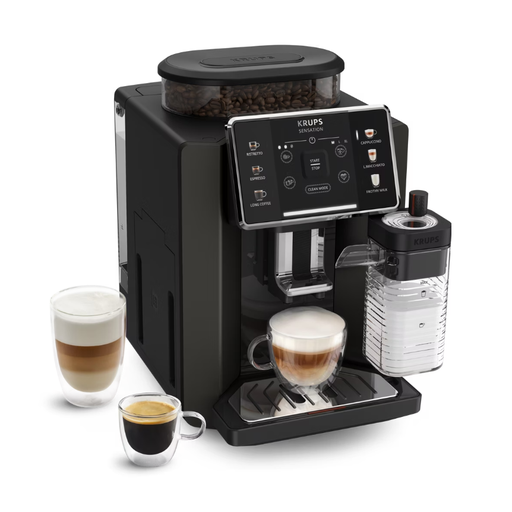
Why this product suits this profile: This fully automatic coffee machine offers six coffee and milk specialities, a touchscreen control panel, plus settings for volume, strength and milk froth.
According to the product information, the removable milk container is dishwasher-safe; automatic rinsing, cleaning and descaling programmes reduce the amount of manual work.
260-g bean hopper, 1.7-l water tank and the ability to prepare two cups.
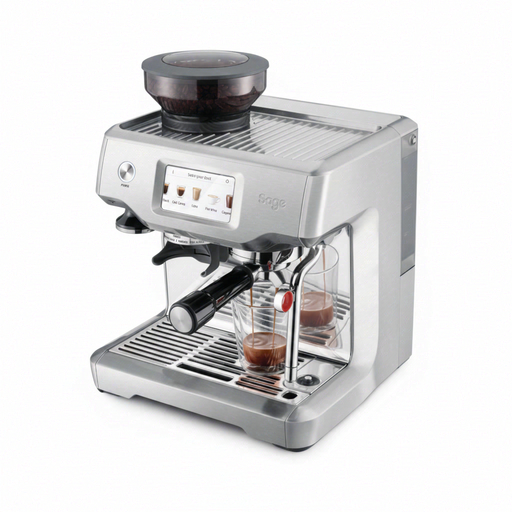
Why this product suits this profile: This portafilter machine combines an integrated conical grinder with a touchscreen and an automatic microfoam function.
The specifications include adjustable coffee strength, milk temperature and milk texture, as well as automatic cleaning of the milk frother.
250-g bean hopper, 2-l water tank, five recipes and up to eight customisable settings that can be saved.
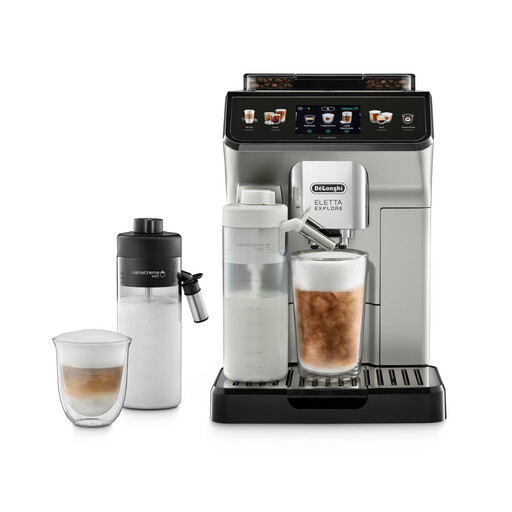
Why this product suits this profile: Families and frequent users can choose from 40 recipes, two milk systems for hot and cold drinks, and a takeaway system.
Automatic cleaning, rinsing and descaling programmes, along with removable dishwasher-safe parts, help reduce the daily maintenance required.
300-g bean hopper, 1.8-l water tank, hot and cold milk drinks, and cups up to 16 cm high can be accommodated.
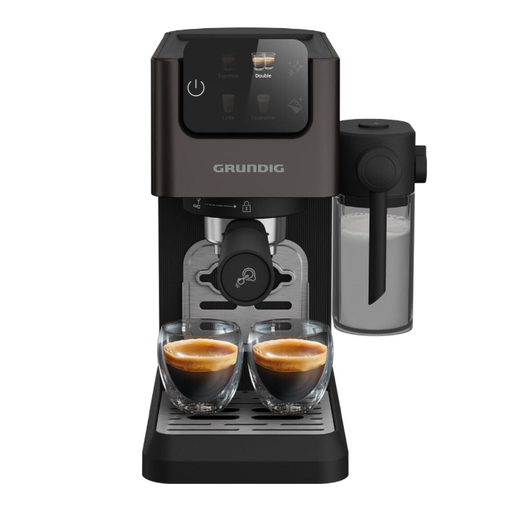
Why this product suits this profile: This semi-automatic model combines portafilter operation with an integrated milk container, touchscreen and dual outlet.
The 1.1-l water tank and removable milk container make refilling and cleaning easier, while the balance between automatic functions and manual preparation keeps operation flexible.
1628 W power, up to 20 bar pump pressure, and BrewSense and CreamyPro technologies according to the product information.
We have put together a complete, regularly updated list of products that fully meet these strict selection criteria and the safety regulations applicable in the EU.
Milk systems require more maintenance than a standard filter or capsule machine. Rinse the milk lines and nozzles after every use in accordance with the operating instructions. The water tank, drip tray and coffee grounds container should be emptied regularly. Descaling intervals depend on water hardness and frequency of use.
Ongoing costs include:
A longer service life cannot be guaranteed as a general rule. It depends on care, water quality, daily use and the availability of replacement parts. Before buying, check the manufacturer's instructions, warranty terms and cleaning intervals.
For several people, a larger water tank, a spacious bean hopper and a two-cup function are useful. A fully automatic coffee machine with a milk system reduces the number of individual steps, while a portafilter machine requires more manual preparation.
Milk-contacting parts should be rinsed or cleaned after every use in accordance with the operating instructions. Regular thorough cleaning and descaling are also required. Automatic programmes make these processes easier, but they do not replace checking and cleaning removable components.
A machine with a grinder gives you more control over the beans, grind size and coffee strength. A capsule machine generally requires less preparation and is suitable for occasional use. Which option is more economical depends on how much coffee you drink, the price of beans or capsules, and the level of convenience you want.