
Lieferung heute & morgen

Qualitätsgarantie

Willkommens-Angebote freischalten: KOSTENLOSE Lieferung | Bis zu 80 % RABATT | Kostenlose 30-Tage-JoyPlus-Testphase
App herunterladen
A coffee maker should fit seamlessly into your everyday routine: people living alone often need only a small portion, while families and offices usually prefer larger quantities. Campers, on the other hand, tend to prioritise a compact design and the heat source available to them. If you focus only on appearance or a low price, you may overlook important details. The moka pot could end up being placed on the wrong hob, the coffee pot may fail to keep its contents warm, or cleaning may become unnecessarily time-consuming.
This buying guide from the Joybuy Product Recommendation Officer explains the key differences clearly and shows which coffee maker is best suited to different usage profiles.
A classic aluminium moka pot is generally designed for gas, electric and ceramic hobs, but not induction. An induction moka pot, on the other hand, needs a suitable stainless steel base or must be explicitly stated as induction-compatible. An adapter may be an alternative, but it affects both ease of use and heat transfer.
With stovetop espresso makers, one cup usually refers to a small Italian serving, not a large German-style mug of coffee. For example, a one-cup espresso maker may prepare only around 40 to 60 ml. You should therefore check the capacity in millilitres before buying. Coffee makers are available for 1 to 8 cups, although the actual amount produced varies depending on the model and cup size.
A filter coffee machine with a glass carafe generally keeps coffee warm on a hotplate. This can be convenient, but it uses electricity and should only be used for a limited period. A coffee machine with a thermal pot, by contrast, stores the heat in the pot itself and does not need a hotplate to remain switched on after brewing. However, thermal pots are often not dishwasher-safe and must be cleaned by hand in accordance with the manufacturer’s instructions.
For stovetop models, aluminium, stainless steel and combinations of both materials are widely used. Aluminium is lightweight and is often used for classic moka pots. Stainless steel is suitable for many types of hob and is particularly important for induction. However, the product description should always be regarded as definitive, as not every stainless steel model is automatically approved for all hobs.
With a French press, a heat-resistant glass beaker, a sturdy frame and a smooth-running plunger are important. Borosilicate glass is widely used, but you should still observe the stated temperature limit. Electrical appliances require a suitable mains voltage; for UK households, the product’s voltage compatibility should be checked carefully. Specifications such as 220–240 V and 50 Hz are relevant for German households.
A coffee maker should be cleared of coffee residue after every use. Depending on the manufacturer, moka pots should often be rinsed with water only and not cleaned with washing-up liquid or in the dishwasher. With filter machines, the filter basket and carafe may sometimes be dishwasher-safe, while the appliance housing must never be immersed in water.
You should also look out for:
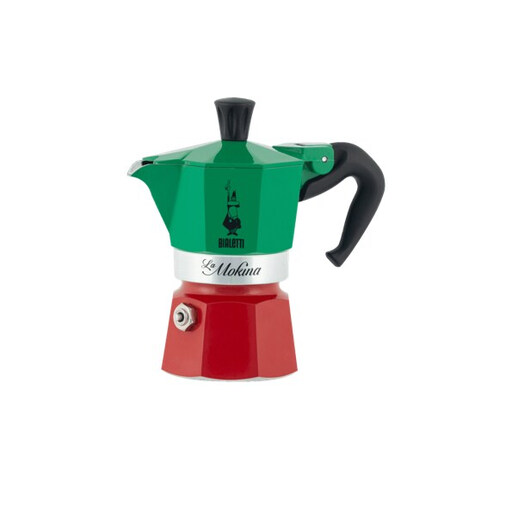
Why this product suits this profile: This coffee maker is designed for one 40 ml serving and is suitable for individual espressos on gas, electric or ceramic hobs.
The stated hob compatibility explicitly excludes induction. This helps prevent ordering the wrong product for an induction hob.
Aluminium housing, manual operation and a detachable design for hand cleaning.
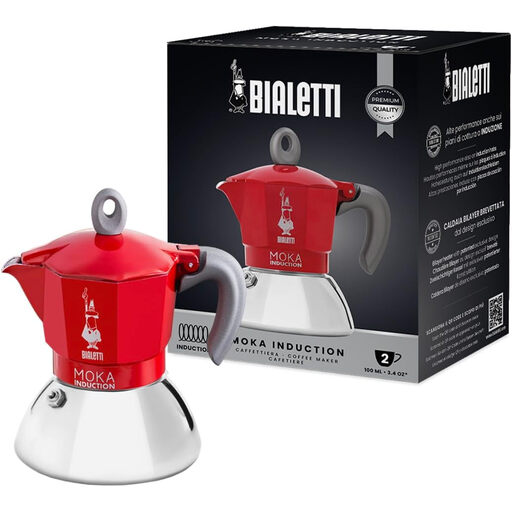
Why this product suits this profile: The combination of an aluminium upper section and stainless steel boiler is designed for all the stated hob types, including induction.
Induction compatibility is explicitly listed as a product feature. This reduces the risk of choosing a classic aluminium moka pot for an induction hob.
Manual operation, a reusable filter and a design intended for two servings.
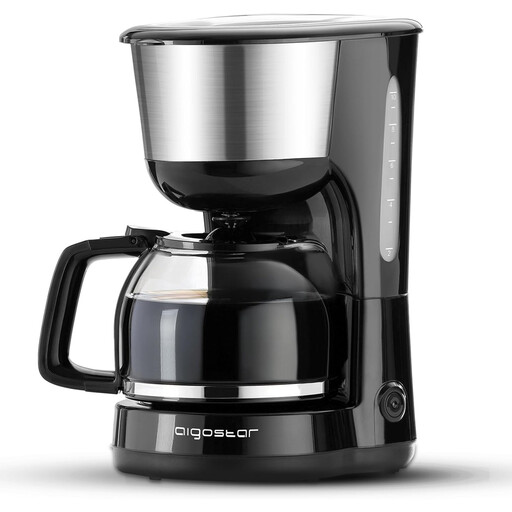
Why this product suits this profile: With a capacity of 1.25 litres, the electric filter coffee machine is suitable for around 5 to 7 standard cups according to the product information.
The 30-minute keep-warm function and automatic switch-off after 40 minutes in total limit the length of time the hotplate operates.
Drip stop, washable filter, overheat and boil-dry protection, plus operation at 220–240 V.
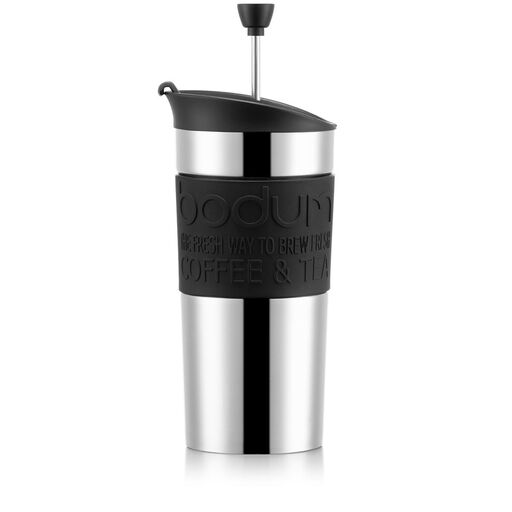
Why this product suits this profile: This portable coffee maker works manually with ground coffee and is suitable for travel according to the product information.
It does not require a power socket and comes with a reusable filter. This makes it less dependent on consumables when camping or travelling.
350 ml capacity, stainless steel construction and an additional thermal function according to the product data.
We have put together a complete, regularly updated list of products that fully meet these strict selection criteria and the safety regulations applicable in the EU.
The decision mainly depends on the quantity required and how you want to prepare your coffee. A French press is a sensible choice if you want to make coffee without electricity or paper filters. For several people and as little manual work as possible, a filter coffee machine is more suitable. A coffee pot with a thermal function is ideal for households where coffee is served over a longer period without keeping a hotplate running continuously.
For a single serving in the office or while travelling, a small coffee maker is sufficient. If you regularly brew coffee for several people, you should plan for at least 750 ml to 1 litre. Bear in mind that larger appliances may require more worktop space and take longer to clean.
A moka pot with explicitly stated induction compatibility, such as a model with a stainless steel boiler, is designed for this purpose. Classic aluminium models without a suitable base will not work directly on induction. Hob compatibility should be listed in the technical specifications before you buy.
Its lifespan depends on the material, how often it is used and how well it is maintained. With moka pots, the sealing ring and filter screen are typical wear parts. Rinsing regularly, drying all components thoroughly and following the manufacturer’s instructions can help extend the product’s service life. Electrical appliances should also be descaled regularly if this is recommended in the instructions.
Running costs consist of electricity, coffee and, where applicable, paper filters. A reusable coffee filter reduces the need for disposable filters. Models with automatic switch-off or a thermal pot can limit the length of time the keep-warm function operates. For a precise estimate, you should calculate the appliance’s power consumption, usage time and your individual electricity tariff together.