If you want individual coins to fill the frame, it’s the combination of camera body and a suitable close-up or macro lens that matters – not just the video resolution. Sony Germany lists 1:1 magnification for its separate E 30 mm F3.5 Macro lens; Canon Germany lists 0.5x for its separate RF 35mm F1.8 MACRO IS STM. For a straightforward tour of a collection with mostly wider shots, a camera with a fixed lens may be enough, provided the framing, working distance, lighting and camera position suit your small table.
Which option is right for you?
Collectors who want to capture fine detail
If you want to show dates, lettering and coin designs in close-up, check the close-focusing performance of the complete camera and lens combination – video resolution alone tells you little. Canon Academy explains that macro photography has a shallower depth of field than shooting from further away.
Filming at a cramped table
If you need both wide and close-up shots without obscuring the coins or your hands, framing and working distance are key. Canon Academy recommends securing the camera when shooting macro, where possible.
Presenters taking viewers on a tour
If you want to show your coins while explaining them clearly, plan for the microphone, camera position and changes of viewpoint as well as the shots themselves. DJI lists three microphones for the Osmo Pocket 3; the results will also depend on where you’re filming.
What should you look for when buying?
Interchangeable-lens camera with a macro lens
A good choice if: you want coin designs and small lettering to appear large in the video, and the camera, lens and mount will fit on your table.
Bear in mind: you may need to buy a suitable macro lens separately. At high magnification, depth of field and movement become more critical. Sony Germany lists 1:1 magnification for its separate E 30 mm F3.5 Macro lens; Canon Germany lists 0.5x for its separate RF 35mm F1.8 MACRO IS STM.
Compact camera with a close-up function
A good choice if: you want to shoot small subjects without changing lenses.
Bear in mind: OM Digital Solutions lists close-ups from as near as 1 cm and 4K/30p video as separate features for the Tough TG-7. Check the coin framing you want specifically in video mode.
Gimbal camera with a fixed lens
A good choice if: you’re mainly planning a moving, narrated tour with changing wide shots.
Bear in mind: DJI lists a focus range starting at 0.2 m for the Osmo Pocket 3. Its fixed lens and gimbal function don’t guarantee that it’s suitable for coin-filling close-ups or fixed overhead shots.
| What matters |
What to check when buying |
Who will find this especially important? |
| Fine coin details |
Check the lens, maximum magnification and focus distance together in video mode; make sure you have enough working distance. |
If dates and coin designs need to be clearly visible in the video, I look at the lens, magnification and distance as a complete package. Around 36% of consumers put fine coin details first. |
| Space on the table |
Test wide and close-up shots from your planned camera position, taking height, angle and mounting into account. |
If the camera, hands and coins all need to fit in a small space, I want to be able to get both views from a practical set-up. Around 29% of consumers prioritise the table set-up. |
| Lighting and legibility |
Use your own coins to check the lighting angle, shadows and depth of field in a test recording. |
With shiny coins, I want to control reflections and keep the relevant area in focus. Around 21% of consumers prioritise lighting and legibility. |
| Spoken commentary |
Check the microphone or suitable microphone inputs, sound at your planned speaking distance and changes of viewpoint. |
If I want to show my collection while explaining it, I need clear sound and a sensible change between wide and close-up shots. Around 14% of consumers put spoken commentary at the centre of their set-up. |
Common misconceptions
-
“4K” means coin designs will be easy to see
Video resolution doesn’t tell you how large a coin will appear in the frame with a particular lens. Sony Germany lists the E 30 mm F3.5 Macro, with 1:1 magnification, separately from the 16–50 mm kit lens.
First decide how much of the coin you want in the frame, then check the lens and video mode on the specific combination.
-
The minimum focus distance is the clear space in front of the lens
A short minimum focusing distance doesn’t tell you exactly how much space there will be between the front of the lens and the coin. A close camera position can also cast shadows from your hands or the camera.
Test the working distance and lighting position separately with your planned table set-up.
Depending on your set-up, you may need a different mount or lighting.
-
A macro function for photos works just as well for video
OM Digital Solutions lists close-ups from as near as 1 cm and 4K/30p video for the Tough TG-7, but this doesn’t confirm that the same close-up function is available in the video mode you want to use.
Before choosing a camera, check the framing and focus you need in the specific video mode.
Brands to consider
Sony
The ZV-E10 II is an E-mount camera with interchangeable lenses. For more detailed coin shots, you can consider adding a separate macro lens.
- Sony Germany lists 1:1 magnification for its separate E 30 mm F3.5 Macro lens.
- The 16–50 mm lens in the kit is not this macro lens, so the 1:1 specification does not apply to the kit lens.
Canon
The EOS R50 supports RF and RF-S lenses. Depending on the shot, you could use a zoom for wide shots and a separate macro lens for close-ups.
- Canon Academy describes a product demonstration mode that can switch focus between a face and an object held in front of the camera.
- Canon lists 0.25x magnification for the RF-S 18–45 mm when manually focusing at close range, and 0.5x for its separate RF 35mm F1.8 MACRO IS STM. The demonstration mode is no substitute for checking the lens.
OM SYSTEM
The Tough TG-7 is a compact camera with a fixed lens, ideal if you want to get close to small subjects without changing lenses.
- OM Digital Solutions lists close-ups from as near as 1 cm and 4K/30p video.
- These specifications don’t show that the close-up function achieves the same coin framing in video mode. Check it in the specific mode you plan to use.
DJI
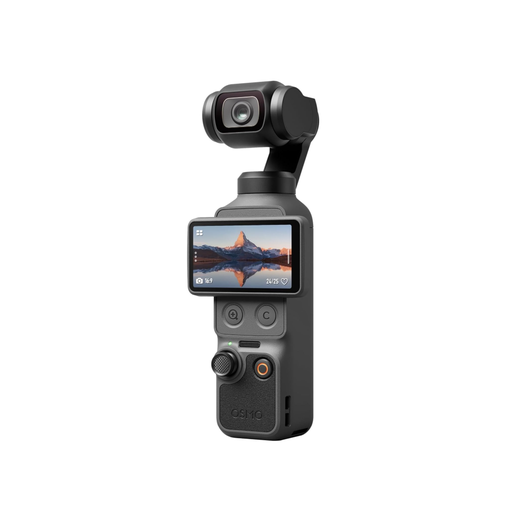
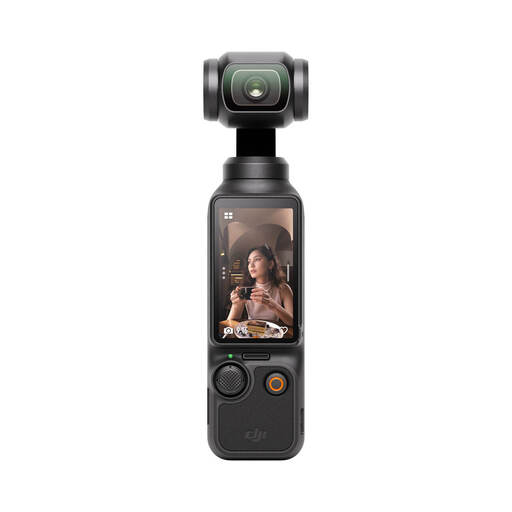
The Osmo Pocket 3 is a small gimbal camera for moving shots and spoken commentary.
- DJI lists 3-axis stabilisation, three microphones and a focus range starting at 0.2 m.
- The fixed lens limits your choice of lenses; the gimbal function doesn’t guarantee macro shots that fill the frame with a coin.
Panasonic
The LUMIX G100D kit is a Micro Four Thirds option with a 12–32 mm standard zoom and documented video and audio features.
- Panasonic lists 4K/30p and five audio recording modes for the kit.
- The 1:1 specification applies to the separate H-HS030 macro lens, not the 12–32 mm kit lens.
Joybuy products for filming a collection tour
This selection features DJI Osmo Pocket cameras and bundles for moving wide shots. For coin details, check the framing you want and the focusing distance with your specific set-up.
 No image available
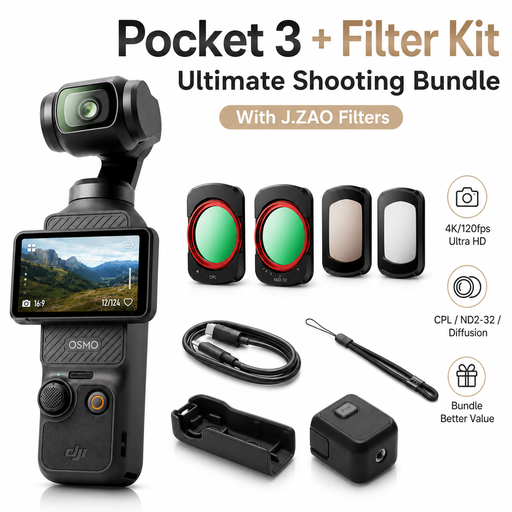
DJI Osmo Pocket 3 Standard Combo with J.ZAO filter kit
For moving wide shots; the filters in the bundle are no substitute for a macro lens.
The product title lists 4K/120fps, 1-inch CMOS, 3-axis stabilisation and a 2-inch rotating screen. The description lists CPL and ND filters.
DJI lists a focus range starting at 0.2 m for the Osmo Pocket 3. Check the coin framing you want with your own table set-up.
View at Joybuy
 No image available
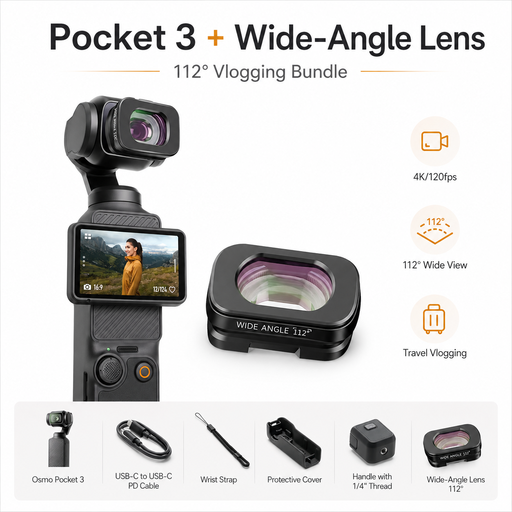
DJI Osmo Pocket 3 Standard Combo with ULANZI F35 wide-angle attachment
The 112° wide-angle attachment is designed for a wider view; check that it also gives you the coin framing you want.
The product title lists 4K/120fps and 3-axis stabilisation; the box contents include the magnetic 112° wide-angle attachment.
DJI lists a focus range starting at 0.2 m for the Osmo Pocket 3. Its fixed lens doesn’t let you choose a macro lens.
View at Joybuy
 No image available
DJI Osmo Pocket 4 Standard Combo
The gimbal camera and rotating screen could be useful for a tour with changing shots; check that it gives you the coin framing you need before buying.
The product title lists 1-inch CMOS, 4K/240fps, 3-axis stabilisation, 2× lossless zoom, 107GB of built-in storage and a 2-inch rotating screen.
View at Joybuy
 No image available
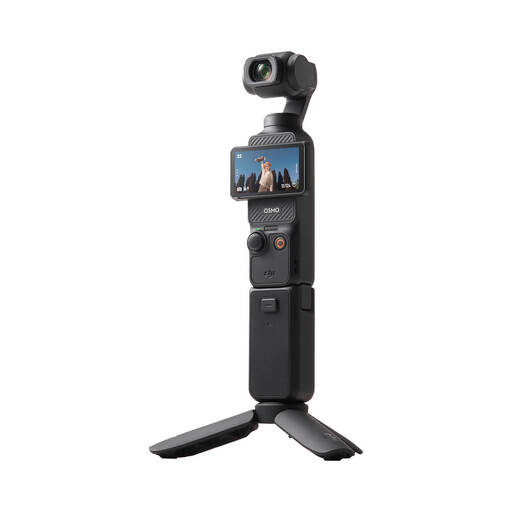
DJI Osmo Pocket 3 Creator Kit
For a moving tour with spoken commentary; test the microphone and camera position at your planned speaking distance.
The product title lists 4K/120fps and a 1-inch CMOS gimbal camera. The description lists a DJI Mic 2 transmitter and mini tripod among the Creator Kit contents.
DJI lists a focus range starting at 0.2 m for the Osmo Pocket 3; this doesn’t guarantee macro shots that fill the frame with a coin.
View at Joybuy
 No image available
DJI Osmo Pocket 3 with DJI Mic 2 transmitter and mini tripod
For a collection tour with spoken commentary; it’s still worth testing the sound at your planned filming location.
The product title lists 4K/120fps and 3-axis stabilisation. The description lists a DJI Mic 2 transmitter and mini tripod.
DJI lists a focus range starting at 0.2 m for the Osmo Pocket 3. Check that its fixed angle of view suits the coin shot you want.
View at Joybuy
Frequently asked questions
Is a camera kit with a standard zoom enough for every coin close-up?
No – you can’t tell from the camera body alone. Sony Germany lists the 16–50 mm kit lens separately from the E 30 mm F3.5 Macro, which offers 1:1 magnification; Canon Germany lists 0.25x magnification for the RF-S 18–45 mm at a specific manual close-focusing setting. Test the framing with the lens you actually plan to use.
How should I set up the camera for a longer session at the table?
Secure the camera as firmly as possible and test the wide shot, close-up and focus from the position you plan to use. A shallow depth of field and small movements can make macro shots more difficult, so check the lighting and sound in a test recording too. Canon Academy recommends securing the camera on a tripod for macro shots, where possible.
What else should I plan for when setting up?
With an interchangeable-lens camera, you may need to add a suitable macro lens. Make sure the mount and lighting also suit the space on your table. Check what’s included with the specific kit. In Germany, statutory rights for faulty goods are separate from a voluntary guarantee; the seller is generally responsible for statutory claims.
Can I film other people recognisably during a coin tour that I publish?
Under § 22 KunstUrhG, you generally need a person’s consent to distribute or publicly display images of them; statutory exceptions and the circumstances of each case must be considered separately. The Federal Ministry of Justice and the Federal Office of Justice include this provision in the text of the law. If only coins are visible and no people can be recognised, this rule does not answer any other questions about publication.


