Who photographs coins against a white background?

Collectors looking to capture fine detail

If you want the mint year, lettering and fine surface features to be clearly visible, the magnification of the complete camera-and-lens system matters. NGC treats the camera, lens and lighting as essential parts of coin photography; Nikon specifies a 1:1 reproduction ratio for one of its macro lenses.

Photographing shiny coins

On metal surfaces, the angle of the light and reflections can change the visible highlights and shadows. NGC and PCGS describe lighting as an important part of coin photography, so it’s worth considering the whole setup, not just the camera.

Beginners taking a series of photos

If you regularly photograph whole coins against a white background, you’ll need a consistent framing and colours that stay as true as possible. Nikon Germany recommends setting the white balance under consistent lighting.

What should you look for when buying?

What you’re looking for What to check before buying Who it matters most to
Fine minting details Check the magnification ratio of the specific lens and how your own coin size fills the frame. If I want to show small inscriptions and surface details at a larger size, I compare the framing with my own coin. Around 31% of consumers with this as their main priority do the same.
Reflections and relief Consider the working distance needed for side lighting and a stable, repeatable camera position. For shiny coins, I want to be able to adjust the lighting angle and control reflections. Around 25% of consumers put reflection control first.
White balance and colour Check the white balance on the specific model and take a test shot under the lighting you plan to use. If I photograph a series of coins against a white background, I want the background and coin colours to look consistent across the images. Around 25% of consumers prioritise consistent whites and colours.
Simple setup Check what’s included in the kit, the close-up capabilities of the supplied lens, and what tripod and lighting setup you’ll need. If I want to start photographing whole coins without changing lenses, I need a manageable setup and want to avoid unnecessary extra purchases. Around 19% of consumers with this as their main priority feel the same.

Common mistakes when buying a camera

  • Assuming a short focusing distance means high magnification

    Focusing distance alone doesn’t tell you how large the coin will appear in the image. A very short distance can also leave less room for lights at the sides.

    Compare a test shot in the coin size you want. With a mirrorless camera, it’s the magnification ratio of the specific lens that matters, not just its minimum focusing distance.

    For finer details, you may also need a suitable macro lens or a different lighting setup.

  • Assuming the camera body is a complete macro solution

    With a mirrorless camera, close-up performance and magnification depend on the lens you use. A lens’s macro specifications don’t automatically apply to a standard zoom or every kit from the same brand.

    Before putting your complete setup together, check the lens mount, exactly what’s included in the kit and whether the supplied lens is suitable for your coin size.

    A separate macro lens, a stable camera support or additional lighting may all be part of the setup.

  • Assuming a white background means accurate colours

    A colour cast can tint the background and alter the coin’s colour; reflections on metal also depend on the lighting setup. Nikon Germany describes setting the white balance under consistent lighting as an important step.

    Take a test shot under the lighting you plan to use, then check the white area, coin colour and highlights separately. If the lighting changes, check the white balance again.

    With changing or mixed lighting, you may need to take additional test shots and make further adjustments.

Camera brands to consider for coin photography

OM SYSTEM

The Tough TG-7 is a compact camera with a fixed lens and a short stated minimum focusing distance.

  • OM SYSTEM specifies close focusing down to 1 cm and around 12 MP for the TG-7.
  • A short focusing distance doesn’t prove a 1:1 magnification ratio or guarantee enough room for side lighting.

Canon

The PowerShot G7 X Mark III has a fixed zoom lens; the EOS R50 can be paired with a separately chosen RF macro lens.

  • Canon Germany specifies a minimum focusing distance of around 5 cm at the wide-angle end and around 40 cm at the telephoto end for the G7 X Mark III. Canon specifies a maximum magnification of 1.4:1 for the RF 100mm F2.8L Macro IS USM.
  • The macro magnification applies to the separate RF 100mm F2.8L Macro IS USM, not automatically to the standard zoom lens in an EOS R50 kit.

Nikon

The Z50II is a camera body with a Nikon Z mount, so you’ll need to choose a close-up lens separately.

  • Nikon Germany specifies a 1:1 magnification ratio for the NIKKOR Z MC 50 mm 1:2,8.
  • At this magnification, Nikon specifies a distance of around 5 cm between the lens and subject, which affects how much room you have for lighting.

Sony

The RX100 VII is a compact camera with a fixed zoom lens for coin photography and other subjects.

  • Sony specifies a focal length range equivalent to 24–200 mm on a full-frame camera.
  • According to Sony, the minimum focusing distance is around 8 cm at the wide-angle end and around 100 cm at the telephoto end. The zoom range alone, therefore, doesn’t prove that it will capture more detail in coins.

Camera option at Joybuy

Camera options for repeatedly photographing coins against a white background.
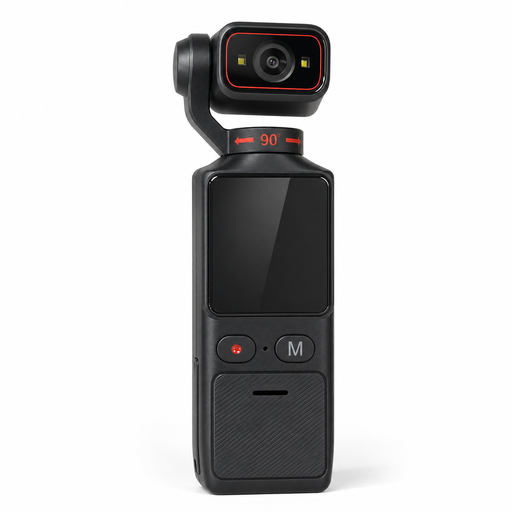
4K pocket camera with electronic image stabilisation, a rotating 180° lens, Wi-Fi and a 1.69-inch touchscreen

4K pocket camera with electronic image stabilisation, a rotating 180° lens, Wi-Fi and a 1.69-inch touchscreen

For repeated shots of a stationary subject, check whether the camera will fit into your planned tripod and lighting setup.

Features listed in the product name: 4K, electronic image stabilisation, a rotating 180° lens, Wi-Fi and a 1.69-inch touchscreen.

View at Joybuy

Frequently asked questions about cameras for coin photography

Are megapixels or a macro mode enough to capture the finest minting details?

No, not on their own. Check how your coin fills the frame and, with interchangeable-lens cameras, the magnification ratio of the specific lens. A suitable macro lens may be a good choice for finer details.

When is a compact camera enough, and when is a macro system a good idea?

A compact camera may be enough for full-coin shots if its close-up capabilities give you the framing you want and make the lettering clear. If you want very small details to appear larger, compare the mirrorless camera and suitable macro lens as a complete system; macro specifications apply to the specific lens in question.

Can focus stacking help keep a coin’s relief in focus?

If areas of a stationary subject at different heights can’t all appear sharp at once, you can combine several shots taken with slightly different focus points. Keep the camera in a stable position throughout the series; whether the camera can combine the images itself depends on the model.

How do I get started with coin photos against a white background?

Keep the coin and camera steady, and point the camera as straight as possible at the coin’s surface. Adjust the lighting using test shots and check the white area, coin colour and highlights separately. Set the white balance under the lighting you’ll actually be using.

What are the rules on legal guarantees and online returns in Germany?

When you buy from a business seller, you’re generally entitled to a statutory guarantee of at least two years from the date you receive the goods. This is different from a voluntary manufacturer’s guarantee. For goods ordered online, you generally have a 14-day right to cancel from the date you receive them, although exceptions and specific return conditions may apply. This information is based on guidance from Your Europe and Verbraucherzentrale.