
Lieferung heute & morgen

Qualitätsgarantie

Willkommens-Angebote freischalten: KOSTENLOSE Lieferung | Bis zu 80 % RABATT | Kostenlose 30-Tage-JoyPlus-Testphase
App herunterladen
Freshly squeezed juice is an easy way to integrate more fruits and vegetables into your daily routine. But the search for the right appliance can quickly become overwhelming. Many models make big promises, but in practice, some turn out to be a poor investment. As your Joybuy Product Recommendation Officer, I'll help you recognise the typical pitfalls and make an informed decision.
Before you invest, you should be aware of the most common problems that only become apparent after the purchase.
To avoid these problems, you should pay attention to three core technical features. These are the primary determinants of juice quality, durability, and ease of use.
The key difference in an electric juicer lies in how it operates. While centrifugal juicers work at high speeds (often over 10,000 RPM) and generate heat in the process, cold press juicers, also known as slow juicers, press ingredients slowly and powerfully.
The materials that come into contact with your food are crucial.
You can recognise a practical cleaning concept by its specific features, not by marketing promises.
Here are some recommendations tailored to specific user profiles that meet the quality criteria mentioned above.
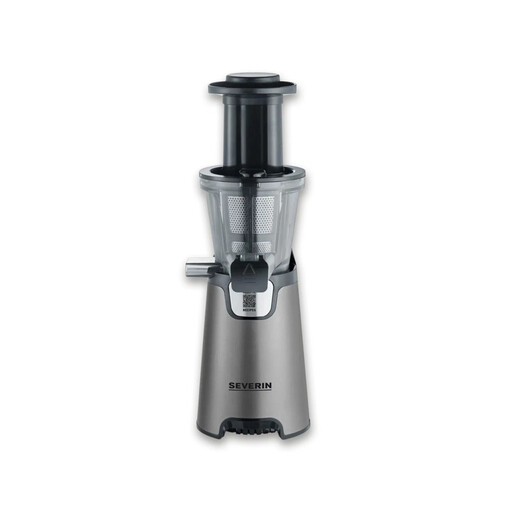
Why This Fits Their Persona: Ideal for families who want more than just juice. This appliance not only processes soft and hard fruits and vegetables but, according to the manufacturer, can also be used to make sorbet, ice cream, or jam with the right attachment.
It avoids the limited functionality trap through its versatility. The system, described by the manufacturer as an "Easy-Clean Concept" with few dishwasher-safe parts, directly addresses the issue of time-consuming cleaning.
Multifunctionality (juice, sorbet, jam). Stainless steel micro-sieves and a drip-stop cap for clean handling.
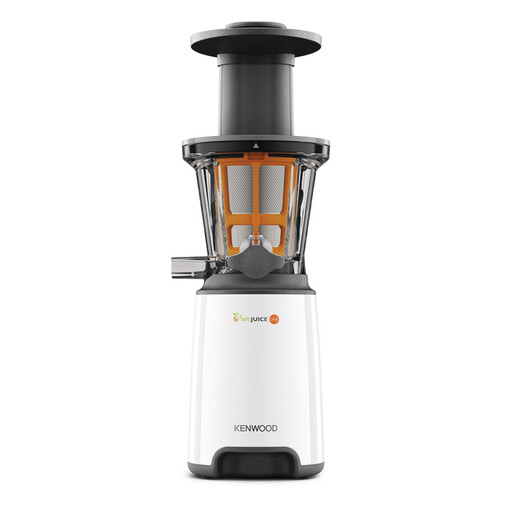
Why This Fits Their Persona: For health-conscious purists who prioritise juice quality above all else. Its very slow speed of 55 RPM, according to the manufacturer, aims to maximise the nutrient content in the juice.
It focuses on the core competency of nutrient-preserving juicing, avoiding the pitfall of inferior results. The rinsing function, which runs water through the unit, simplifies pre-cleaning.
Very slow pressing technology (55 RPM). Compact design and a rinsing function to simplify cleaning.
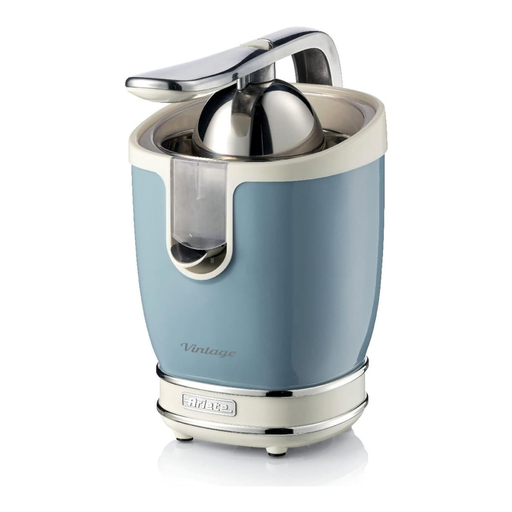
Why This Fits Their Persona: Perfect for those who primarily enjoy fresh orange or lemon juice and value kitchen aesthetics. The lever operation is simple and requires little effort.
This appliance is specialised and doesn't promise to do everything. It avoids the complexity trap by being designed for a clear purpose, making it easy to operate and clean.
Simple lever operation, quiet motor, and an appealing retro design. Two cones for large and small citrus fruits.
We have compiled a complete, real-time list of products that fully satisfy these strict selection criteria and UK safety regulations.
The effort depends heavily on the model. Appliances with an "Easy-Clean" concept, few individual parts, and a pre-clean or rinsing function can typically be cleaned in 5–10 minutes. Models with complex, fine sieves without special tools can take significantly longer. A good practice is to rinse the device under running water immediately after use before any residue dries.
Yes, high-quality cold press juicers are designed for this. Their slow, powerful pressing action can effectively break down and juice the fibres of leafy greens and celery stalks. It is recommended to cut such ingredients into smaller pieces and feed them into the machine alternately with juicier ingredients like apple or cucumber to prevent clogging.
The main difference lies in the technology and the result.