Commuters preparing single portions
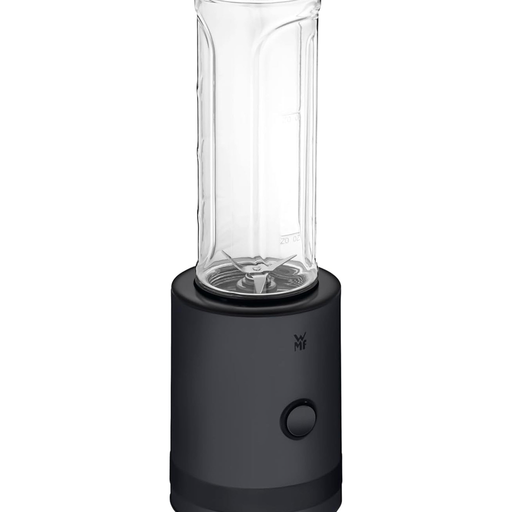
If you make one portion in the morning and want to avoid transferring it, a sealable blending cup is worth considering. WMF describes the Kult X Mix & Go as a blending container with a drinking lid.


For a single portion with as little transferring as possible, a compact blender with a sealable blending cup is an obvious choice. If you’re preparing several lunches, a jug blender offers more capacity. A hand blender is a good fit if you want to blend the soup in a suitable tall container. In each case, check the usable capacity, how to clean the parts that come into contact with food, and whether you have a suitable container for taking it with you. Keeping perishable soup safely chilled is also essential when transporting it.
If you make one portion in the morning and want to avoid transferring it, a sealable blending cup is worth considering. WMF describes the Kult X Mix & Go as a blending container with a drinking lid.
If you prepare several lunches in one go, capacity and having enough separate containers for transport are key. Bosch lists a 1.5-litre jug and an additional 0.6-litre cup for the MMB6174SN2 set.
If you’d rather use a suitable container you already own, a hand blender can be an alternative to having an extra blending jug. For the Braun MQ50051M, the manufacturer refers to the instruction manual for details of which parts are dishwasher-safe.
A good fit if: you usually prepare one portion and want to blend it directly in the container you’ll take with you. WMF lists a 0.6-litre container for the Kult X Mix & Go.
The trade-off: Capacity is limited if you’re making several portions. Also check whether the opening is suitable for eating soup from, and how to clean the lid and blade unit.
A good fit if: you already have a suitable tall container and want to blend in it, rather than filling a separate blending jug.
The trade-off: You’ll still need a suitable container for transporting the soup. Cleaning depends on which parts of the specific model the instructions say are dishwasher-safe.
A good fit if: you want to prepare several portions at once. Bosch lists a 1.5-litre jug and a 0.6-litre to-go cup for the MMB6174SN2 set.
The trade-off: A larger jug needs worktop and storage space. Its stated capacity doesn’t automatically tell you how much is suitable for your recipe.
| Priority | What to check before buying | Who it matters to most |
|---|---|---|
| Taking one portion with you | Check the usable capacity, how securely the lid closes and whether the opening is suitable for eating from. | If I want to take my soup with me without unnecessary transferring, the container should also be suitable for eating from. Around 31% of consumers have this as their main priority. |
| Quick weekday cleaning | Check the instructions to see which parts are removable and dishwasher-safe. | If I blend regularly, I want to know how much cleaning is involved for the lid, seals and blade area. Around 25% of consumers prioritise ease of cleaning above all else. |
| Preparing several portions | Compare the jug capacity, worktop space, items included and number of containers for transport. | If I prepare several lunches at once, I need enough capacity for blending as well as a container for each portion. Around 25% of consumers have this as their main priority. |
| Desired consistency | Consider how easy the blender is to use and the shape of the container; the wattage alone doesn’t guarantee a particular result for your recipe. | If a particular consistency matters to me, I want to be able to choose settings that suit my ingredients. Around 19% of consumers put this first. |
A lid doesn’t tell you whether the container is comfortable to eat from or how the soup will stay chilled until lunchtime. The German Federal Institute for Risk Assessment recommends keeping perishable foods as cold as possible until they’re eaten.
Check the opening and make sure the lid is properly closed. Plan how to keep the soup chilled separately from your choice of blender.
Depending on the container, you may need a separate bowl for eating and a suitable cooling solution for transport.
The Bosch MMB6174SN2 set pairs a 1.5-litre jug with a 0.6-litre to-go cup. These figures describe different functions and don’t mean that several transport cups are included.
Plan the batch size and the number of containers you’ll need separately, and check what’s included with the specific set.
You may need additional individual containers for any extra portions you prepare.
Manufacturers’ dishwasher guidance may apply only to certain parts. For the MQ50051M, Braun refers to the instruction manual; for the BL91HD31, Tefal specifies certain jug parts without blades.
Before buying, check the parts list and cleaning instructions for the exact model.
Parts that aren’t dishwasher-safe may need extra hand-washing.
The Kult X Mix & Go is a compact option for small portions, with a blending container and drinking lid.
The MultiQuick hand blenders are an option if you want to blend in a suitable container you already own.
According to Bosch, the VitaPower MMB6174SN2 set combines a larger jug with a to-go cup.
The HR3041/00 jug blender is an option if you’re planning to blend firmer ingredients as well as tomatoes.
According to the manufacturer, the InfinyMix BL91HD31 combines a larger blending jug with a separate to-go cup.
The models below include compact blenders with a cup for taking drinks with you, hand blenders for use in a suitable container, and jug blenders for larger batches. For all containers that come into contact with the soup, check the information about their intended use with food; a product description alone doesn’t prove compliance.
 No image available
An option if you want to prepare a single portion in the travel cup and take it with you in the same container.
The product name lists a removable 710 ml travel cup and three preset automatic modes.
 No image available
A jug blender option if you want to prepare several portions at once and use a separate bottle for transport.
The product name lists a 1,500 ml blending jug, a 600 ml travel bottle and a 300 ml chopper cup.
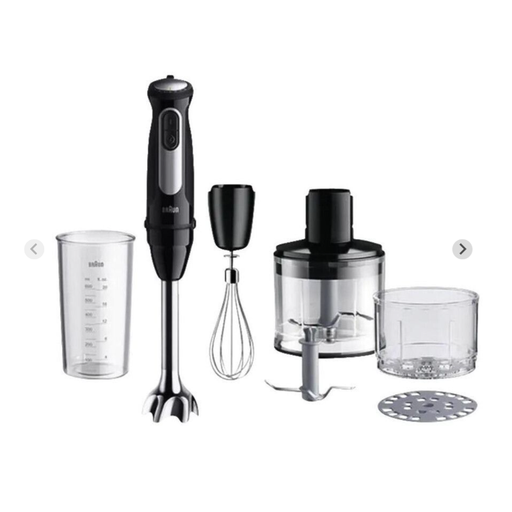 No image available
An option if you want to blend the soup in a suitable tall container and don’t need an additional jug.
When blending liquid or semi-liquid ingredients, fully immerse the blending shaft to help prevent splashes.
 No image available
A compact option if you want to blend individual portions and take one of the containers with you.
The product name lists two 0.6 l blending and drinking containers and a 300 W motor. The product information limits continuous operation to one minute.
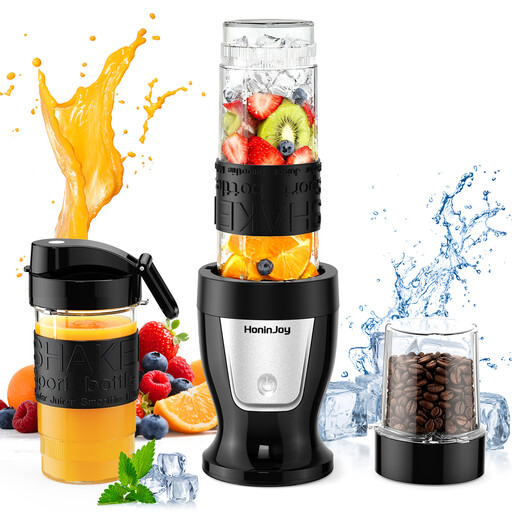 No image available
An option if you want to blend individual portions in portable cups and take them with you.
The product name lists a chopper cup and two travel cups with capacities of 20 oz and 14 oz.
Not necessarily: a compact blending cup can be handy for a single portion. What matters is the capacity you need and whether the container and lid are suitable for taking it with you.
No, you shouldn’t assume that. For the MQ50051M, Braun refers to the parts specified in the instruction manual; for the BL91HD31, Tefal lists certain jug parts without blades. Clean the lid and other parts that come into contact with food according to the instructions for the specific model.
Perishable soup shouldn’t be left unrefrigerated just because it’s in a sealable cup. The German Federal Institute for Risk Assessment recommends keeping perishable foods as cold as possible until they’re eaten. The right storage method also depends on the ingredients and surroundings.
Check that the container is suitable for its intended contact with food and for the way you plan to transport it. Materials intended to come into contact with food must meet the requirements of Regulation (EC) No 1935/2004; a product description alone doesn’t prove that a specific item complies.
EU requirements for food contact materials apply to parts intended to come into contact with soup. Which harmonised rules—and therefore which CE marking requirements—apply to an electrical appliance depends on the specific product. Your Europe explains that CE marking is required only where the relevant EU rules call for it. This doesn’t confirm that any individual product complies.