Choose your lighting to suit the size and surface of your collage. For a larger, mostly flat piece, a copy-stand setup with two adjustable lights may be a good option, while a freely positionable panel gives you more flexibility when arranging your lighting. If your collage includes glossy elements, test the light angle and diffusion with your actual setup; a high CRI rating alone does not guarantee accurate colour reproduction.
Which lighting is right for you?
Collages with a large image area
If you regularly photograph the whole piece, check that the lighting reaches the edges and avoids differences in brightness between the centre and the edges. Kaiser's published information on even illumination refers to a DIN A3 subject.
Collages with glossy elements
With foil, varnish or metal, you need to assess the light angle and reflections with your own setup. A test shot will show whether glossy areas obscure any details.
Documenting work for colour comparisons
If you want to compare colours and the whiteness of the paper across several shots, keep the lighting and white balance as consistent as possible, and include a colour reference in your photos.
What should you look for when buying?
Copy lighting with two lights
A good fit if: you want to photograph a larger, mostly flat collage repeatedly and position two light sources to suit your setup.
Things to consider: the frame and lights need space; you’ll still need to test how glossy areas look with your specific setup.
Freely positionable bi-colour panel
A good fit if: you want to position a panel flexibly and experiment with the light angle or diffusion.
Things to consider: diffusion doesn’t guarantee a reflection-free shot of foil, varnish or metal; a brightness rating doesn’t prove that the whole subject will be lit evenly.
Single panel with mains or battery power
A good fit if: you want a setup that’s easy to move and would like to start with one positionable light source.
Things to consider: check the exact kit version and whether one panel will cover your image area; according to the manufacturer, optional NP-F batteries are not included with the NEEWER NL660.
| What matters |
What to check before buying |
Who it matters most to |
| Even illumination |
Compare the collage dimensions with the light positions; use a test shot to assess brightness in the centre and at the edges. |
If you regularly document a larger area, you’ll want the centre and edges to be captured as evenly as possible. Around 31% of consumers say this is their main priority when lighting a collage. |
| Consistent colours |
Keep the light colour and white balance consistent throughout the series; include a colour reference in your photos. |
If you want to compare colours and the whiteness of the paper across several shots, a consistent shooting process matters. Around 25% of consumers prioritise consistent colours. |
| Controlling reflections |
Test with your intended camera position; assess the light angle and diffusion on both glossy and matt areas. |
If your collage includes foil, varnish or metal, you’ll want to see whether reflections obscure image details. Around 25% of consumers prioritise controlling these reflections. |
| Setup and accessories |
Check what’s included with the specific version: power supply, mount or tripod, and any batteries sold separately. |
If you want to set up the light in a particular location or use it flexibly, the power supply and mounting options need to suit your needs. Around 19% of consumers prioritise having a suitable setup. |
Avoiding common buying mistakes
-
Assuming a lux rating means the whole collage will be lit evenly
A reading taken at a particular distance doesn’t automatically tell you how bright the edges of your image will be with your setup. Kaiser's published information on even illumination applies to a DIN A3 subject.
Test your actual collage area and compare the centre with the edges. If needed, allow for additional light sources or mounting options in your setup.
-
Assuming a high CRI guarantees true-to-life colours
The colours captured also depend on your camera, white balance and shooting process. A manufacturer’s CRI and TLCI ratings alone don’t show how your particular collage will look in your photos.
Keep your lighting and camera settings as consistent as possible, include a colour reference in your photos and compare the result with the original.
-
Confusing a panel with a complete photography kit
The tripod and power supply may vary depending on the version you choose. According to the manufacturer, a tripod is included with the NEEWER NL660 version ‘with Stand’; optional NP-F batteries are not included.
Before buying, check the exact kit version, as well as the power supply, tripod or mounting options and any batteries you may need.
Brands to consider
Kaiser Fototechnik
According to the manufacturer, the RB 560 AL is a copy-lighting system with two LED lights and an adjustable frame.
- Could be worth considering for repeatable shots of flat subjects; according to the manufacturer, the lights can be dimmed and positioned separately or together.
- The published illumination figures refer to even lighting of a DIN A3 subject. You’ll still need to check the space required and whether it suits your particular collage.
Godox
According to the manufacturer, the P260C Pro is a freely positionable bi-colour panel with an integrated diffuser and DC, battery or USB-C power options.
- Godox lists a colour temperature range of 2800–6500 K for the P260C Pro, with average CRI and TLCI ratings of at least 98.
- These are manufacturer specifications for the model, not an independent assessment of colour reproduction when photographing collages.
amaran
The P60x is a bi-colour panel; according to the manufacturer, the stated contents include a softbox and grid.
- The softbox lets you change how the light falls.
- The beam angle and lux rating at a distance of one metre quoted by the manufacturer don’t, on their own, prove that a large subject will be lit evenly.
NEEWER
The NL660 is a bi-colour panel with an adjustable mount and mains power; according to the manufacturer, optional NP-F batteries can also be used.
- The choice between ‘NL660 Only’ and ‘NL660 with Stand’ gives you different kit options.
- A tripod is listed only for the ‘with Stand’ version; batteries are not included according to the manufacturer. The stated CRI is a model specification, not an independent colour test.
Related products at Joybuy
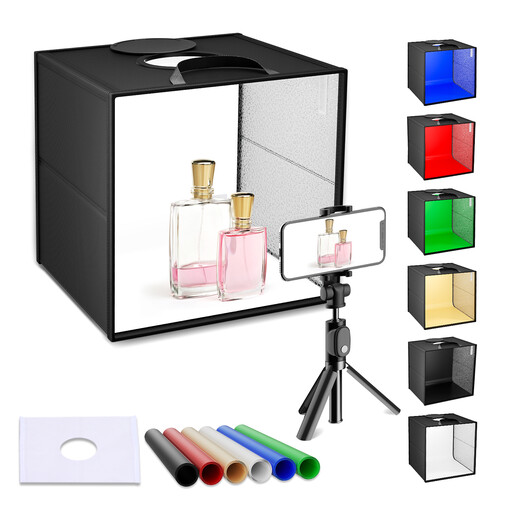
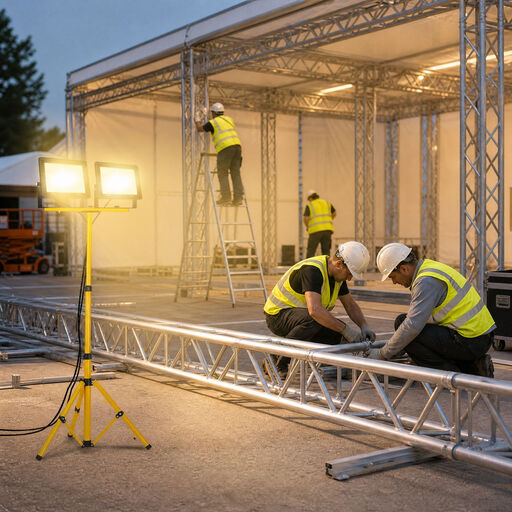
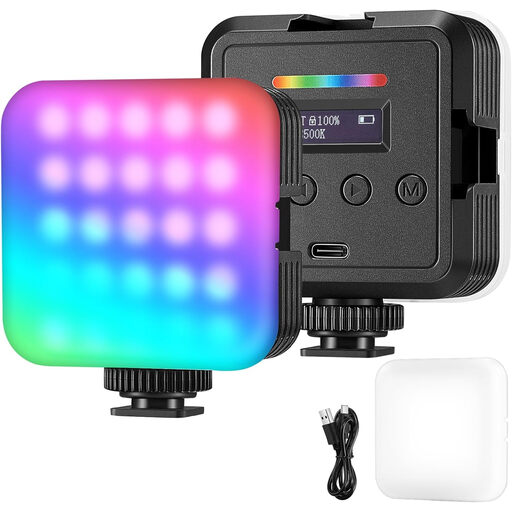
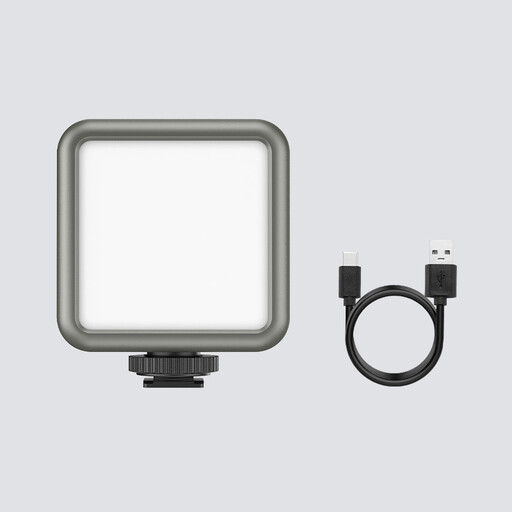
The products below range from a photo box and work lights to compact photo and video lights. For documenting collages, check in particular whether the format, light position and coverage suit your subject; not all the products listed are LED panels.
 No image available
Foldable LED photo box with coloured backgrounds
Could be suitable for a collage if your subject fits through the intended opening.
Foldable design; adjustable brightness.
View at Joybuy
 No image available
LED work-light set, 2 × 200 W, warm white
Consider these for lighting collages only if you can position the lights suitably with your setup.
Two lights; warm white; supplied with a tripod and mains cable.
View at Joybuy
 No image available
Portable RGB LED camera and video light
Could suit a setup that you need to move around; check whether its light covers the whole collage.
Designed for photography and video; with adjustable lighting modes.
View at Joybuy
 No image available
ULANZI VL49 RGB video light
Designed for mobile product or macro photography; check whether its size and light coverage are sufficient for your collage.
2000 mAh battery; dimmable; 2500–9500 K; rear magnets.
View at Joybuy
Frequently asked questions
Is one LED panel enough to light the whole collage?
It depends on the size of your collage, the distance and the position of the light. Take a test shot and compare the centre with the edges; figures given for a single measuring distance or a DIN A3 subject don’t prove that the whole image area will be lit evenly.
How can I keep colours consistent across several shots?
Keep the lighting and white balance as consistent as possible, and include a colour reference in your photos. Canon points out that you can also adjust the white balance of RAW images during post-processing.
What should I consider for mounting and operation?
Check the space available, how securely the light can be positioned and what’s included with the specific version. According to the manufacturer, optional NP-F batteries are not included with the NEEWER NL660; a tripod is listed for the ‘with Stand’ version.
Are a guarantee and your statutory rights the same thing?
No. The Verbraucherzentrale distinguishes between your statutory rights against the seller and a voluntary guarantee. Any additional cover offered by a guarantee depends on its terms and conditions.
What are the CE marking requirements for buying an electric photography light in Germany?
A CE marking is required if the relevant harmonised EU rules require it for that product. It is not an independent quality mark; you’ll need to check which rules apply to the specific light and its power supply.


