
Lieferung heute & morgen

Qualitätsgarantie

Willkommens-Angebote freischalten: KOSTENLOSE Lieferung | Bis zu 80 % RABATT | Kostenlose 30-Tage-JoyPlus-Testphase
App herunterladen
The search for an effective collagen cream can quickly become complex. The market is saturated with products promising firmer, more youthful-looking skin. However, not every cream with "collagen" on its label delivers the expected results. Many users invest in products that fail to reach their full potential due to their formulation or a lack of suitable supporting ingredients. This guide highlights the crucial criteria you should check before buying and helps you avoid common pitfalls.
Before you make a decision, it's important to distinguish between common marketing promises and actual product performance. Here are three points that often lead to poor purchasing decisions:
To make an informed choice, focus on verifiable product characteristics rather than advertising claims. The following three parameters are crucial.
Pay attention to the ingredients list (INCI). Instead of just "Collagen," you should look for terms like hydrolyzed Collagen or specific peptides. In a collagen peptide cream, the collagen molecules are broken down into much smaller fragments. These peptides are small enough to potentially penetrate deeper into the skin. There, they can act as signalling agents and stimulate the skin's own collagen production. This approach is often referred to as a collagen-boosting effect for the skin.
An effective anti-ageing cream combines collagen-supporting ingredients to achieve a comprehensive result. Key partners include:
Consider how the product fits into your existing routine. Are you looking for a lightweight day cream with sun protection, a rich night cream, or a complete collagen skincare set? Korean skincare, in particular, relies on multi-step routines that combine serums, creams, and sometimes even tech devices to maximise ingredient absorption and achieve targeted results like "Glass Skin."
Here are some recommendations that align with the criteria above and suit various user profiles.
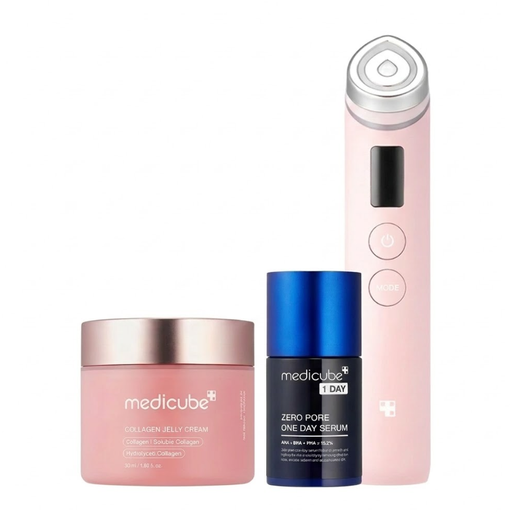
Why This Fits Their Persona: Ideal for users seeking an advanced, tech-driven routine to achieve the "Glass Skin" look. This set combines a beauty device with coordinated skincare products for a comprehensive treatment.
The set directly addresses the problem of poor ingredient absorption (Pitfall 3) with the Age-R Booster Pro, which is designed to improve the penetration of skincare products. It offers a complete system (Pitfall 2).
Combines a beauty device with targeted skincare (serum and cream) for an optimised routine and enhanced ingredient absorption.
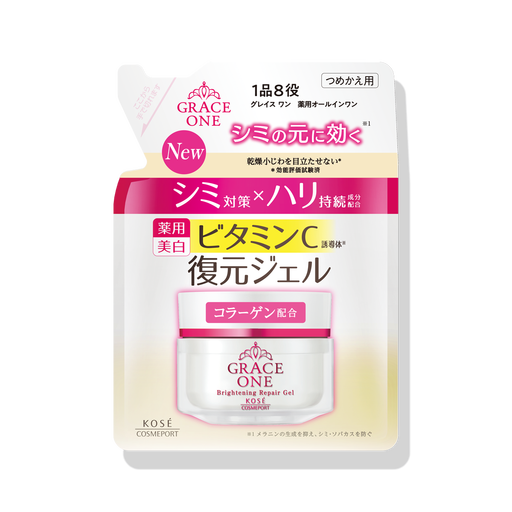
Why This Fits Their Persona: Perfect for individuals with a busy lifestyle who need a multifunctional day cream. This all-in-one product combines moisturiser, anti-ageing ingredients, and very high sun protection.
The formula is rich in synergistic ingredients (Pitfall 2), including various forms of collagen and hyaluronic acid, elastin, and antioxidants. The high SPF also protects existing collagen.
Combines daily moisturiser, UV protection (SPF50+ PA++++), and a tone-up effect in one step. The rich gel texture is tailored to the needs of more mature skin.
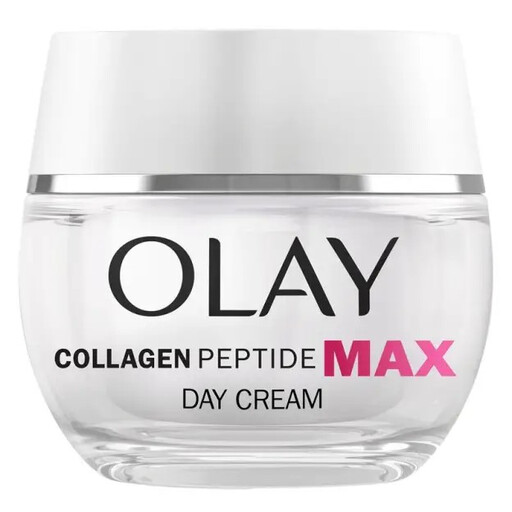
Why This Fits Their Persona: Suitable for users looking for a targeted, straightforward product from an established brand. The focus is on a proven combination of active ingredients for visible results.
The cream explicitly uses collagen peptides (Pitfall 1) and combines them with 99% pure Niacinamide, a powerful synergistic partner (Pitfall 2), to renew the skin's surface.
Concentrated formula with a high dose of moisturisers (+50% according to the manufacturer compared to a daily cream with collagen peptide) for 24-hour hydration.
We have compiled a complete, up-to-date list of products that fully meet these strict selection criteria and UK/EU safety regulations.
1. At what age does a collagen cream make sense? There is no fixed age, but the skin's natural collagen production typically begins to slow down in your mid-to-late 20s. Many people, therefore, start integrating an anti-ageing cream with collagen-supporting ingredients like peptides and antioxidants into their routine from age 30 onwards as a preventative measure. If visible signs like fine lines or loss of elasticity appear, a targeted collagen cream can be beneficial.
2. Can a cream really replace the collagen in my skin? A cream cannot replace lost collagen on a 1:1 basis. The goal of modern formulations, especially a collagen peptide cream, is to stimulate the skin to produce its own collagen. The peptides act as signalling molecules, while other ingredients like hyaluronic acid provide a plumping effect and antioxidants protect the existing collagen structure. The result is an improvement in skin firmness and texture.
3. How do I integrate a collagen cream into my skincare routine? A collagen cream is typically applied as the final step in your skincare routine after cleansing and applying serums, to lock in moisture and active ingredients. In the morning, this should be followed by sunscreen if the collagen cream itself does not contain SPF. For an optimised routine, as practiced in Korean skincare, combining it with a collagen serum or a collagen skincare set can enhance the results.