
Lieferung heute & morgen

Qualitätsgarantie

Willkommens-Angebote freischalten: KOSTENLOSE Lieferung | Bis zu 80 % RABATT | Kostenlose 30-Tage-JoyPlus-Testphase
App herunterladen
A collagen face mask can be a welcome addition to your skincare routine when your skin feels dry, tight or lacklustre. However, the choice can be overwhelming: hydrogel, sheet, jelly essence, PDRN, hyaluronic acid and “lifting” promises all sit side by side. Not every mask suits every skin type or daily schedule.
Collagen in a mask applied topically is primarily used as a nourishing and film-forming ingredient. A visible change in skin elasticity cannot be inferred from the name “collagen mask” alone. Claims such as “rejuvenates”, “removes wrinkles” or “replaces a treatment” should therefore be viewed critically. What is far more telling is the full INCI list, the recommended wear time and specific usage instructions.
A sheet mask with collagen can contain plenty of serum. However, for sensitive skin, fragrances, alcohol or numerous plant extracts can be relevant. If you are prone to redness or intolerances, test a small area of skin before first use and always follow the instructions on the packaging.
A classic sheet mask is typically designed for around 10 to 20 minutes. A hydrogel face mask can stay on the skin longer depending on the product, but should not be worn overnight as a general rule. The manufacturer’s specific instructions are what matter. If a mask is left on after it has dried, the skin feel can worsen.
Hydrogel masks often adhere closely to the contours of your face and are less likely to slip during calm application. Sheet masks are usually thinner and straightforward to use, but may not fit as well around the eyes, nose or mouth. Look for:
A good fit is often more important in daily use than the longest possible ingredient list.
For a hydrating face mask, typical ingredients include glycerin, hyaluronic acid, betaine or panthenol. Ceramides can be used in formulations to support the skin barrier. If you are aiming for a more even complexion, you will often find niacinamide in the formula. For sensitive or dry skin, you should also watch out for fragrances, alcohol and any known personal triggers.
PDRN, peptides or various forms of collagen are not uniform quality grades. Check where they appear on the INCI list and whether the product description gives specific details about the quantity. The ingredient list can change, so the packaging of the batch you receive is the definitive source.
A single mask is ideal if you want to try out a new formula first. Multi-packs are more practical for regular routines. Don’t just compare the pack price, but also:
An anti-ageing face mask that is rarely used because of its short shelf life may be less suitable for everyday life than a simple mask in a five- or ten-pack.
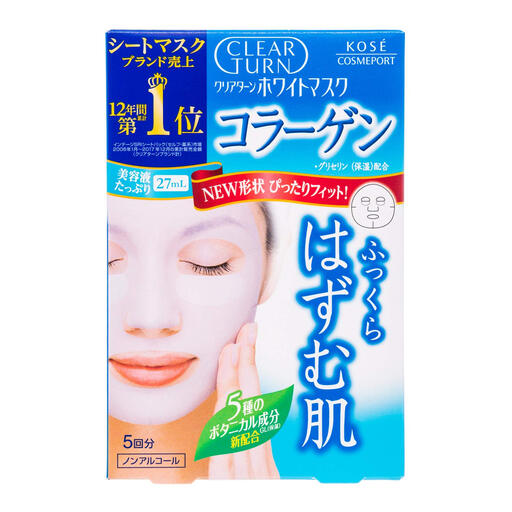
Why this product fits the profile: Five individual sheet masks are ideal for anyone looking for a manageable skincare routine with regular use.
The stated wear time is around 10–15 minutes. This reduces the temptation to leave a classic sheet mask on the skin for longer than necessary.
Soluble collagen and succinoyl atelocollagen; five individual masks for planned applications.
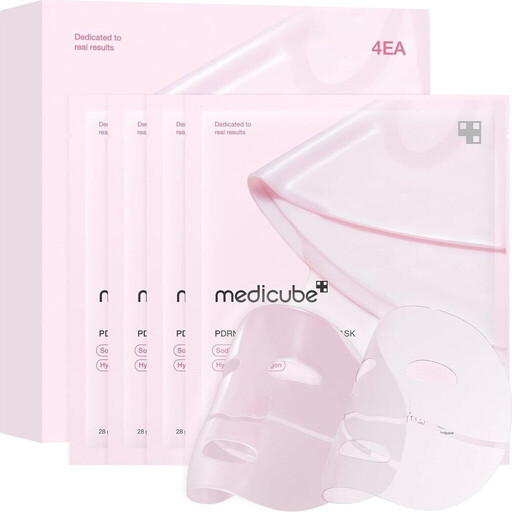
Why this product fits the profile: The hydrogel face mask combines a close-fitting structure with a detailed, clearly stated formula for targeted self-care application.
The product information explicitly states a wear time of 30–40 minutes. This clearly distinguishes it from a short sheet mask application.
Hydrolysed collagen, sodium DNA (PDRN), niacinamide and ceramide NP are listed in the stated INCI list.
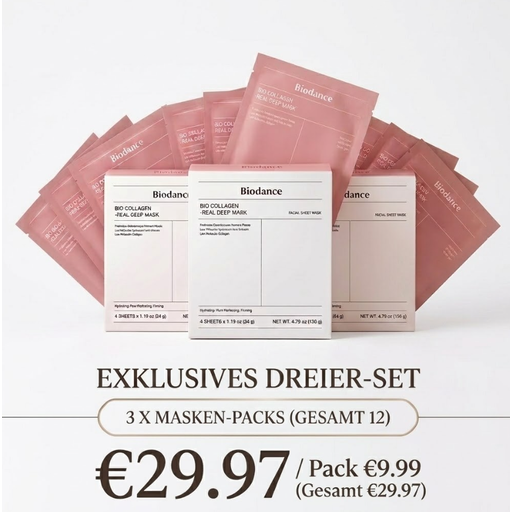
Why this product fits the profile: Twelve individually packaged hydrogel masks are ideal for regular routines and for those who prefer a longer wear time.
The pack quantity and the intended hydrogel application are clearly stated. For longer wear, the instructions on the specific packaging should be followed.
Twelve individual masks, each 34 g; the product description mentions a collagen-focused hydrogel formula.
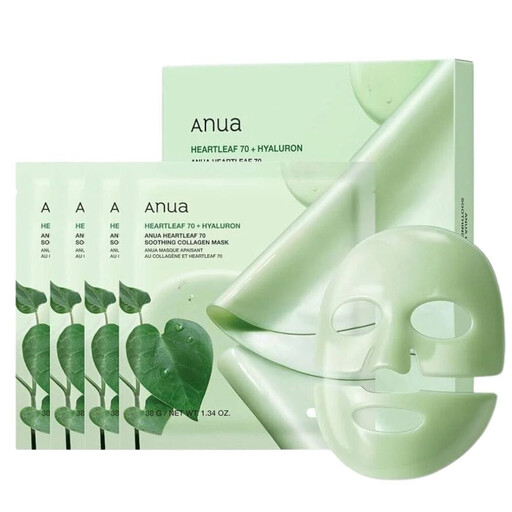
Why this product fits the profile: The formula combines heartleaf (Houttuynia cordata) water, collagen and several forms of hyaluronic acid, making it suitable for dry, tight-feeling skin.
The application time is stated as 15–20 minutes, making it practical for daily use. The current ingredient list should be checked for personal intolerances before purchase.
Four hydrogel masks, each 38 g; allantoin, aloe vera extract and hyaluronic acid are included in the stated formula.
We have put together a complete, regularly updated list of products that fully meet these strict selection criteria and the safety regulations in force in the EU.
If you experience burning, itching, redness or swelling, stop using the mask immediately. Masks should not be applied to broken or inflamed skin. Avoid contact with the eyes and mucous membranes.
This depends on the formula and the manufacturer’s instructions. Many sheet and hydrogel masks are intended for use once or twice a week. If you have sensitive skin, it is advisable to start cautiously with longer intervals between uses.
Only if this is explicitly stated. Some hydrogel products are designed for several hours, whereas classic sheet masks should be removed after around 10–20 minutes. The product packaging is the definitive guide.
It can temporarily support a more hydrated skin feel thanks to humectants such as glycerin or hyaluronic acid. For dry skin, follow-up care with a suitable moisturiser is important. A face mask does not replace a personalised skincare routine or dermatological advice for persistent concerns.