
Lieferung heute & morgen

Qualitätsgarantie

Willkommens-Angebote freischalten: KOSTENLOSE Lieferung | Bis zu 80 % RABATT | Kostenlose 30-Tage-JoyPlus-Testphase
App herunterladen
Anyone looking for collagen products for skin and joints will find food supplements and cosmetics in a wide range of formats: marine collagen, collagen powder, collagen tablets, collagen liquid, collagen ampoules and collagen serum. The choice may initially seem straightforward, but becomes more complex on closer inspection. What matters is not eye-catching wording on the packaging, but the type of collagen, amount per serving, additional ingredients and the product’s actual intended use.
A collagen serum or collagen booster is applied externally. A collagen food supplement, on the other hand, is taken orally. The two product groups are therefore not directly interchangeable. With cosmetics, the focus is on the formulation, skin compatibility and hydration. With food supplements, factors such as the ingredients list, dosage and directions for use are important.
5,000 mg of hydrolysed collagen per serving may initially sound more substantial than 3,000 mg. However, that alone does not determine whether the product is suitable. A product for daily use must fit your personal diet, preferred format and any additional ingredients you may wish to avoid. With tablets, it is also important to check how many need to be taken each day.
Flavourings, sweeteners, preservatives and vitamins may be relevant to some shoppers. Marine collagen generally contains fish ingredients and is not automatically suitable for people with a fish allergy. Vitamin-containing products should not be combined uncritically with other preparations. The information on the specific label is what matters.
Hydrolysed collagen, also known as collagen hydrolysate, consists of broken-down collagen peptides. The ingredients list should clearly state whether the collagen comes from fish or another source. Marine collagen is of interest to people who specifically want to choose a fish source; at the same time, the “contains fish” warning must be taken into account.
With powder, it is worth checking:
Collagen powder offers flexible dosing and can be stirred into drinks or foods. Collagen tablets are neatly portioned, but require several tablets to be taken along with sufficient liquid. Collagen liquid and ampoules can be taken directly and are suitable for use on the go.
The most convenient format is not automatically the most suitable for everyone. If you prepare drinks every day, powder may work well for you. If you prefer not to prepare anything while out and about, you may prefer liquid sticks. The key question is whether the recommended intake can be incorporated into your daily routine over the long term.
Some formulations combine collagen with vitamin C, vitamin D, vitamin E, zinc or manganese. Under EU nutrition labelling rules, vitamin C can contribute to normal collagen formation. This is an authorised nutrient claim, not a promise of a particular result for the skin or joints.
You should also check:
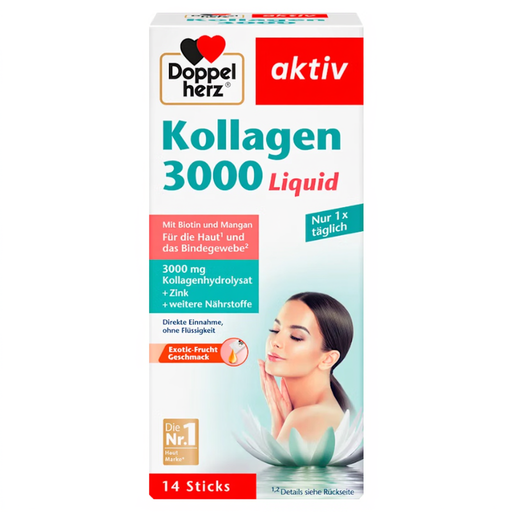
Why this product suits this profile: The 14 liquid sticks are designed for people who prefer a pre-measured dose that can be taken without water. Each stick contains 3,000 mg of collagen hydrolysate.
The amount of collagen per stick and the recommended daily intake are clearly stated. This makes it easier to calculate how long the pack will last.
Can be taken directly without water; also formulated with vitamins and minerals.
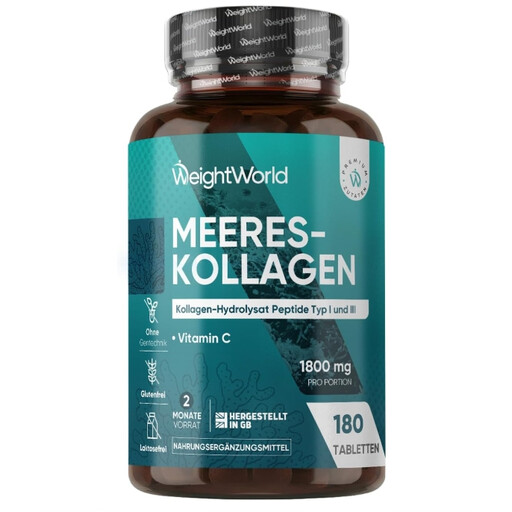
Why this product suits this profile: The tablets contain hydrolysed marine collagen peptides and, according to the product information, are designed to provide a three-month supply when taking two tablets a day.
The source and allergen warning are stated explicitly. This makes it easier for people who specifically need to take fish ingredients into account when choosing a product.
180 tablets; unflavoured formula; hydrolysed marine collagen peptides clearly identified as the main ingredient.
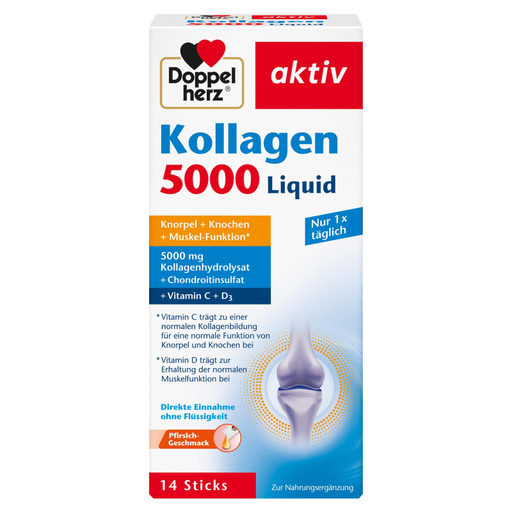
Why this product suits this profile: Each stick contains 5,000 mg of collagen hydrolysate and 80 mg of chondroitin sulphate. The liquid format is designed for easy use when you are out and about.
The formula lists collagen, chondroitin, vitamins C, D and E, and manganese separately. This makes the combination easier to understand than a generalised booster claim.
5,000 mg of collagen hydrolysate per stick; vitamin D provides 400% of the reference value per serving according to the product information.
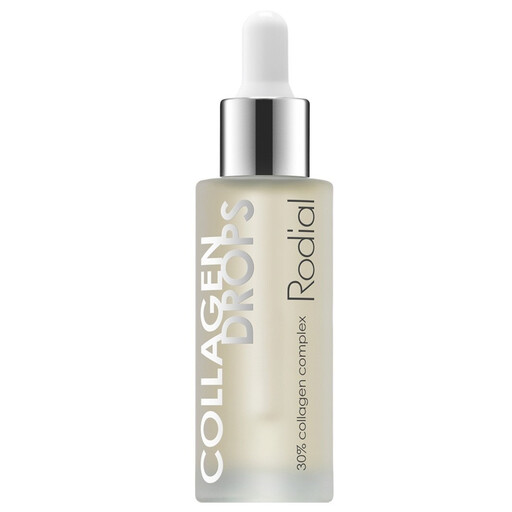
Why this product suits this profile: The drops are intended for external application to the face and neck. The formula contains soluble collagen, sodium hyaluronate and almond oil ingredients.
Its use is clearly separate from that of oral collagen products. This makes it easier to check before buying whether you are actually looking for facial care rather than a food supplement.
31 ml bottle; apply two to three drops; added hydrating care with hyaluronic acid.
We have put together a complete, regularly updated list of products that fully meet these strict selection criteria and the safety regulations applicable in the EU.
For an oral product, follow the serving size stated on the label. Food supplements are not a substitute for a balanced diet or a healthy lifestyle. If you already take vitamin D or other fortified preparations, check your total intake. If you are pregnant or breastfeeding, have a chronic illness, take medication or have known allergies, it is advisable to consult a doctor.
A collagen serum, ampoule or booster follows different rules:
It depends on the pack size and daily serving. 180 tablets taken at two tablets a day equates to 90 days. A pack of 14 liquid sticks lasts 14 days when taken daily. For a fair price comparison, you should therefore consider the price per serving rather than just the pack price.
Powder is suitable if you regularly prepare drinks or foods and want flexibility over the amount you use. Liquid and ampoules are already portioned and usually require no water. However, they may contain flavourings, sweeteners or preservatives. The ingredients list is what determines the right choice.
A serum is applied externally, while a collagen preparation is taken orally. The products therefore serve different functions within your personal skincare or dietary routine. A combination should not be understood as a guarantee of results. With food supplements, dosage, allergens and possible interactions must be considered; with cosmetics, skin compatibility and correct application are the main priorities.