
Lieferung heute & morgen

Qualitätsgarantie

Willkommens-Angebote freischalten: KOSTENLOSE Lieferung | Bis zu 80 % RABATT | Kostenlose 30-Tage-JoyPlus-Testphase
App herunterladen
Collectible figures and building sets for children combine creative play, building and collecting. The selection ranges from LEGO collectible figures and LEGO building sets to action figures for collecting, blind-box figures and themed worlds such as Marvel, Star Wars, Disney, NINJAGO, Harry Potter and Sonic. To ensure a gift does not end up unused after a short time, parents and relatives should take a closer look at the recommended age, number of pieces and play concept.
This selection from the Joybuy Product Recommendation Officer objectively assesses the most important buying criteria and highlights products for different user profiles.
Large packaging, elaborate images and terms such as “complete series” can create the impression that several different figures are included. However, a blind-box product generally contains just one random figure per order. Duplicate designs are possible when several individual boxes are purchased.
For sets containing several figures, you should therefore check the exact quantity. For example, a LEGO set may contain many building pieces but only a few minifigures. With collectible figures, it is important to check whether accessories, interchangeable parts or several characters are actually listed as included.
Small building pieces and accessories can pose a choking hazard for children under 3 years old. Even if a product looks suitable for children, the manufacturer’s age recommendation is decisive. A set for ages 6, 9, 12, 14 or 18 and over is not automatically suitable for younger children.
For a gift for children aged 3 and over, products with the appropriate age marking and a manageable amount of accessories are therefore more suitable. With younger children, adult supervision is also recommended, particularly for figures with small accessories.
Terms such as “rare”, “secret” or “chaser” describe a possible variant, but do not guarantee that this exact figure will be delivered. With blind-box figures, the precise contents are unknown before opening. If you want to give someone a specific character, choose a product with clearly defined contents, such as a set with specified LEGO minifigures or a figure pack containing named characters.
The recommended age should always match the child’s stage of development. For children aged 3 and over, for example, figures that require no assembly or simple playsets may be suitable. For building and display models with several hundred pieces, however, you should consider the child’s patience, fine motor skills and previous building experience.
You should also check:
The number of pieces is an objective indication of the scope of a building set, but on its own it says nothing about the actual build time. A set with 119 pieces can provide a quick introduction, while a model with 931 or 1,138 pieces is more suited to longer building sessions followed by display.
For children who want to start playing straight away, ready-made toy figures or small battle packs are usually more practical. Those who enjoy building step by step can benefit from LEGO building sets with digital 3D instructions. For compatible products, the LEGO Builder app supports features including rotating and enlarging the model, as well as tracking building progress.
For plastic figures, check the material details and safety information on the product page or packaging. Joints, accessories and stability are also important in everyday use. Articulated action figures for collecting are better suited to role-play, while larger models with a base or nameplate are aimed more at display in a cabinet, on a desk or on a shelf.
It is worth checking the finished dimensions before buying. A Spider-Man standing 36 cm tall or a 38 cm-high C-3PO requires considerably more display space than a Disney figure measuring 5 cm high.
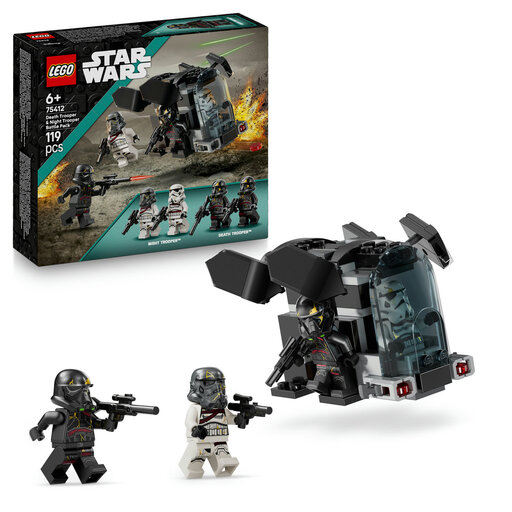
Why this product suits the profile: This set is aimed at Star Wars fans aged 6 and over and combines four minifigures with a small buildable landing craft.
The contents clearly specify the four figures and 119 pieces. This is not a random blind-box selection.
Four minifigures, a 6 cm-high landing craft and two shooters provide a clearly defined play experience.
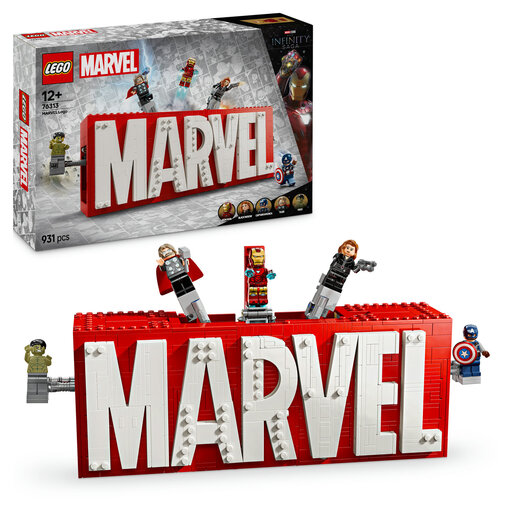
Why this product suits the profile: For Marvel fans aged 12 and over, this model combines decorative display with five named Avengers minifigures.
The scope is easy to understand, with 931 pieces and five specific figures. The figures can be launched from the logo using three push buttons and put back in place.
The completed model is 28 cm wide and 11 cm high; the app provides digital 3D building instructions.
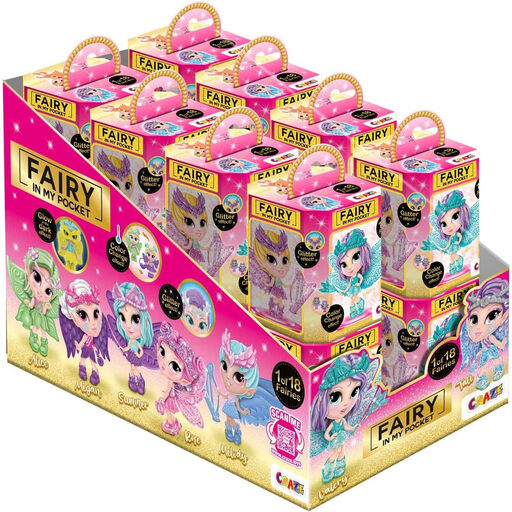
Why this product suits the profile: The 16-piece set is specified for children aged 3 and over and is suitable for swapping, role-play or keeping as part of a small collection.
Unlike a single blind-box figure, the display contains 16 fairies. The versions with glitter, glow or colour-changing effects may vary.
16 figures with accessories and three themed families; no assembly required.
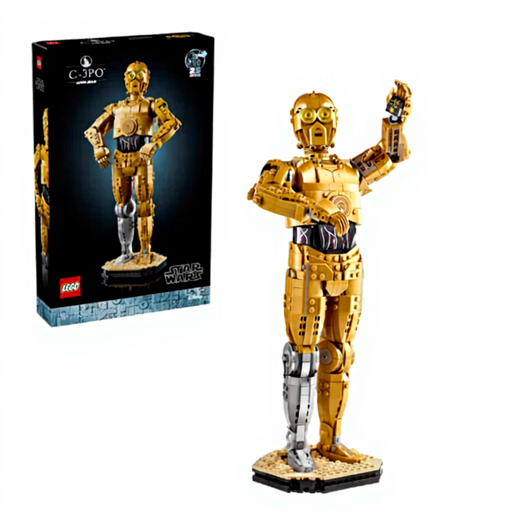
Why this product suits the profile: This model is aimed at fans aged 18 and over and, with 1,138 pieces and a height of 38 cm, is designed for building and display.
The age group, number of pieces and model height are clearly stated. This makes it easier to assess the space required before buying.
Articulated head and arms, a display base with information plaque and an additional C-3PO minifigure.
We have compiled a complete, regularly updated list of products that fully meet these strict selection criteria and the safety regulations applicable in the EU.
Suitable products are those whose manufacturer explicitly states an age recommendation of 3 and over. It is also important to check the warnings about small parts. Figures that require no complicated assembly, such as a defined multi-figure set, may be more practical for younger children than blind-box figures with small accessories.
Yes, provided that the age recommendation is right for the child. Small LEGO sets for ages 5 or 6 and over offer an accessible introduction. Larger models for ages 12, 14 or 18 and over are more suitable for teenagers and adult fans. The number of pieces, model size and intended build time should be considered before buying.
How long they remain engaging depends on the play concept. Figures with articulated parts and accessories encourage repeated role-play, while display models are mainly intended to be shown once built. With blind-box figures, the element of surprise is also central; if you are looking for a specific figure, choose a product with clearly defined contents.