Photographers working in changing light
If you photograph the same site in sunshine, cloud or backlight, look for precise exposure control and check whether RAW files suit your editing workflow.


For exterior shots of colliery sites, choosing the right angle of view and knowing how to work in changing light are key. RAW and precise exposure control can help when you’re dealing with bright skies and dark steel structures. High resolution matters most if you plan to crop heavily later, while a lighter system can make longer walks more comfortable. Always check stabilisation, lens compatibility and weather protection for the specific camera-and-lens combination.
If you photograph the same site in sunshine, cloud or backlight, look for precise exposure control and check whether RAW files suit your editing workflow.
The lens’s angle of view matters when you’re photographing entire winding towers. Resolution can also make a difference if you plan to crop heavily or print large images later.
On longer walks, it’s the weight of your complete kit that matters, not just the camera body. Also factor in the weather protection offered by both the camera and the attached lens.
| Purchase priority | What to check before buying | Who is it especially important for? |
|---|---|---|
| Exposure in changing light | Check RAW capture, exposure compensation and bracketing on the specific model. | When I’m photographing the sky and dark steelwork in backlight, I want to be able to control the exposure precisely. Around 36% of consumers put exposure in changing light first. |
| Angle of view and architectural details | Compare focal length in relation to sensor format, wide-angle lenses and effective resolution. | When I want to capture an entire winding tower and crop into details later, I need the right angle of view and enough resolution to work with. Around 29% of consumers prioritise angle of view and architectural details. |
| Portability and use in different weather | Check the weight with the lens attached, the protection ratings for both components and the conditions under which stabilisation works. | When I’m taking photos on a longer walk, I want kit that’s comfortable to carry and can cope with changing weather. Around 21% of consumers prioritise portability and use in different weather. |
| Total cost and system compatibility | Check what’s included, the mount, any lenses you already own and whether you’ll need an adapter. | When I already own lenses or am putting together a complete system, I want to know what I can keep using and what else I’ll need. Around 14% of consumers prioritise total cost and system compatibility. |
High resolution gives you more room to crop, but it won’t bring a building into the frame if it doesn’t fit within the angle of view when you take the shot.
First, work out the angle of view you need at your chosen locations. Then compare the system’s resolution and available lenses.
You may need an additional wide-angle lens to get the angle of view you want.
Manufacturers’ stabilisation figures depend on the stated test conditions and, in some cases, the lens used. The Canon EOS R10 does not have in-body image stabilisation.
Compare the specific camera-and-lens combination. For deliberately long exposures of a still exterior, a stable support can be useful.
Stiftung Zollverein’s rules vary according to the intended use. They apply to this site and not automatically to other colliery sites.
Before taking photos, check the rules for the specific site and your intended use. Also follow any closures and site regulations.
Canon’s EOS R system includes APS-C bodies such as the EOS R10 and full-frame models such as the EOS R5 Mark II.
Sony’s full-frame E-mount system includes the α7 IV and the higher-resolution α7R V.
The Z6III is a full-frame option in Nikon’s Z system for anyone who values the viewfinder and controls alongside photo and video features.
The APS-C X-S20 combines RAW capture with sensor-based stabilisation.
The OM-5 Mark II is a compact, outdoor-focused interchangeable-lens camera for longer walks and changeable weather.
The products below are relevant to architectural views and cropping. Before buying, check that the design and weather protection suit your trip to the colliery.
 No image available
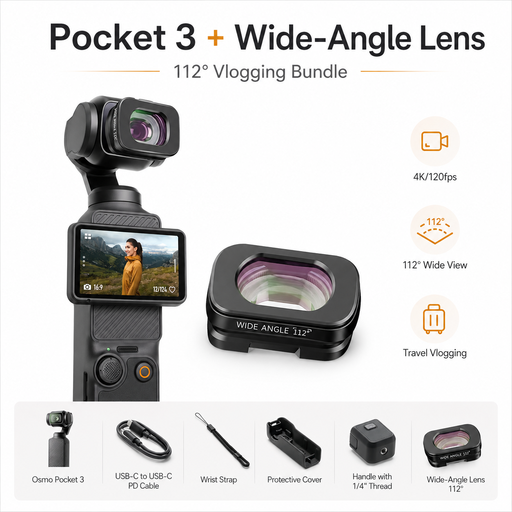
The wide-angle lens included in the bundle may be useful for architectural views if you’re looking for a wider angle of view.
The product title also lists a 1-inch CMOS sensor, 4K/120fps video and a 3-axis gimbal.
 No image available
The interchangeable-lens system may suit architectural photography if the supplied zoom lens gives you the angle of view you want.
The product title lists a 16–50 mm lens. The camera is not water-resistant, so don’t plan to use it as weather-protected kit.
Check the exposure on your subject and use exposure compensation or bracketing if needed. RAW can be useful for editing afterwards. Sony describes these features as tools for difficult lighting conditions, not a guarantee for every subject.
Not in every situation. Manufacturers’ stabilisation figures apply under specific test and lens conditions. For deliberately long exposures of a still exterior, Sony suggests using a tripod. When you’re on site, make sure it doesn’t obstruct other visitors.
Compare the body and kit with the lens you need and any adapter you may require. If a new product is faulty, you have statutory warranty rights against the seller. Verbraucherzentrale distinguishes these from a voluntary guarantee and states that, for newly purchased goods, the period is generally two years from handover.
Under the conditions set out in § 59 UrhG, you may photograph works that are permanently located on public paths, roads or squares. For buildings, the rule is limited to their exterior, as explained by Gesetze im Internet. This does not automatically mean you can enter private land or disregard its site rules.
Stiftung Zollverein generally allows private photography in outdoor areas without permission or charge, but lists some exceptions. The foundation says you don’t need permission for editorial photography in freely accessible outdoor areas, but asks you to register in advance. Photography for commercial publication requires permission. You must not enter closed areas. These site rules do not automatically apply to other collieries.