
Lieferung heute & morgen

Qualitätsgarantie

Willkommens-Angebote freischalten: KOSTENLOSE Lieferung | Bis zu 80 % RABATT | Kostenlose 30-Tage-JoyPlus-Testphase
App herunterladen
Color-treated hair requires a specialized care routine to maintain its vibrancy and protect the hair's structure. However, the hair care market is saturated and filled with marketing promises that often create more confusion than clarity. Many users invest in products that fail to deliver the desired results or even cause additional damage to their hair.
As your Joybuy Product Recommendation Officer, I'm here to help you understand the crucial criteria and avoid common purchasing traps. This guide focuses on the objective properties that define a high-quality shampoo for color-treated hair.
Before you make a purchase, it's important to recognize widespread misconceptions and exaggerated advertising claims that can lead to poor choices.
To find a suitable shampoo for colored hair, you should concentrate on three core technical parameters instead of marketing messages.
Surfactants are responsible for a shampoo's cleansing action. For colored hair, a gentle yet thorough cleanse is crucial.
Check the ingredient list (INCI): If mild surfactants are listed near the top, it's a good indicator of a gentle formulation.
After a coloring process, the hair's cuticle layer is often slightly open. A shampoo with a slightly acidic pH value (around 4.5 to 5.5) helps to close this cuticle layer again. A closed cuticle reflects light better (more shine) and locks color pigments inside the hair shaft. Ingredients like Citric Acid are frequently used to regulate the pH value.
Depending on your hair color and needs, different active ingredients are relevant:
Here are three product recommendations tailored to the different needs of individuals with color-treated hair, taking the above criteria into account.
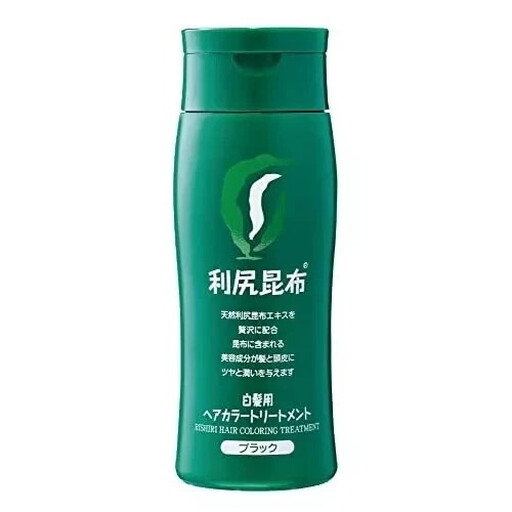
Why This Fits Their Persona: Ideal for users who want to gradually and subtly blend their first grey hairs rather than covering them with permanent dye. This shampoo combines daily cleansing with a gentle toning effect.
This product avoids the "instant color-sealing" trap by being clearly positioned as a toning shampoo for gradual color deposit. It doesn't promise a permanent fix but a nourishing alternative for a color refresh.
Combines cleansing and color refreshing in one step. According to the manufacturer, the formula contains Rishiri Kombu extract for moisture and is free from diamine dyes and parabens.
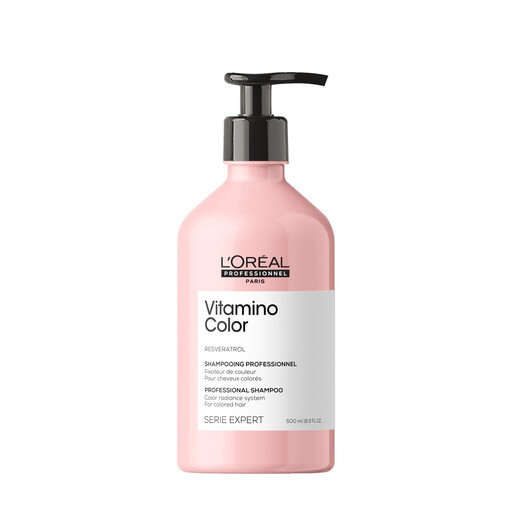
Why This Fits Their Persona: Suitable for users with freshly colored or highlighted hair whose priority is protecting against fading and maintaining shine. A classic color-protecting shampoo for regular use.
This shampoo relies on a specific active mechanism rather than vague natural promises. It uses the antioxidant Resveratrol to protect hair from external aggressors that cause color to fade—a focused, technical approach.
The formula with Resveratrol aims to protect hair fibers from damage that leads to color fading. The acidic pH (Citric Acid) helps smooth the cuticle for enhanced shine.
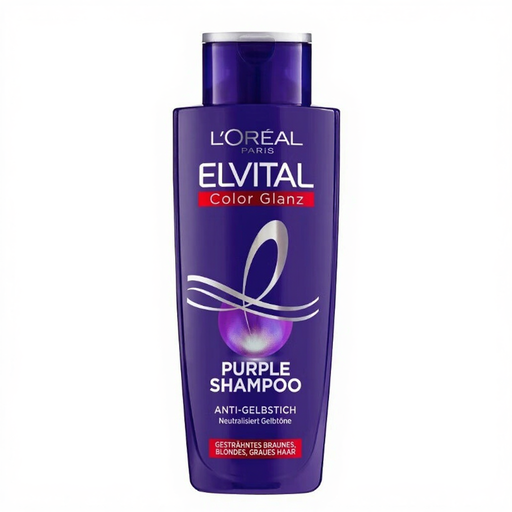
Why This Fits Their Persona: Specifically for people with bleached, highlighted, or grey hair who want to correct unwanted yellow or orange tones. A specialty product for a clear, cool color result.
This product isn't a jack-of-all-trades; it's a specialist. It avoids the trap of being a general color-protecting shampoo and focuses on the demonstrable function of color correction via violet pigments (CI 60730).
Contains highly concentrated violet pigments for effective neutralization of yellow and orange tones. The formula is also enriched with a UV filter for additional color protection.
We've compiled a complete, up-to-date list of products that fully meet these strict selection criteria.
1. How often should you use a purple shampoo? An anti-yellow shampoo should not be used with every wash, as it can over-tone the hair and leave a purple or blue tint. Using it once or twice a week, alternating with a regular color-protecting shampoo, is usually sufficient to maintain the desired cool tone.
2. Can a color-depositing shampoo replace a professional color treatment? No. A color-depositing shampoo is an at-home product for refreshing color or providing light coverage. It only deposits pigments on the surface of the hair and washes out over time. It cannot replace a professional hair color, which is chemically anchored in the hair and offers superior coverage and longevity, but it can extend its life.
3. Is a sulfate-free shampoo guaranteed to be gentler on hair color? Not necessarily. The "sulfate-free" label alone is not a guarantee of better color protection. The entire product formulation is what matters. A well-formulated shampoo with mild sulfates in a low concentration, combined with nourishing ingredients and an acidic pH, can be just as suitable for colored hair, or even better, than a poorly formulated sulfate-free product.