
Lieferung heute & morgen

Qualitätsgarantie

Willkommens-Angebote freischalten: KOSTENLOSE Lieferung | Bis zu 80 % RABATT | Kostenlose 30-Tage-JoyPlus-Testphase
App herunterladen
Whether it’s nursery, homework or creative afternoons, colouring and writing supplies for children need to suit their age, hand size and specific use. A large colour range alone doesn’t say much about everyday practicality. What really matters includes the grip shape, the tip, washability and clear safety labelling.
A comprehensive marker set or a large pack of colouring pencils looks appealing. However, if many very similar shades are included, some pencils often go unused. For younger children, 8 to 24 clearly distinguishable colours are usually more manageable. Older children and teenagers, on the other hand, benefit from finer colour gradations for drawings, journaling or creative school projects.
With washable wax crayons or felt-tip pens, you should check exactly what the claim refers to. Product information often mentions skin and most fabrics, but not every wall, piece of furniture or carpet. A damp cloth and a wipe-clean workspace are therefore still a good idea. Stains should be treated as soon as possible.
Very broad tips are fine for colouring in, but less suitable for small letters and precise notes. Conversely, fine tips can break more easily with younger children or encourage a cramped hand grip. With colouring pencils for children, felt-tip pens for children and writing pens, the intended use should therefore be the main consideration.
For nursery-age children, jumbo wax crayons with a chunky, easy-to-hold body are practical. Product details should include an age recommendation. With small parts, also pay attention to the warning notice: several sets are not suitable for children under three years old or require adult supervision.
For school-age children, classic wooden pencils, gel pens and ballpoint pens with a non-slip surface are often more versatile. Look out for:
With water-based colours, cleaning is usually easier than with permanent inks. Even so, you should check the specific product description. A felt-tip pen for children with washable ink is a different choice for craft activities at the kitchen table compared to a permanent marker for cardboard, labelling or creative DIY projects.
For left-handed children, quick-drying inks can be helpful, as they reduce the time the hand moves over freshly written lines. However, this doesn’t guarantee smudge-free results on every type of paper.
A chisel tip allows different stroke widths depending on the angle. With the STAEDTLER Textsurer Classic Set, for example, a line width of approximately 1 to 5 mm is specified. A flipchart marker like the STAEDTLER Lumocolor works with a 2 to 5 mm wide chisel tip according to the product description and is intended for paper flipcharts.
For fine notes and drawings, coloured gel pens with a 0.5 mm tip can be suitable. A ballpoint pen set with several colours, on the other hand, makes it easier to colour-code school notes, provided the ink writes cleanly on the paper you use.
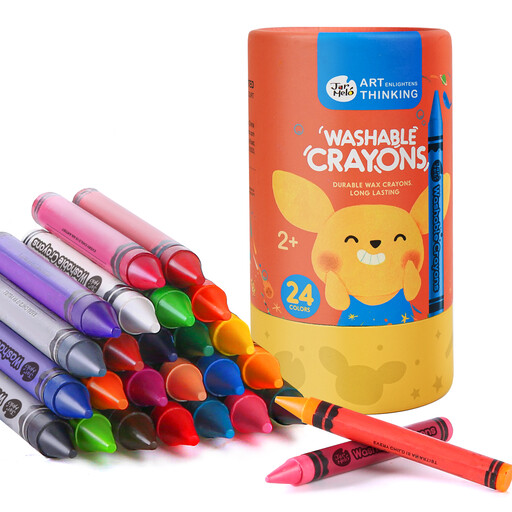
Why this product fits the profile: The 24-piece set offers a manageable colour selection for first drawings at home or in nursery. The jumbo shape is designed for small hands, according to the product details.
The colour selection remains manageable. The product description mentions washable materials; however, stains should still be treated promptly and according to the care instructions.
24 jumbo wax crayons, chunky shape and, according to the product details, washable colours.
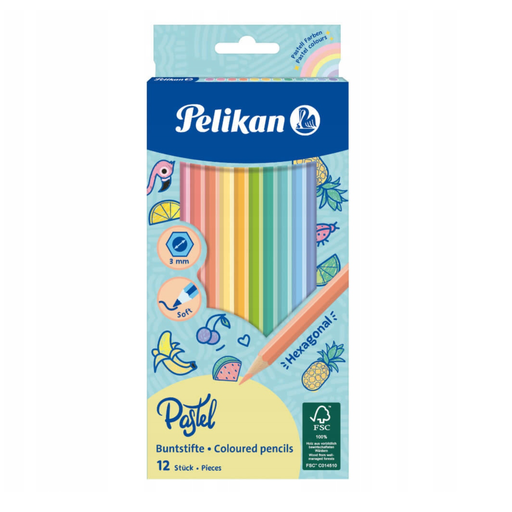
Why this product fits the profile: The pre-sharpened pastel colouring pencils are intended for drawing, writing and sketching, making them suitable for nursery, school and creative projects.
The product data states the quantity, the pre-sharpened finish and the intended use. This makes it easy to assess what’s included before buying.
12 pastel colours, pre-sharpened pencils and a broad tip for drawing and colouring.
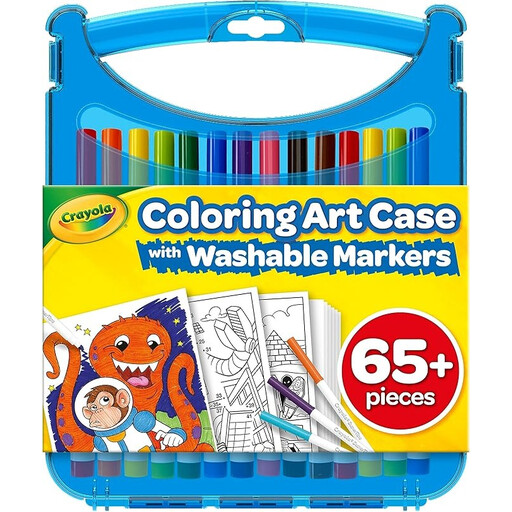
Why this product fits the profile: The set combines 25 washable felt-tip pens with 40 sheets of paper and a carry case. It is intended for children aged four and over, as well as for travel, school and craft activities.
Storage in the case reduces loose items lying around. According to the product details, washability refers to skin and most fabrics, not every surface.
25 markers, 40 sheets of paper, carry case and a stated age recommendation from four years.
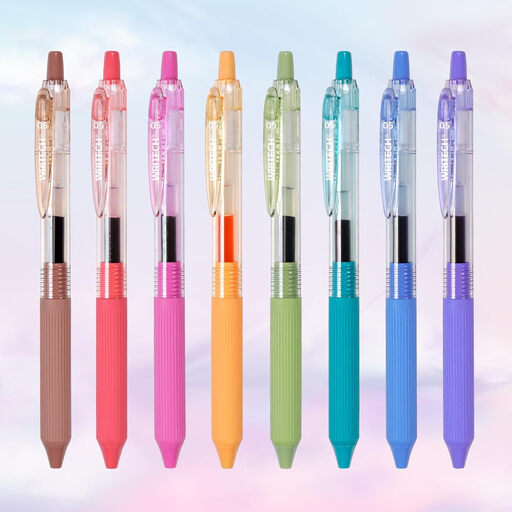
Why this product fits the profile: The eight gel pens with a 0.5 mm tip are designed for colour-coded notes, journaling and detailed lines. The retractable mechanism protects the tip during storage.
The stated fine tip is clearer to assess for precise applications than a broad marker. The product description still notes possible stains on fabrics and surfaces.
Eight colours, 0.5 mm tip, retractable mechanism and, according to the product description, a quiet click mechanism.
We’ve put together a full, regularly updated list of products that fully meet these strict selection criteria and the safety regulations in force in the EU.
For school supplies, a combination of colouring pencils, highlighters and a multi-coloured ballpoint pen set can be enough. A chisel-tip highlighter is practical when you need both narrow underlining and broader markings. For presentations or large paper surfaces, special markers like a flipchart marker are more suitable than ordinary felt-tip pens.
If you do regular crafting, a coordinated craft supplies for children set is worthwhile: paper, a suitable mat, colouring pencils, washable felt-tip pens and a labelled storage box. This keeps drawing materials for children easy to find and stops them drying out as quickly when the caps are closed.
For younger children, chunky wax crayons or short, easy-to-grip felt-tip pens are often easier to handle. The age recommendation, warnings about small parts and a tip that doesn’t require excessive pressure are all important. Use should match the child’s developmental stage.
No. ‘Washable’ describes easier cleaning under the conditions stated in the product description. Skin and many fabrics can often be treated with water or a damp cloth. Residues can still remain on wood, wallpaper, upholstery or untreated surfaces.
Durability depends on pressure, storage and use. Caps should be closed after every use, and gel pens retracted when not in use. Dry storage away from direct sunlight protects colours and materials. With frequently used sets, individual tips or leads may need replacing sooner than rarely used pens.