
Lieferung heute & morgen

Qualitätsgarantie

Willkommens-Angebote freischalten: KOSTENLOSE Lieferung | Bis zu 80 % RABATT | Kostenlose 30-Tage-JoyPlus-Testphase
App herunterladen
By: Joybuy Product Recommendation OfficerDate: July 16, 2026
Choosing the right bike lock is a crucial decision for any cyclist. A reliable lock protects your bike from theft and gives you peace of mind when you leave it unattended. In particular, a combination bike lock offers the convenience of not having to carry an extra key. This article serves as an objective guide to help you make your choice. We will introduce various models and explain the key features to consider when searching for the right security solution for your bicycle, e-bike, or mountain bike.
To make an informed decision, several technical aspects should be considered. These criteria will help you objectively evaluate the features of different bike locks.
The security of a combination lock largely depends on the number of digits and the quality of the locking cylinder. A 5-digit combination lock offers 100,000 possible combinations, whereas a 4-digit model provides 10,000. A higher number of combinations can significantly increase the time required to crack the code.
Additionally, the thickness of the cable or chain is crucial. A steel cable with a diameter of 12 mm or more offers greater resistance to cutting tools than thinner versions. For valuable bikes, a high-security e-bike lock or mountain bike lock is recommended. This level of security is achieved through a combination of robust materials and a complex locking mechanism.
The length of the lock determines how and where you can secure your bike. A 120 cm bike lock generally provides enough length to secure the frame, and often a wheel, to a fixed object like a bike rack, lamppost, or railing.
A coiled cable lock is especially practical in this regard. Its self-coiling design makes it compact and easy to transport when not in use. This flexibility is a major advantage for storing the lock in a bag or directly on the bike frame.
For daily use, ease of handling and useful accessories are a plus. A bike lock with a mounting bracket can be attached directly to the bike frame, so it's always within reach and doesn't take up space in your backpack.
Since bikes are often parked outdoors, the lock should be weatherproof. A coating made of PVC or a similar material protects the inner steel cable from corrosion caused by rain and moisture. This coating also prevents scratches on your bike's paintwork.
Based on the criteria mentioned, we have compiled a selection of products that cater to different needs.
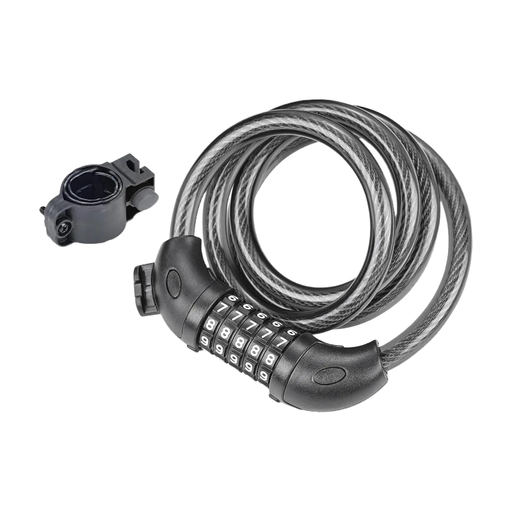
Why It Stands Out: This lock combines the enhanced security of a 5-digit code with a practical 120 cm length and an included frame mount.
Key Features:
Who It's For: This model is an excellent choice for e-bike and mountain bike owners, as well as commuters looking for a keyless solution with a higher security level and practical handling.
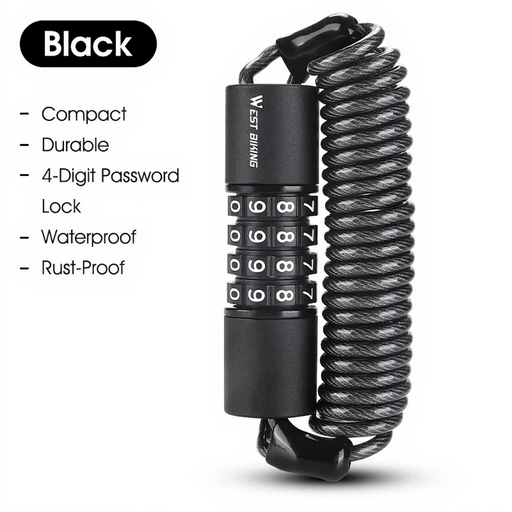
Why It Stands Out: This coiled cable lock is distinguished by its highly compact and lightweight design, making it ideal for quick stops and easy transport.
Key Features:
Who It's For: Ideal for everyday cyclists in urban areas with low to medium theft risk who need an extremely portable and straightforward lock for short errands.
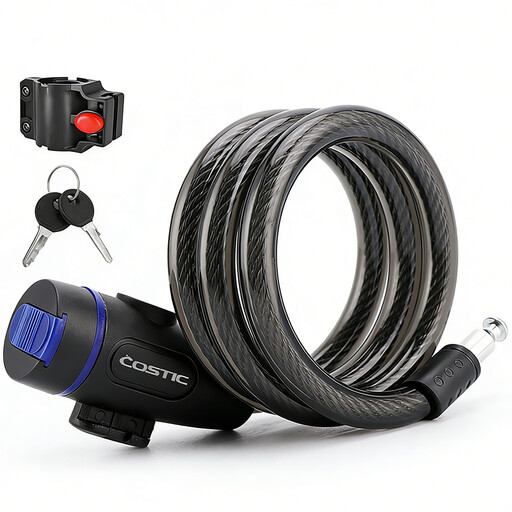
Why It Stands Out: For users who prefer a traditional key system, this model offers an extra-thick steel cable for high cut resistance.
Key Features:
Who It's For: This lock is designed for cyclists who prioritise material thickness and prefer the handling of a classic keyed lock over a combination lock.
If the models featured here don't fully meet your needs, a wider range of security solutions is available. Explore our entire collection to find the perfect lock for you.
? Discover More Combination Locks Here
1. How secure is a combination bike lock? The security of a combination lock depends on several factors: the number of digits (a 5-digit lock offers more combinations than a 4-digit one), the quality of the locking mechanism, and the resistance of the cable or chain material. For high-theft areas, a combination of a robust lock body and a thick steel cable or hardened chain is recommended.
2. What should I consider when buying a bike lock for an e-bike? Since e-bikes have a higher monetary value, a high-security lock is advisable. Look for thick, cut-resistant material (e.g., hardened steel), a durable locking cylinder, and sufficient length (e.g., 120 cm) to securely fasten the frame to a fixed object. Some insurance policies also require a lock of a specific security level.
3. How do I set the code on a combination lock? Most combination locks can be reset in a few simple steps. Typically, you need to open the lock using the factory default setting (often "0000" or "00000"). Then, there is usually a small button or dial that must be turned or pressed while you set your new desired combination. After setting it, the mechanism is returned to its original position to save the new code. It is important to follow the manufacturer's specific instructions.