Last-minute bakers
If you need to soften butter at short notice to cream with sugar, look for a low, selectable microwave power setting and a timer that’s easy to control. The butter should yield when pressed, while still offering some resistance.


When you need butter soft enough to mix into a cake batter, but not melted, having precise control over the microwave function matters more than a grill or convection setting. A combination microwave is particularly useful for this occasion if you also want to bake the cake or another treat in it, and the oven cavity, baking tin and available worktop space are all suitable. A grill function alone is no substitute for a dedicated convection function.
If you need to soften butter at short notice to cream with sugar, look for a low, selectable microwave power setting and a timer that’s easy to control. The butter should yield when pressed, while still offering some resistance.
If you want to make a cake to take to a shared dinner in the same appliance, check whether the specific model has a convection function and whether your baking tin will fit inside.
If you want extra functions but have limited space, check the appliance’s external dimensions against its intended location, and compare the usable internal dimensions with your baking tin.
First decide whether you only want to soften butter or also bake in the appliance. This will determine the functions you need and the space required.
| What you need | What to check before buying | Who is this especially important for? |
|---|---|---|
| Soft, not melted, butter | Low microwave power settings and a timer that’s easy to stop. | When I’m preparing butter for a cake batter, I want to be able to check its consistency as it warms. Around 40% of consumers are mainly looking to soften butter without melting it. |
| Baking in the same appliance | A clearly specified convection function, plus the oven cavity and baking tin dimensions. | If I also want to bake the cake in the appliance, I need a suitable convection function and enough room for the tin. Around 30% of consumers prioritise baking in a combination appliance. |
| Finding room for the appliance and tin | Compare the external dimensions, usable interior space and, where applicable, turntable diameter with your kitchen and baking tin. | If my kitchen has limited worktop space, the appliance needs to fit in its intended spot and still accommodate my baking tin. Around 20% of consumers pay particular attention to space and whether their tin will fit. |
| Keeping extra effort to a minimum | Consider whether you really need a convection function or whether an existing oven will do; check the container guidance for microwave use. | If I mainly want to soften butter, I don’t want to take on extra functions and maintenance unnecessarily. Around 10% of consumers prioritise keeping the need for additional appliances to a minimum. |
In recipes where butter is creamed with sugar, butter that’s too warm or melted can affect the texture of the batter.
Follow the recipe and check the consistency as the butter warms. Only use melted butter if the recipe calls for it.
If the butter melts, the batter may not turn out as intended.
The name alone doesn’t tell you which cooking modes a particular model has. A grill doesn’t automatically mean it has a convection function.
Before buying, check the functions listed specifically if you want to bake in the appliance.
Without a suitable baking function, you may still need a separate oven for the cake.
The stated capacity in litres doesn’t tell you on its own whether your baking tin will fit or whether the appliance will fit in its intended location.
Compare your baking tin, the internal dimensions and the turntable with the specifications for the specific model, and check the installation instructions.
Your existing tin may be too large for the usable space, or the appliance may take up too much room.
The built-in CMA485GB2 combines microwave and convection functions. Bosch home appliances lists microwave power settings starting at 90 W.
Samsung lists the freestanding MC32DB7746KDE1 as a 32-l combination microwave with grill and convection.
According to Severin, the freestanding MW 7798 has microwave, grill and convection functions.
For the NN-CD88, Panasonic lists microwave, convection and grill functions, a 34 l oven cavity and a 360 mm turntable.
According to Bauknecht, the Chef Plus product range includes models with microwave, grill and other functions.
The models below are combination microwaves with convection, for softening butter and – depending on the appliance and whether your tin fits – baking in the same appliance.
 No image available
For anyone who wants to soften butter in the microwave and use a baking tray or wire rack inside the appliance.
25 l oven cavity with a glass base and no turntable; ten microwave power settings and an electronic timer. Convection up to 230 °C; a baking tray and wire rack are listed.
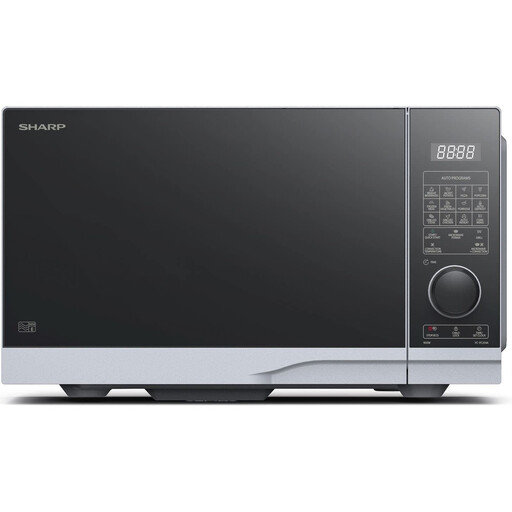 No image available
For anyone who wants to soften butter and also bake using convection; your tin needs to fit in the usable space.
25 l oven cavity, ten power settings and a 288-mm turntable. A baking tray is listed.
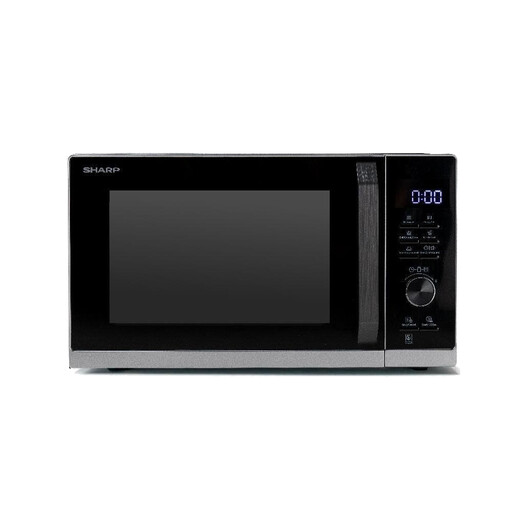 No image available
For anyone who wants to prepare butter in the microwave and use a dedicated baking function in the same appliance.
27 l oven cavity, six microwave power settings and a timer. The description lists grill and convection heating.
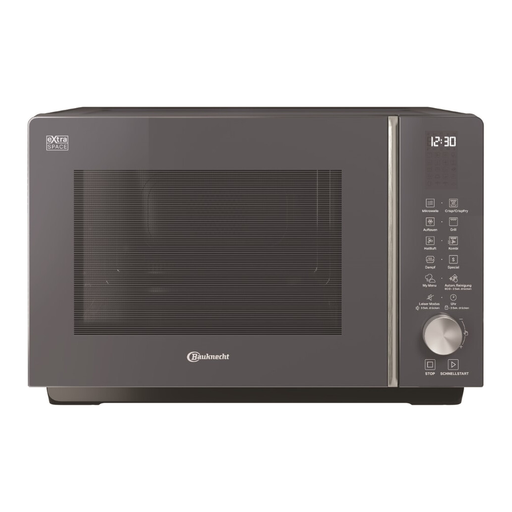 No image available
For anyone who wants to prepare butter and use convection to bake in the same appliance.
25 l oven cavity with no turntable, six adjustable microwave power settings and a listed butter-softening function. Convection and a Crisp plate are also included. Follow the ventilation guidance when positioning the appliance.
You should be able to press a finger into it, while still feeling some resistance. It shouldn’t feel greasy or liquid. This is a baking guideline, not a specific appliance setting, so check the butter as it warms.
No. Only use containers whose instructions confirm they’re suitable for microwave use and can withstand the relevant temperature and wattage limits. The Verbraucherzentrale notes that fatty foods can become hotter in some spots than expected; don’t continue to use damaged containers.
If you notice visible mechanical damage or wear to the door, the Federal Office for Radiation Protection recommends having the appliance checked by the service department and, if necessary, repaired or replaced.
No. For consumer purchases in the EU, you’re generally entitled to a minimum two-year statutory guarantee from the seller, starting from the date you receive the goods. This is separate from any manufacturer’s guarantee.
For new electrical and electronic appliances covered by Germany’s ElektroStoffV, Section 12 governs CE marking on the appliance or rating plate. If that isn’t possible, the marking must appear on the packaging or in the accompanying documents. A product description alone doesn’t confirm that a specific offer is compliant.