Hosts preparing potatoes in advance
If you’re making potatoes ahead of a meal, you’ll also need to plan how to chill, transport and serve them hot.


For a potato that’s already been baked, the microwave setting is key for reheating. Grill or convection are useful extras if you also want to crisp up the surface or cook other oven-style dishes. Check the container, portion size and usable internal dimensions together. For prepared food, the Federal Institute for Risk Assessment recommends heating it to at least 70 °C throughout for 2 minutes. You’ll also need to plan for chilling and transport.
If you’re making potatoes ahead of a meal, you’ll also need to plan how to chill, transport and serve them hot.
If you want the potato to be more than just warm when you serve it, and would also like to refresh its surface, check for grill and convection settings, as well as the right accessories.
If one appliance needs to handle several cooking tasks, consider not only its footprint but also its internal dimensions and the shape of your serving dish.
For a baked potato prepared in advance and taken to a meal, the key considerations are controlled reheating, how you want to treat the surface, and enough room for the dish and portion.
| What you need | What to look for when buying | Especially useful if |
|---|---|---|
| Safe preparation and reheating | Plan for chilling and transport. The Federal Institute for Risk Assessment recommends heating food to at least 70 °C throughout for 2 minutes. | You’re preparing the potato in advance and serving it later, so you want to plan for chilling and thorough reheating. Around 30% of consumers would put safe preparation and reheating first. |
| Reheating or crisping up the surface | Check whether the model has a microwave setting as well as the grill or convection mode you want, and which accessories are intended for use with them. | You also want to treat the potato’s surface before serving, so you’re comparing the available cooking modes. Around 30% of consumers would prioritise a crisped-up surface. |
| Room for the dish and portion | Measure your dish with its cover on. Compare its dimensions with the cavity height and floor area, or the turntable. | You need to fit several potatoes or a larger dish inside, so available space is your main consideration. Around 20% of consumers would prioritise portions suitable for sharing. |
| Extra functions and footprint | Compare the external dimensions and consider whether you’ll also use the grill or convection setting for other dishes. | Your kitchen has limited worktop space, so you only want to pay for extra functions if you’ll use them regularly. Around 20% of consumers would weigh up versatility and space requirements together. |
A browned surface doesn’t tell you whether the middle of the potato has heated through sufficiently. The Federal Institute for Risk Assessment also notes that some bacterial toxins that have already formed are heat-stable.
Plan for chilling and transport, and check that the food has heated through before serving. Don’t rely on browning or the programme finishing alone.
The turntable, internal height and shape of your dish can all limit the usable space.
Measure your dish with its cover on, then compare it with the internal dimensions or turntable of the specific model.
Containers can have different temperature and power limits. You may need a container that’s suitable for grill or convection use.
Check the container’s markings and the appliance instructions separately for each mode you want to use.
You may need an additional dish if your current one isn’t suitable for the mode you plan to use.
The MCG 25 Ceramic chef combines microwave, grill and convection cooking with a flat cavity floor.
According to Severin, the MW 7774 offers microwave, grill and convection cooking, which can be used separately or in combination.
The MW 49 SL is aimed at buyers who want to use Crisp, convection or steam functions as well as reheating.
According to Samsung Germany, the MC28A5137KK/E1 combines microwave, grill and convection cooking with a steam-cooking container.
This selection features combination microwaves with a microwave setting and additional grill or convection functions, for reheating baked potatoes and tackling other cooking tasks.
 No image available
The glass base without a turntable may be useful for square serving dishes; check the usable area against your dish.
Listed specifications include 900 W microwave power, 10 power levels, a cavity height of 19 cm and accessories for two levels.
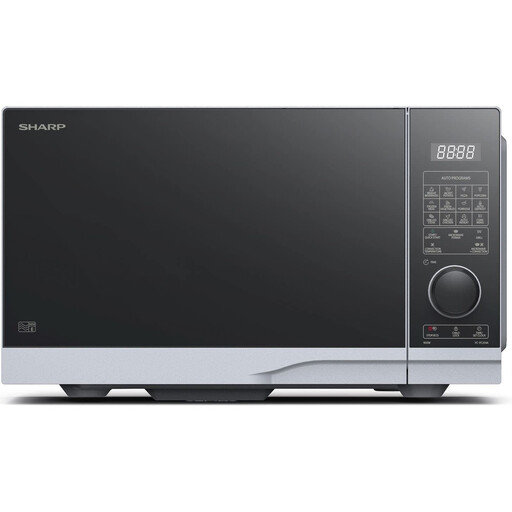 No image available
If you want to use the grill or convection setting as well as reheat food, check that your dish is suitable for the mode in question.
Listed specifications include a 25 l capacity, 900 W microwave power, 7 power levels and a 288 mm turntable.
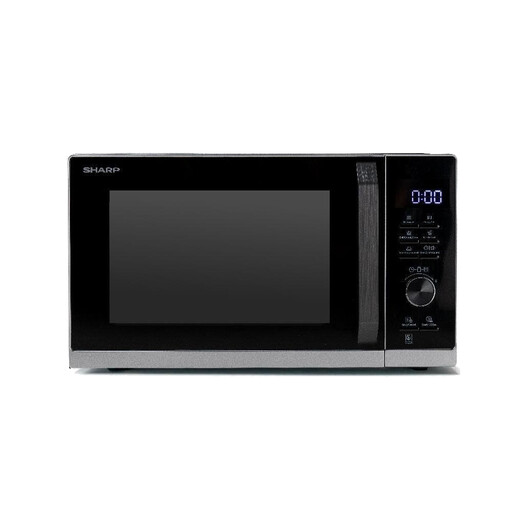 No image available
This model combines microwave cooking with additional heating modes. Consider whether you’ll also use the grill and convection settings for other dishes.
The product details list a 27 l capacity, 900 W microwave power, 6 power levels, a 1000 W grill and 2100 W convection heating.
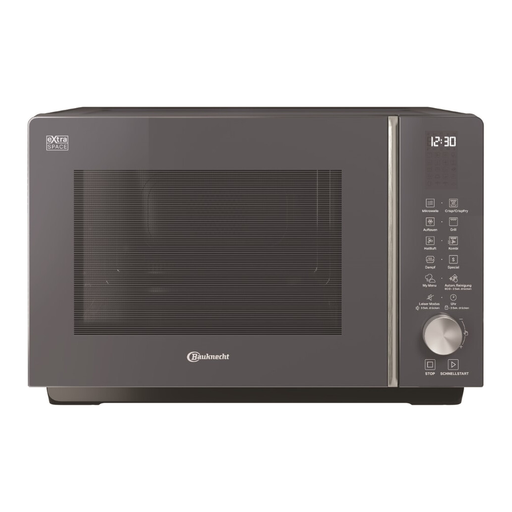 No image available
The base without a turntable may suit a square dish; compare its dimensions with the cavity.
Listed specifications include a 25 l capacity, 800 W microwave power and 6 power levels. The model also features Crisp, convection and quartz grill functions.
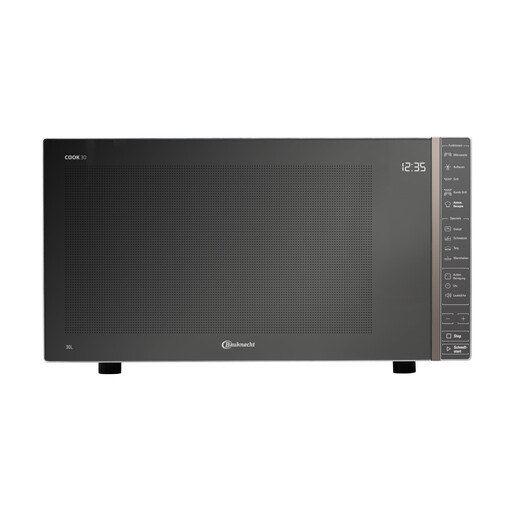 No image available
If you want to use the grill as well as the microwave setting, check that your dish fits on the turntable.
Listed specifications include a 30 l capacity, 900 W microwave power, 7 power levels and a removable 31.5 cm turntable.
Yes, as long as the prepared food is stored safely in the fridge until reheating and kept chilled while you’re travelling. The Federal Institute for Risk Assessment recommends heating food to at least 70 °C throughout for 2 minutes. A browned surface isn’t a substitute for checking this.
Not just because it’s labelled ‘microwave-safe’. Check the container’s temperature and power limits, and only use it in grill or convection mode if the instructions for both the container and the appliance say it’s suitable.
Have the appliance checked if you can see any mechanical changes to the door or signs of wear. The Federal Office for Radiation Protection recommends having it inspected by the service team and repaired or replaced if necessary.
No. New goods are generally covered by a two-year statutory warranty from the seller; a manufacturer’s guarantee is an optional extra. Check its specific terms separately from your statutory rights.
No. According to the Federal Ministry for the Environment, old electrical appliances must be collected separately and taken to an authorised collection point. Retailers are subject to conditions when taking appliances back, including requirements relating to the retailer’s size and the purchase of an equivalent new appliance.