Bakers using chilled butter
If you’re preparing butter for a cake batter with sugar, it should give when pressed without melting. King Arthur Baking describes the ideal consistency as soft but still slightly firm.


To soften butter for a cake batter, a microwave with adjustable power is generally all you need; you don’t need a grill or convection function for this. A combination model is more worthwhile if you also want to bake in it and its convection function, cavity and dimensions suit your needs. For creamed cake batter, the butter should give when pressed but still offer a little resistance, without looking greasy or melted – that’s how King Arthur Baking describes it.
If you’re preparing butter for a cake batter with sugar, it should give when pressed without melting. King Arthur Baking describes the ideal consistency as soft but still slightly firm.
If you’d like to bake small batches in the appliance after preparing your ingredients, check whether the specific model explicitly offers a convection function. Panasonic and Severin list combination models with convection.
If you want to use a particular baking tin or save worktop space, check its dimensions against the usable cavity and the space available where you plan to put the appliance. Severin and CASO Design also offer models with flat bases, but you’ll still need to make sure your tin fits.
| Buying consideration | What to check | Who is it important to? |
|---|---|---|
| Softening butter | Check for adjustable microwave power, short time settings and an easy way to stop the appliance. | When I’m preparing butter for a cake batter, it needs to remain soft enough to press, not melt. Around 40% of consumers prioritise exactly this consistency. |
| Extra baking | Check that the specific model explicitly offers convection; a grill alone doesn’t mean it has a convection function. | If I want to bake small batches in the same appliance after preparing the ingredients, I need a clearly specified baking function. Around 30% of consumers prioritise extra baking options. |
| Tin and available space | Check the tin’s dimensions against the usable cavity width and height, as well as the space where you plan to put the appliance; distinguish between a turntable and a flat base. | If I need to use a particular tin, I want to be sure it fits inside the cavity and can rotate freely on a turntable. Around 20% of consumers prioritise a good fit for their tin and available space. |
| Cost and service | Compare the heating functions you need, the accessories included and the terms of any voluntary guarantee. | If I’d only use extra features when I genuinely need them, I want to weigh up their benefits and the service terms. Around 10% of consumers prioritise cost and service; according to Verbraucherzentrale, a guarantee is voluntary and is separate from statutory consumer rights. |
Grill and convection are different cooking modes. The word “combination” alone doesn’t tell you whether an appliance has the convection function you need for baking.
Check the details for the exact model and look specifically for convection or a baking function.
For cake batter, consistency is what matters. Butter that’s too warm or melted isn’t the same as soft butter that still gives when pressed.
Warm the butter carefully, checking it between short bursts by gently pressing it.
The capacity in litres won’t tell you whether a particular square or rectangular tin will fit, or whether it can rotate freely on a turntable. You also need to make sure the appliance will fit in its intended position.
Compare the tin’s dimensions with the cavity’s internal measurements and layout, and measure the space where you plan to put the appliance.
According to Panasonic Germany, the NN-CD58RS combines an inverter microwave with a grill and fan-assisted cooking.
Severin describes the MW 7777 as a freestanding combination appliance with a flat base, grill and convection.
According to CASO Design, the MCG 25 Ceramic chef combines microwave, grill and convection functions with a flat base.
According to Bauknecht, the MW 49 SL offers a grill and convection as well as microwave cooking.
Samsung Germany describes the MC32DB7746KDE1 as a combination microwave with grill and convection.
This selection includes combination microwaves for gently heating ingredients in stages, as well as models with a clearly specified convection function for extra baking. One model is listed as a microwave with a grill; if you want to bake, check whether the specific appliance offers convection.
 No image available
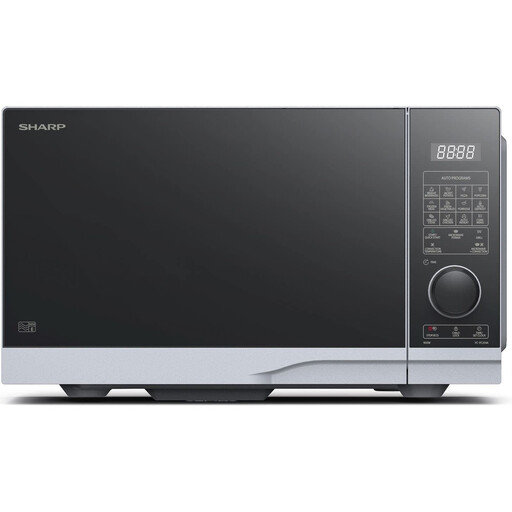
Ten microwave power levels give you control for gradual heating, while the convection function is specified for extra baking.
Convection up to 230 °C; glass base.
 No image available
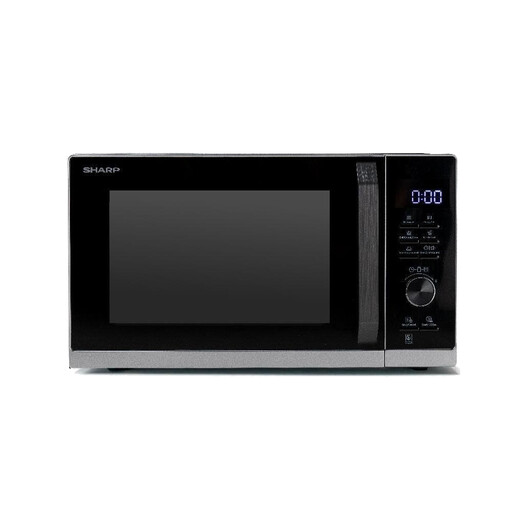
If you want to bake as well as heat food, the convection function and the included baking tray are relevant features.
25 l; ten microwave power levels; timer; 288 mm turntable.
 No image available
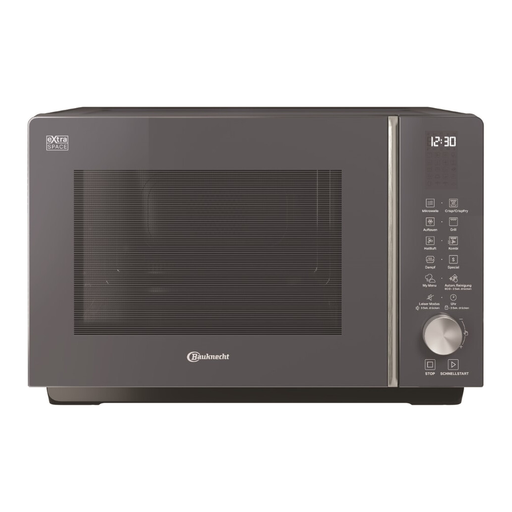
The specified convection heater is designed for baking and roasting; six microwave power levels give you options for heating.
27 l; 900 W microwave power; 1000 W grill power; 2100 W convection heater; quick start with 30 seconds or one minute.
 No image available
A butter-softening programme is listed for this model; convection and the flat base are useful for extra baking and certain types of tin.
25 l; six microwave power levels; flat base with no turntable.
 No image available
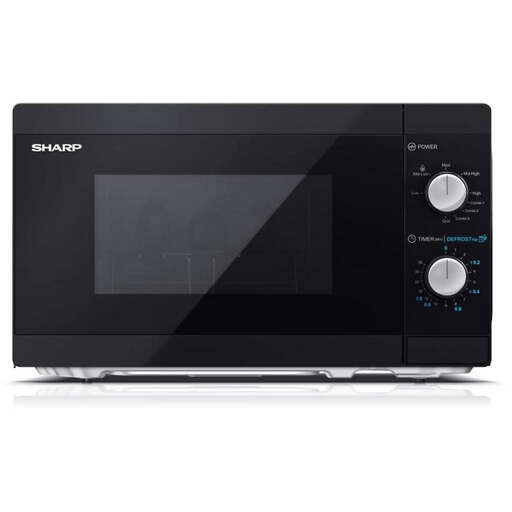
Five adjustable power levels and manual dials give you options for gradual heating. If you want to bake as well, check that the specific appliance has the convection function you need.
800 W microwave power; 1000 W grill power; 25,5 cm turntable.
No, not if the recipe calls for softened butter to be creamed with sugar. It should give when pressed but still offer a little resistance, and shouldn’t look greasy. King Arthur Baking describes this as the ideal consistency.
No. Follow the dish’s temperature and power specifications, as well as the instructions for the specific appliance and cooking mode. Plastic that’s safe for microwave use isn’t necessarily suitable for the higher temperatures of other heating functions; Verbraucherzentrale highlights this point.
If you notice visible mechanical damage to the door or clear signs of wear, have the appliance checked by the service team. This is the advice of the Bundesamt für Strahlenschutz.
No. Your statutory consumer rights apply against the seller, while a guarantee is voluntary and its scope depends on the terms and conditions. Verbraucherzentrale explains the difference.
Where the relevant harmonised EU rules apply to the product, the manufacturer uses the CE marking to declare that it meets the applicable requirements. It isn’t an individual approval from a central EU testing body; the European Union explains how the system works. Also check the markings, the manufacturer’s information and the instructions for the appliance being offered.