For combo practice at home, choose the layout you plan to use in competition: a stick for lever movements, a leverless controller for individual directional buttons, or a fightpad for thumb inputs. Then check the exact model against your platform and game version, and make sure you have enough desk space and that it meets tournament rules. Converter or firmware requirements, as well as configurable input functions, may mean you need to do some extra checks.
Which layout is right for you?
Practising combos with a consistent input layout
If you want to practise the same directional movements at home as you’ll use in competition, first choose between a stick, individual directional buttons and a directional pad. HORI and MAYFLASH describe these different layouts for some of their products.
Playing on PC and console
The key is whether the exact device configuration works with your platform and game version. PlayStation Support outlines support for officially licensed specialist peripherals with PS5 games and supported PS4 games. For other combinations, check the relevant manufacturer’s guidance.
Tournament players with limited desk space
Compare the case shape and footprint with your workspace, and check the rules on functions and settings before competing. MAYFLASH and Razer’s product details show that models can differ in both layout and configurable features.
What should you look for when buying?
Fightstick with a lever
Best for: practising lever movements you plan to use in tournaments.
Consider: The case needs space for the lever, your hands and the height of the stick.
Leverless or all-button controller
Best for: deliberately practising directional sequences using individual fingers.
Consider: The input feel differs from a stick, and some movement sequences may take time to get used to.
Fightpad with a directional pad
Best for: entering directions with your thumb while using less desk space.
Consider: You won’t be practising either the movement of a stick or the separate-finger layout of a leverless controller.
| What matters |
What to look for when buying |
Who should consider it? |
| Platform and game version |
Check the full model number, platform and game version. For certain MAYFLASH configurations, also take converters and firmware into account. |
If I practise on a specific console or game version, that exact combination needs to work. Around 29% of consumers put platform and game version first. |
| Input layout |
Choose a stick, individual directional buttons or a directional pad based on the movements you want to practise for your tournament. |
I want to practise directional sequences using the same type of input I’ll use later. Around 29% of consumers prioritise the layout for their combos. |
| Desk space and handling |
Compare the available desk space, case height and room for your hands and cables with the model specifications. |
If my desk space is limited, the device needs to fit along with my hands and cables. Around 18% of consumers focus on whether it suits their workspace. |
| Tournament rules |
Check the rules for the specific competition and, where relevant, the device’s settings for macros, turbo and SOCD. |
I want to be able to configure the device in line with the rules of the competition I plan to enter. Around 24% of consumers put tournament rules first. |
Avoid common buying mistakes
-
Assuming similarly named console versions are the same
HORI identifies the Fighting Stick α SPF-013U as the PlayStation version and the AB11-001U as the Xbox version. A similar-looking model name isn’t enough to confirm compatibility with your platform.
Check the full model number against your platform and game version.
-
Assuming PS5 compatibility has no requirements
For certain MAYFLASH configurations, the manufacturer describes use with MagicBoots-S5 and updated firmware. A platform listing alone doesn’t confirm that your exact model and game version are covered.
Check the instructions for the specific model, converter and firmware. Depending on the configuration, you may also need a compatible converter and time to set everything up.
-
Assuming a configurable device is allowed at every tournament
The MAYFLASH F500 FLAT Elite offers macro, turbo and SOCD modes. The presence of a mode doesn’t mean every tournament allows you to use it.
Compare the rules for your specific competition and game with the device’s active settings. For example, Evo’s rules prohibit certain hardware-assisted input functions.
Key brands at a glance
HORI
HORI offers lever controllers such as the Fighting Stick α, as well as fightpads such as the Fighting Commander OCTA. The full model number is important when choosing between them.
- HORI says the SPF-013U has a case that can be opened for maintenance, while the directional pad sensitivity on the SPF-023U can be adjusted.
- The SPF-013U and AB11-001U are different platform versions. Manufacturer claims about quality and performance aren’t independent test results.
MAYFLASH
MAYFLASH offers lever models such as the F300 Elite and F500 Elite, as well as the all-button F500 FLAT Elite.
- The manufacturer provides information about parts and platform modes. For certain configurations, it specifies MagicBoots-S5 and compatible firmware.
- The F500 FLAT Elite offers macro, turbo and SOCD modes. Check PS5 compatibility and the rules for your specific tournament separately.
Razer
The Kitsune is aimed at buyers looking for a low-profile all-button controller for PS5 or PC.
- Razer lists optical buttons, a detachable USB-C cable, a cable clip and a lock switch.
- The layout isn’t suitable for practising with a stick. Claims that it outperforms traditional sticks or prevents input errors aren’t backed by independent evidence of effectiveness.
8BitDo
According to the manufacturer, the 8BitDo Arcade Stick is designed for Switch and Windows.
- The manufacturer lists Bluetooth, 2.4 GHz and wired USB-C as connection options.
- Check the platform information for the exact model and the game version you plan to play; connection types alone don’t prove compatibility.
Qanba
Qanba lists the Obsidian 2 as a lever model with PS5, PS4 and PC support, according to the manufacturer.
- Qanba lists Sanwa controls, a tournament lock switch and interchangeable lever tops.
- These features don’t prove an independent input advantage or guarantee approval by every tournament organiser.
Joybuy products for combo practice
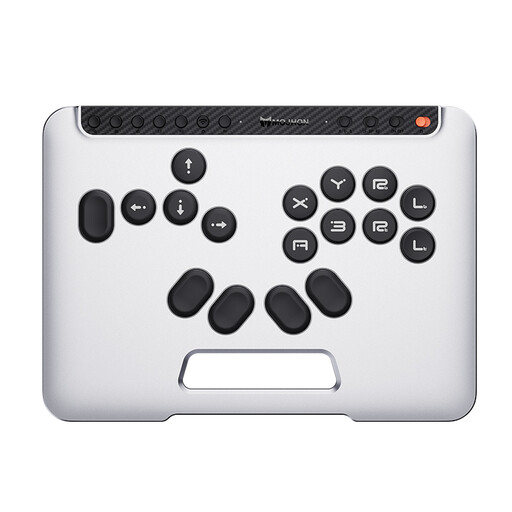
Joybuy product selection for practising with individual directional buttons instead of a stick.
 No image available
BIGBIG WON Fight Master Leverless Controller
The all-button layout is ideal for practising combos with individual directional buttons instead of a stick.
The product name lists Switch 2, Switch, PC, iOS and Android, as well as Bluetooth, 2.4 GHz and wired connectivity.
It also lists interchangeable Fast Trigger mechanical switches and RGB lighting.
View at Joybuy
Frequently asked questions
Will an arcade stick described as PS4-compatible automatically work with the PS5 version of my game?
No, that information alone isn’t enough. PlayStation Support outlines support for officially licensed specialist peripherals with PS5 games and supported PS4 games. For the F300 Elite, MAYFLASH lists a PS5 configuration using MagicBoots-S5 and compatible firmware. Check the exact game version and device combination.
How should I set up a controller for practice and later tournament use?
First, select the mode the manufacturer specifies for your platform, then test the buttons in the game itself. For tournament use, you also need to follow the relevant organiser’s rules: Evo, for example, prohibits certain hardware-programmed input sequences and rapid-fire functions. That’s a rule set by this organiser, not a universal tournament rule.
What can I do if a controller I bought online is faulty?
When you buy from a trader in the EU, you’re generally entitled to a minimum two-year legal guarantee from the date you receive the goods. The European Union’s Your Europe website explains these rights in relation to the seller; this is separate from any additional manufacturer’s warranty.
Can I return a controller bought online if I don’t like the layout?
For consumer purchases made at a distance, you generally have a 14-day right to cancel; exceptions and when the period starts depend on the specific contract. The Verbraucherzentrale notes that you need to notify the seller that you’re cancelling. This is separate from your rights if the product is faulty.


