
Lieferung heute & morgen

Qualitätsgarantie

Willkommens-Angebote freischalten: KOSTENLOSE Lieferung | Bis zu 80 % RABATT | Kostenlose 30-Tage-JoyPlus-Testphase
App herunterladen
A comfortable armchair should look good and work reliably for everyday use. Many disappointing purchases happen because product photos give an unrealistic idea of how much space a chair needs, upholstery is judged only at a glance, or important information about its weight capacity is missing. Before you buy, it’s worth taking a closer look at the dimensions, materials, features and intended use.
Thick padding doesn’t automatically mean a chair offers a good sitting position. Seat height, seat depth, backrest angle and armrest height all matter too. A very soft chair may also give more than expected when you sit in it for a long time. So look at claims such as “high-density foam” alongside the chair’s dimensions.
A living room armchair needs more than the stated floor space. A rocking chair also needs room in front of and behind its runners to move freely. A recliner with a footrest, or a TV chair with a reclining backrest, will need extra depth when extended too.
Before placing your order, mark out the available space on the floor with masking tape. Check doorways, the stairwell and the intended position as well. A chair’s external dimensions don’t tell you whether it will fit through the entrance.
Velvet, teddy or Sherpa fabric can create a cosy feel, but each needs suitable care. Light-coloured surfaces show dirt more quickly. For an armchair in a bedroom, nursery or frequently used reading nook, it’s especially important to consider how it can be cleaned, how the cover is constructed and how stable the chair is.
Compare at least these measurements:
An armchair with an upright backrest is more suited to a table or home office. A lounge chair, reading chair or upholstered armchair, on the other hand, is usually designed for more relaxed seating.
The maximum weight capacity is a specific technical figure and shouldn’t be exceeded. It isn’t a recommendation for several people to sit on the chair, or for anyone to sit on the armrests. Check whether the frame is made from metal, solid wood, engineered wood or a combination of materials.
A swivel chair needs a stable swivel base. For a rocking chair, it’s important that the runners sit evenly on the floor and have floor protectors. For all types, check the screw connections after assembly and tighten them if needed.
Common materials include polyester, velvet, cotton, faux fur, Sherpa and chenille. Check the following:
A removable cover makes care easier, but you’ll still need to follow the manufacturer’s instructions. Test cleaning products on an inconspicuous area first.
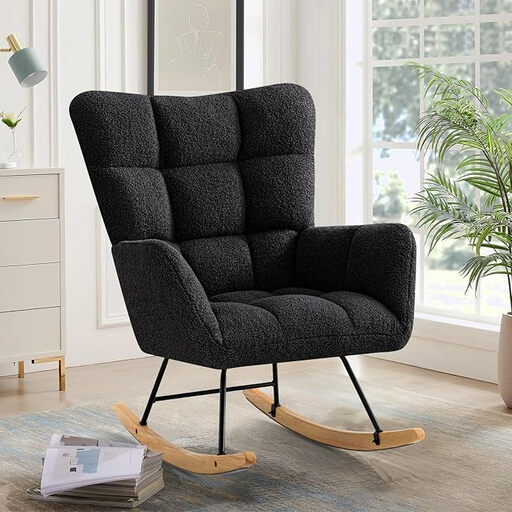
Why it suits this type of buyer: This compact rocking chair is suitable for a living room, bedroom or nursery, combining padded armrests with a high backrest.
The product details specify a steel frame, beechwood runners, floor protectors and a weight capacity of 113 kg. That means key buying criteria are clearly stated.
Measures 95 × 72 × 93 cm, with Sherpa upholstery, padded armrests and protective feet to help prevent scratches and noise.
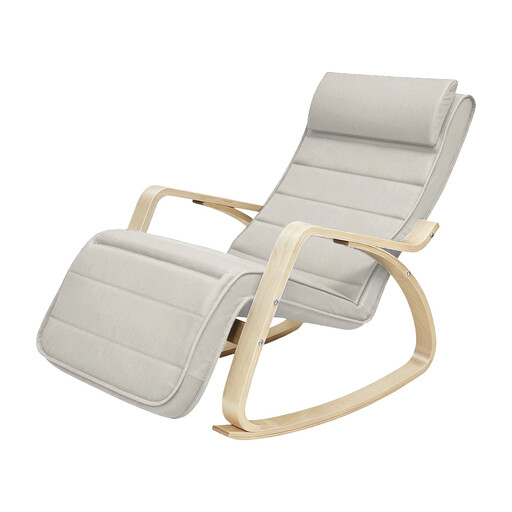
Why it suits this type of buyer: This Scandinavian-style recliner is for anyone looking for an adjustable footrest, a removable cover and clearly specified materials.
Rather than making a vague claim about its reclining function, the product details specify five footrest positions, a metal frame and a maximum weight capacity of 150 kg.
Measures 121.5 × 65 × 84 cm, made from birch plywood or birch wood according to the product details, with a cotton cover and removable head cushion.
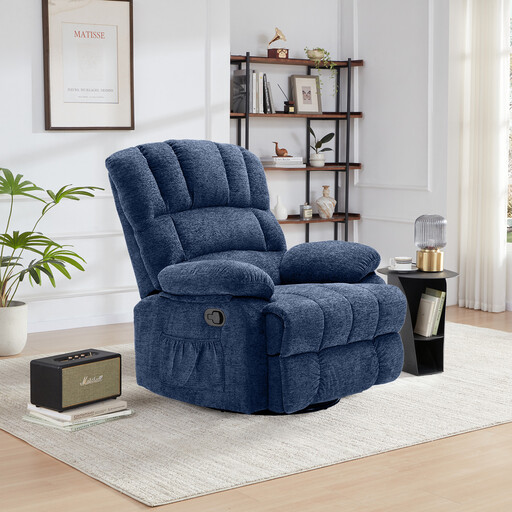
Why it suits this type of buyer: This TV chair is designed for anyone looking to combine swivel, rocking and an adjustable backrest in one piece of furniture.
The product details state an extended depth of 164 cm, a maximum recline angle of 160 degrees and a weight capacity of around 159 kg. This makes it easier to plan how much space you’ll need.
Swivel function, manual reclining adjustment, up to 30 degrees of rocking movement and dimensions of 105 × 94 × 103 cm.
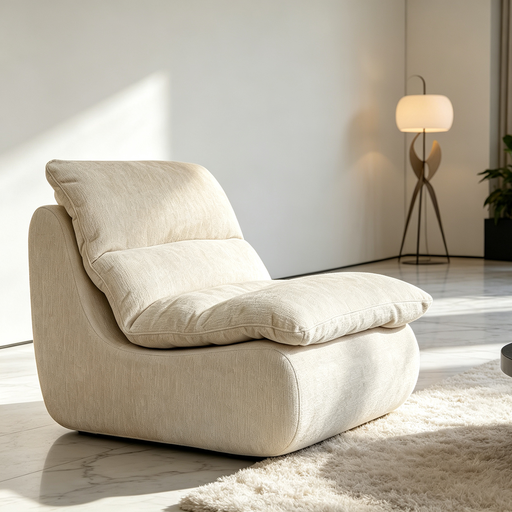
Why it suits this type of buyer: This low-level seat is ideal for reading nooks, small flats or play and living areas where a traditional armchair would take up too much room.
The product description states that no assembly is required, that it can take up to 72 hours to fully expand, and that its weight capacity is 136 kg.
No assembly required, non-slip base, compact design and corduroy cover according to the product details.
We’ve put together a comprehensive, regularly updated list of products that meet these strict selection criteria and fully comply with the safety regulations in force in the EU.
Assemble your armchair exactly as instructed. Tighten the screws only lightly at first, then align all the connections before fully tightening them. Place the chair on a level, stable surface. All the floor protectors on a rocking chair should make contact with the floor; a swivel chair’s base should not catch on rug edges or uneven surfaces.
Lifespan depends on use, materials, weight and care. Regular vacuuming, keeping the chair away from direct heat and checking the connections can help keep it in good condition. If you notice cracks, loose frame parts or damaged runners, stop using the chair until you’ve checked what’s wrong.
Depth matters just as much as width. Measure the available floor space and allow extra room for a rocking or reclining chair to move. A low-level lounge or upholstered chair could be an alternative to a tall TV chair if your room has limited headroom.
It depends on the seat height, backrest, padding and your height. A footrest changes your sitting position, but it can’t make up for poor ergonomics. Check that the footrest extends securely and that there’s enough clearance between the chair, furniture and walls when it’s extended.
Vacuum regularly using a suitable upholstery attachment. Treat stains according to the manufacturer’s care instructions. For removable covers, follow the washing temperature, drying and ironing guidance. Harsh cleaning products and excessive moisture can damage the cover and padding.