
Lieferung heute & morgen

Qualitätsgarantie

Willkommens-Angebote freischalten: KOSTENLOSE Lieferung | Bis zu 80 % RABATT | Kostenlose 30-Tage-JoyPlus-Testphase
App herunterladen
Solar garden lights promise a simple, wireless, and eco-friendly way to illuminate paths, enhance security, or create an ambient atmosphere. However, the market is flooded with products whose real-world performance often falls short of their marketing claims. Many buyers are disappointed when the lights fail after a short time or only manage a weak glimmer for a few hours.
As your Joybuy Product Recommendation Officer, I'm here to help you identify the crucial features and avoid the typical pitfalls. This guide focuses on the technical facts that truly matter for durable and functional lighting in UK gardens and on balconies.
Before we get to the solutions, it's important to understand the problems that lead to the most disappointment. Pay attention to these three points to avoid a bad investment:
To avoid the traps mentioned above, you should focus on three verifiable technical specifications. These determine the longevity and functionality of your new solar garden lights.
The IP (Ingress Protection) rating indicates how well a housing is protected against the entry of foreign objects (first digit) and water (second digit). For waterproof solar lights in outdoor areas, the following values are relevant:
The combination of the battery and solar panel is the heart of every LED solar light.
Don't be fooled by vague descriptions. These two values give you precise information about the lighting effect:
Here are some product recommendations tailored to specific needs that meet the criteria mentioned above.
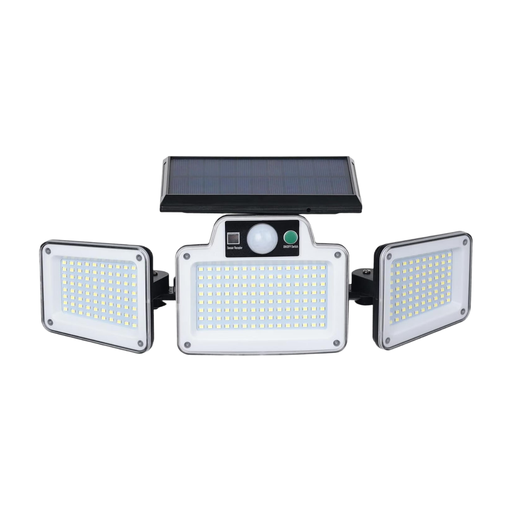
Why This Fits Their Persona: Ideal for illuminating driveways, garages, or dark corners of the property. The motion sensor provides light on demand, which saves energy and acts as a deterrent. The three adjustable heads allow for wide and targeted coverage.
The separate solar panel with a long cable solves the problem of insufficient charging, as it can be optimally positioned towards the sun. The IP65 certification ensures protection against heavy rain. The mode selection efficiently manages the 2400mAh battery charge.
Flexible installation due to the separate panel; high brightness from 280 LEDs and wide illumination thanks to three adjustable heads.
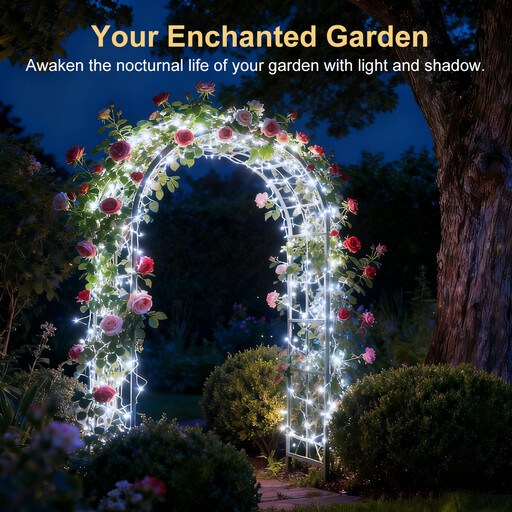
Why This Fits Their Persona: Perfect for anyone looking for flexible and atmospheric lighting for their balcony, patio, or for parties. The pliable copper wire can be easily wrapped around railings, plants, or furniture to create a magical atmosphere.
With an IP65 rating, this string light is reliably protected against rain, not just "splash-proof." The 8 different lighting modes and the clear specification of the light colour (Cool White) prevent unpleasant surprises with the ambiance.
Very flexible in application; 8 lighting modes with a memory function for varied effects; comes in a practical 2-pack set.
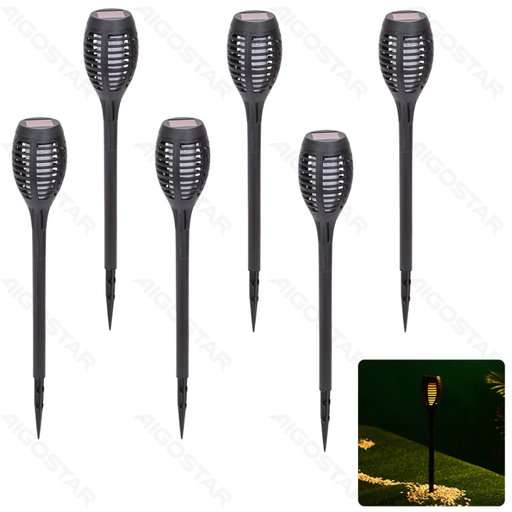
Why This Fits Their Persona: For garden owners who want to not only illuminate paths or flowerbeds but also showcase them decoratively. The realistic flame effect creates a particularly warm and inviting atmosphere reminiscent of real torches.
The light colour is clearly specified at 2700K (Warm White), which guarantees the cosy torch effect and avoids the "cold blue light" trap. The 6-pack allows for a uniform and expansive design without having to mix different products.
Atmospheric, realistic flame effect; practical set of 6 lights for a cohesive garden design; easy installation with ground stakes.
We have compiled a complete, up-to-date list of products that fully meet these strict selection criteria and UK safety regulations.
1. How long do solar garden lights really last? The lifespan depends on two main components: the battery and the LED. A Ni-MH or Lithium-ion battery typically lasts 1-3 years, depending on charge cycles and quality, and can be replaced in many models. The LEDs themselves have a very long lifespan, often 15,000 hours or more, which is sufficient for many years of nightly operation. However, the most common cause of failure is not the LED, but water damage or a depleted battery.
2. Do solar lights also work in winter or on cloudy days in the UK? Yes, but with reduced performance. Solar lights also charge in diffuse light, but much more slowly than in direct sunlight. In winter, when the days are shorter and often cloudy, the runtime will be noticeably shorter. Models with high-quality solar panels, large batteries, and/or an energy-saving mode (e.g., via a motion sensor) are better suited for year-round operation in the UK.
3. Is there anything I need to consider when installing solar lights? Yes, three things are crucial: