
Lieferung heute & morgen

Qualitätsgarantie

Willkommens-Angebote freischalten: KOSTENLOSE Lieferung | Bis zu 80 % RABATT | Kostenlose 30-Tage-JoyPlus-Testphase
App herunterladen
Choosing the right ceiling light can transform a room—or become a source of constant frustration. Many buyers focus on design and overlook technical pitfalls that only become apparent after installation. Before you make a decision, you should know the three most common mistakes that lead to unnecessary costs and disappointment.
1. The "Metal-Look" Trap: A design advertised as "industrial" or "vintage" is no guarantee of durability. Often, instead of solid metal, thin sheet metal or plastic-coated material is used, which quickly tarnishes, deforms, or its paint peels off.
2. The Dead-End of Integrated LEDs: An LED ceiling light with permanently integrated diodes seems practical and modern. However, if a single LED fails or the brightness diminishes, the entire fixture often has to be replaced and discarded. This is neither sustainable nor cost-effective.
3. Inadequate Mounting Hardware: Many lights come with universal mounting hardware that is unsuitable for the typical concrete ceilings or drywall found in modern homes. The result is an extra trip to the hardware store and frustration during installation.
To make an informed decision that goes beyond mere aesthetics, you should examine three core technical aspects. These determine the functionality, longevity, and flexibility of your new lighting.
The lamp socket is the heart of any light fixture. While integrated LEDs may seem maintenance-free at first glance, classic screw-in sockets offer decisive advantages:
The quality of a ceiling light is revealed in the details. A black industrial-style ceiling light should be made of powder-coated steel or aluminium to resist corrosion. For a vintage lamp with wooden elements, it's important that it is solid wood and not a foil wrap. Check the product description for precise material specifications like "steel," "aluminium," or "solid wood." Solid craftsmanship not only ensures a better look but also safety and stability.
The shape of the fixture determines how light is distributed in the room.
Instead of making a blanket recommendation, we have selected models that meet specific requirements and deliberately avoid the pitfalls mentioned.
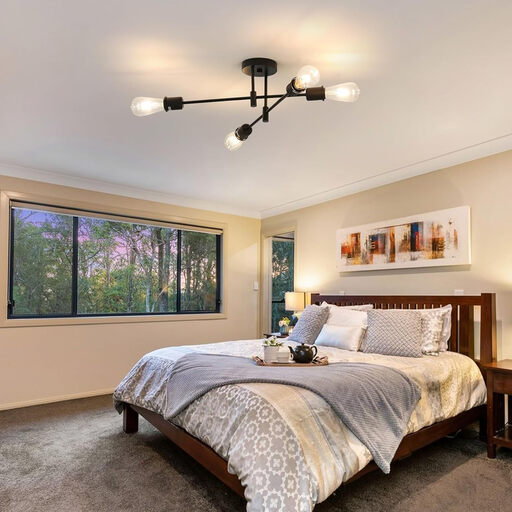
Why it's a great fit: Ideal for anyone seeking a modern industrial look for a living room or bedroom without breaking the bank. The design is clean and functional.
The fixture uses four universal E27 sockets. This guarantees full flexibility in the choice of bulbs and bypasses the dead-end of integrated LEDs. The described metal construction promises more stability than simple plastic versions.
The arms are adjustable, allowing for individual alignment of the light. This enables the lighting to be specifically adapted to the room's layout.
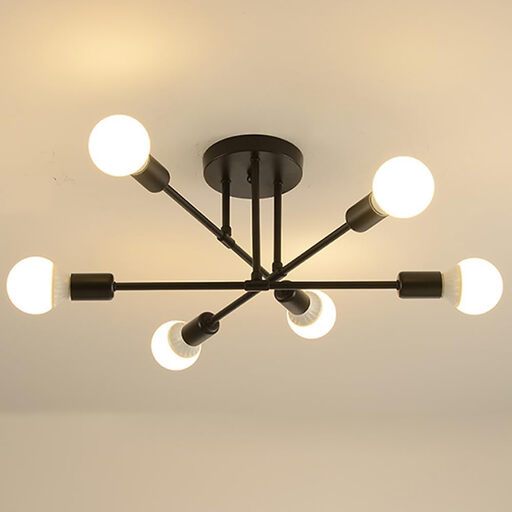
Why it's a great fit: This Sputnik light makes a clear statement and becomes the central focal point in a living or dining room. The design is inspired by mid-century style and has a sculptural feel.
Six E27 sockets offer maximum freedom in choosing bulbs. This allows you to use decorative filament LEDs in the style of a vintage lamp, for example, without being tied to expensive specialty solutions. The metal construction is robust.
The arms are adjustable, allowing the light distribution and the overall shape of the fixture to be customized. This enables dynamic room illumination.
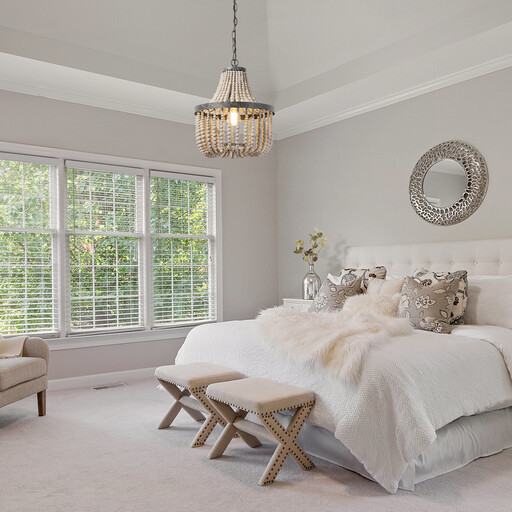
Why it's a great fit: This chandelier brings a warm, organic texture to the room and fits perfectly with Boho or Scandi styles. It serves as a gentle focal point for a bedroom or living room.
The product description transparently lists the materials (wood beads, iron chain), avoiding the "fake look" trap. The use of a standard E27 socket ensures a free and cost-effective choice of bulb.
The beaded structure diffuses the light, creating a particularly soft, atmospheric, and glare-free illumination that promotes relaxation.
We have compiled a complete, up-to-date list of products that fully meet these strict selection criteria and safety standards.
For rooms with a ceiling height under 2.40 meters (about 7.9 feet), flush-mount ceiling lights or models with a very low profile are the right choice. They take up minimal visual space and prevent the room from feeling cramped. Models like ultra-slim acrylic ceiling lights are designed for this purpose.
No. Dimmability is a technical feature that depends on three components:
A reliable rule of thumb is that the distance between the tabletop and the bottom edge of the pendant light should be approximately 60 to 70 cm (24 to 28 inches). This distance ensures optimal illumination of the table surface without blocking the view of the person opposite or causing glare. For very large tables, two or more smaller pendant lights in a row can also be a great solution.