If the communal room is genuinely cool or left unheated at times, an electric desiccant dehumidifier can complement regular ventilation. Before choosing one, check the room temperature, floor area and humidity patterns, as well as the noise level, tank or drainage options, and energy use in the mode you plan to use. If the room is usually heated, consider a compressor dehumidifier too. No appliance can replace ventilation or investigation into the cause of structural damp.
Who is this buying guide for?
Communal room with condensation on the windows
If condensation repeatedly forms on the windows, check humidity patterns and possible causes, then choose an appliance suited to the room’s floor area. The Environment Agency notes that lots of people in a room release additional moisture, so you may need to ventilate more often.
People using a cool communal room
If the room is only heated occasionally, compare the temperature range of the specific model with the conditions in the room. Trotec and Meaco state that certain desiccant models can operate from 1 °C; this does not automatically apply to other models.
Groups who want to chat in peace
If the appliance will run while people are using the room, check its noise level and fan setting in the mode you plan to use. Figures published by Meaco, Trotec and EcoAir relate to specific models or conditions, and are not measurements taken using a common comparison standard.
What should you look for when buying?
The right choice depends on whether room coverage, operation in cold conditions, quiet operation or the ongoing effort involved matters most.
Electric desiccant dehumidifier
Best suited to: Communal rooms that are genuinely cool or occasionally unheated, where humidity remains high despite ventilation.
Things to weigh up: Noise, warm exhaust air, tank or drainage options, and power consumption in the mode you plan to use. Figures from different manufacturers’ models are not directly comparable.
Compressor dehumidifier
Best suited to: Communal rooms that are usually heated, where this technology is worth considering as an alternative.
Things to weigh up: Compare the temperature range, dehumidifying performance at the room’s actual temperature, noise level and power consumption of the specific model.
Ventilation, heating and checking for causes
Best suited to: Situations where humidity is mainly caused by lots of people in the room, or persists despite regular ventilation.
Things to weigh up: You may need to agree on a shared ventilation routine. If you suspect structural damage, the cause will need to be investigated.
Passive moisture absorber with granules
Worth considering: At most, for a limited humidity problem—not as an equivalent replacement for electric room dehumidification.
Things to weigh up: As it does not use electricity, it cannot be compared on the basis of daily output from an electric appliance. It is not an equivalent solution for the ongoing moisture released by lots of people.
| Buying priority |
What to check before buying |
Who it matters most to |
| Condensation and room coverage |
Note the room’s floor area and when humidity is typically highest; check the recommended room size for the specific model. |
If the windows repeatedly mist up after typical periods of use, I want to find out what’s causing it and which room coverage is right first. Around 33% of consumers prioritise condensation and choosing the right dehumidifier for the room. |
| Operation at low temperatures |
Measure the temperature during the times when the problem occurs and compare it with the operating range of the full model. |
If the communal room is often cool, the stated temperature range matters more to me than a single daily high. Around 27% of consumers put low-temperature suitability first. |
| Quiet conversations and ease of use |
Check the noise rating and the mode it applies to, as well as whether the person responsible for the appliance can use it easily. |
If people will still be talking, I want to know how loud the appliance is at the setting we plan to use. Around 20% of consumers prioritise minimal disruption and straightforward controls. |
| Emptying the tank and ongoing effort |
Check the tank, automatic shut-off and whether there’s a suitable drain you can actually use. To estimate electricity costs, check the power consumption, running time and your own tariff. |
When an appliance is used by a group, I want to know who will empty the tank and whether drainage is available. Around 20% of consumers put low maintenance and running requirements first. |
Avoid common buying mistakes
-
Expecting a dehumidifier to make up for poor ventilation or structural damage
People and other sources of moisture continue to release humidity into the room. If moisture is entering through the building, lowering the humidity indoors will not address the cause.
Keep an eye on humidity levels, agree on a shared ventilation routine and, if you suspect structural damage, get the cause investigated.
If the source of moisture remains, you may need to run the appliance more often.
-
Assuming different appliances’ maximum litres per day reflect performance in your room
Manufacturers use different rooms and operating conditions. A high daily output on its own does not show whether an appliance is right for your room size and temperature.
Compare the model’s stated room coverage and the conditions used for its performance figures with your own room.
-
Treating non-electric moisture absorber granules as equivalent to electric desiccant appliances
Best-buy lists may include different types of product. Granules and electric appliances are not equivalent solutions for dealing with the ongoing moisture released in a shared room.
First check whether active dehumidification is needed, then compare each type of product separately.
Passive moisture absorber products may need refills.
-
Overlooking the tank, drainage and noise in the mode you plan to use
Tank sizes and noise ratings vary by model. A stated minimum noise level does not necessarily apply to every setting.
Before buying, check who will empty the tank, whether drainage is practical and which setting the stated noise level applies to.
Key brands at a glance
Meaco
The DD8L range includes electric desiccant dehumidifiers for cooler rooms. Meaco says the DD8L Pro also offers app control and several power settings.
- Meaco states that the DD8L Pro operates from 1 °C.
- Its noise rating starts at 40 dB and does not automatically apply to every operating mode. The more basic DD8L models are not the same as the Pro.
Trotec
Trotec states that the TTR 57 E is designed for rooms up to 20 m² or 50 m³.
- Trotec states that it operates from 1 °C, removes up to 9 l per 24 hours and has a 5-l tank.
- Its recommended room size may be too small for a larger communal room. The maximum daily output is not a guarantee of performance in your own conditions.
Wood’s
Wood’s describes the WDD80 as a desiccant dehumidifier for cold rooms, with several fan settings.
- Wood’s states that the WDD80 operates from 0 °C and has a hose connection.
- Without a suitable drain, the 2-l tank needs more attention. Claims about quiet operation are the manufacturer’s descriptions, not the result of a comparison test in a communal room.
EcoAir
EcoAir describes the DD1 Simple MK3 as an electric desiccant dehumidifier with a rotary control and several operating modes.
- EcoAir states that it removes up to 7.5 l per day, has a 2-l tank, hose drainage and a noise rating of 34 dBA.
- Check the conditions and operating mode for the noise rating before making a direct comparison.
Joybuy products for heated rooms
The Joybuy products below are compressor dehumidifiers, making them an alternative to consider for communal rooms that are usually heated. They are not a substitute for desiccant dehumidifiers in genuinely cool rooms.
 No image available
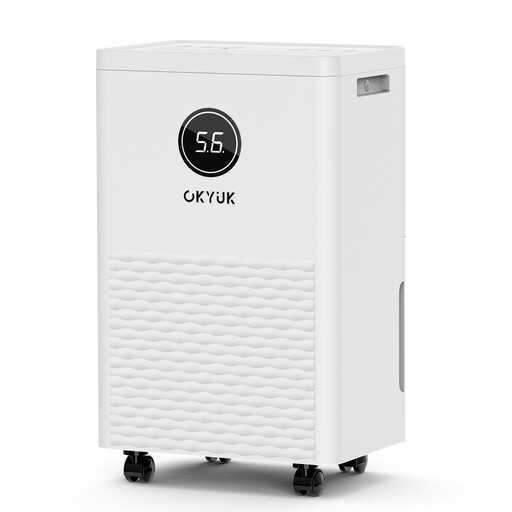
OKYUK D036D-12L compressor dehumidifier
Worth considering as a compressor appliance for a room that is usually heated—not as a desiccant dehumidifier for cool rooms.
The product description states that it removes up to 12 l per day and covers a room of 30 m².
It is stated to have a 35 dB sleep mode, a 24-hour timer, humidity settings from 30–50% and a 2.5-l tank with automatic shut-off.
View at Joybuy
 No image available
TRULIVA AP10-2012EE compressor dehumidifier
Worth considering as a compressor appliance for a room that is usually heated—not as a desiccant dehumidifier for cool rooms.
The product description states that it removes up to 16 l per day under the specified conditions and covers an area of around 32 m².
The stated operating range is 5–35 °C. It also has a 1.35-l tank with a full-tank shut-off, a drainage hose and a 24-hour timer.
View at Joybuy
 No image available
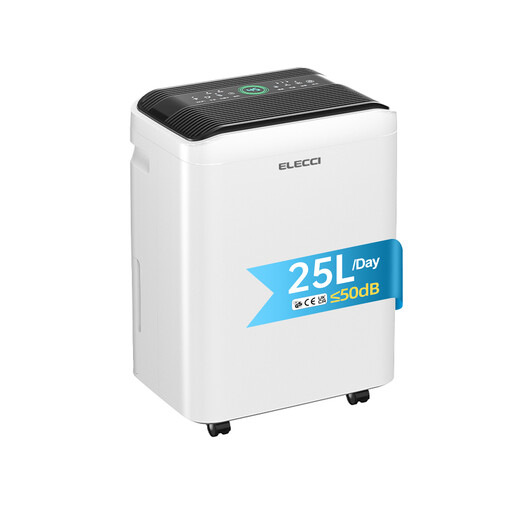
ELECCI 25L/D compressor dehumidifier
Worth considering as a compressor appliance for a room that is usually heated—not as a desiccant dehumidifier for cool rooms.
The product description states that it removes up to 25 l per day under the specified conditions and has a 4.8-l tank.
It is stated to have three fan settings, a 24-hour timer, hose drainage and a real-time humidity display.
View at Joybuy
 No image available
VINO 20L Smart compressor dehumidifier
Worth considering as a compressor appliance for a room that is usually heated—not as a desiccant dehumidifier for cool rooms.
The product description states that it removes up to 20 l per day under the specified conditions and is suitable for rooms up to 40 m².
The stated operating range is 5–32 °C. It also has a 2.5-l tank, three modes, app control, scheduling and hose drainage.
View at Joybuy
 No image available
VINO 12L Smart compressor dehumidifier
Worth considering as a compressor appliance for a room that is usually heated—not as a desiccant dehumidifier for cool rooms.
The product description states that it removes up to 12 l per day under the specified conditions and is suitable for rooms up to 24 m².
The stated operating range is 5–35 °C. It also has a 1.8-l tank, three modes, app control, scheduling and hose drainage.
View at Joybuy
Frequently asked questions
Should I buy a dehumidifier first if my windows are misting up?
No. Measure humidity and temperature at different times when the room is in use, ventilate regularly and check for possible sources of moisture. The Environment Agency notes that lots of people in a room release more moisture, so you may need to ventilate more often. If the problem persists, get any possible structural causes investigated.
What humidity level should I aim for in a room that’s in use?
The consumer advice organisation Verbraucherzentrale recommends around 40–60% relative humidity at approximately 18–22 °C as a guide to a comfortable indoor climate, and suggests using a thermo-hygrometer. This does not guarantee that condensation will not form on particularly cold windows. Measure and monitor the conditions in the room.
How should I organise the appliance’s setup and upkeep in a communal room?
Agree on who will look after the tank and filter, and follow the instructions for the model you choose. A hose connection is only useful if there is a suitable drain. Wood’s states that the WDD80 has a 2-l tank and a connection option; EcoAir also states that the DD1 Simple MK3 switches off when the tank is full.
How do I work out the appliance’s electricity costs?
Multiply the power consumption in kilowatts by the actual running hours and your electricity price in euros per kilowatt-hour. Use the power consumption for the mode you plan to use. You can’t calculate an individual cost without knowing the running time and your own tariff.


