What should you look for?
Wired dynamic handheld microphone
A good fit if: speakers stay in one place or pass the microphone around, and you have a suitable recording setup.
Trade-off: The cable restricts movement, and a handheld microphone cannot record on its own.
Wireless clip-on system
A good fit if: the speaker moves around or needs their hands free, and the transmitter and receiver are compatible with the intended recording device.
Trade-off: Test the attachment, batteries, wireless environment and recording setup together before use.
Recorder with built-in microphones
A good fit if: you want to record without a separate microphone or an existing external recording setup.
Trade-off: The recorder needs to be close to the speaker; handling noise can be distracting if it’s moved around.
XLR condenser microphone in a fixed position
A good fit if: you can position the microphone close to the speaker and have a suitable XLR recording setup with 48 V phantom power.
Trade-off: The connection, power supply and cable must be compatible with your existing equipment; this type of microphone also needs to be at a suitable distance from the speaker.
For short talks in a community hall, first check where the speaker will be and what recording setup is available. Then you can decide more easily whether a handheld microphone, clip-on system or standalone recorder best suits the event.
| Priority |
What to check before buying |
Who is this important to? |
| Clear speech despite echo |
Keep a short, consistent distance from the speaker; test the microphone in its intended position. |
If I need clear speech in an echoey hall, I start by checking that the microphone can be positioned close to the speaker and making a test recording. Around 36% of consumers put speech clarity despite room echo first. |
| Freedom of movement |
For wireless systems, check how the microphone is attached, reception at the venue and the connection to the recording device. |
If the speaker needs to move away from their position or keep their hands free, a microphone worn on the person rather than placed on a lectern matters. Around 29% of consumers prioritise freedom of movement. |
| Compatibility with existing equipment |
Check the microphone input, recording device, cables and, where necessary, phantom power. |
If I want to use equipment I already have, the signal path must work all the way through to the saved file. Around 21% of consumers pay particular attention to compatibility with their equipment. |
| Recording without separate equipment |
Check for a standalone recording function, as well as storage, power supply and accessories. |
If there’s no interface or mixing desk available for recording, a device with its own recording function is worth considering. Around 14% of consumers put standalone recording first. |
Joybuy products for speech and recording
This selection includes microphones for a fixed speaking position, a clip-on microphone and standalone voice recorders.
 No image available
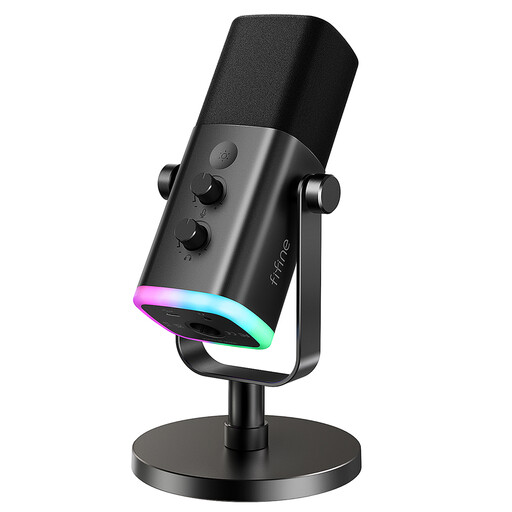
FIFINE AM8 USB/XLR dynamic microphone
For a fixed speaking position, when you want to connect the microphone to a computer via USB or to an audio interface via XLR.
Dynamic microphone with a unidirectional pickup pattern. A desk stand is listed; the description says a separate XLR cable is required for the XLR connection.
Joybuy
 No image available
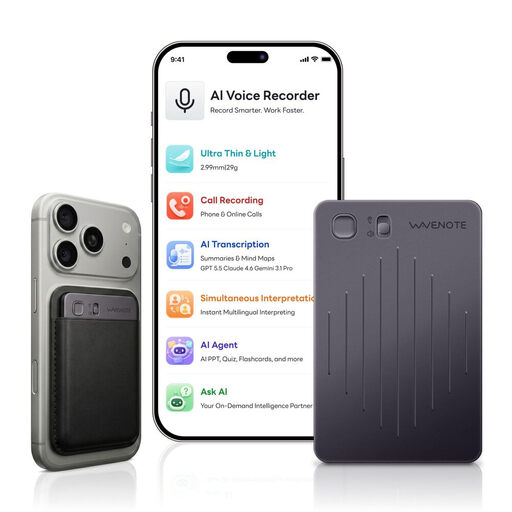
WaveNote AI Voice Recorder, 64GB, Black Grey
For standalone recording without a separate microphone; position the recorder as close as possible to the speaker.
The description lists built-in microphones, local recording, 64 GB of storage and WAV recording. Check in advance that the positioning and recording conditions suit your needs.
Joybuy
 No image available
Digital Voice Recorder, 64 GB, with transcription function
For recording without a separate microphone, if a standalone recorder with built-in microphones suits your needs.
The description lists 64 GB of storage and up to 36 hours of battery life. Check that the transcription function and 3.5 mm connection suit the way you plan to use it.
Joybuy
 No image available
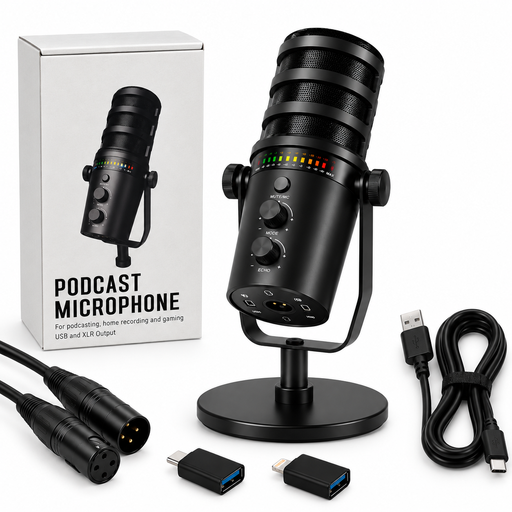
Dynamic USB/XLR microphone set with desk stand
For a fixed position, when you want to use a dynamic microphone with a computer via USB or with suitable audio equipment via XLR.
The description lists a cardioid pickup pattern, desk stand, and USB and XLR cables. Computers and mixing desks are listed as compatible equipment; check the exact signal path before recording.
Joybuy
 No image available
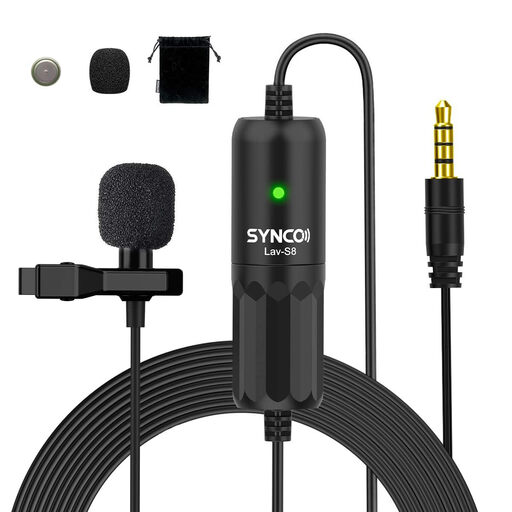
SYNCO S8 lavalier microphone
For speakers on the move, when you want to attach a microphone to their clothing and connect it to a compatible recording device.
The description lists an omnidirectional pickup pattern, clip and 3.5 mm connection. Smartphones, PCs, laptops and cameras are listed as compatible devices; check which input or adapter you need.
Joybuy
Frequently asked questions
Is the hall’s microphone enough to save the talks as a file?
Not necessarily. Check whether the existing system has a suitable recording output or recorder. An XLR handheld microphone such as the Sennheiser e 835-S provides a microphone connection; the Zoom H1essential, by contrast, is itself a recording device.
How should I position a recorder for short talks?
Make a test recording from the speaker’s actual position and place the device as close to the speaker as possible. Don’t hold it while they’re speaking. Zoom describes the H1essential as suitable for tripod mounting; Bonedo reported noticeable handling noise with this model.
What extra costs or requirements should I consider when buying?
Check whether cables, a tripod and storage media are included in the specific offer. Audio-Technica Germany states that the XLR cable for the AT2020 is sold separately, and Bonedo found that the tested H1 Essential came with no accessories. The Verbraucherzentrale distinguishes the statutory right to remedies for defects from a voluntary guarantee. This does not mean there is a general right to repairs for every microphone.
Can I simply record talks in a community hall?
You can’t determine this from the venue alone. Under Section 201 of the German Criminal Code (StGB), unauthorised recording of another person’s non-public spoken words is covered. If identifiable voices are processed as personal data, you also need an appropriate legal basis under the GDPR; the Federal Commissioner for Data Protection and Freedom of Information explains the possible legal bases. Before recording, clarify who will be speaking, what the file will be used for and which legal basis applies.
Can I use any wireless microphone in Germany without checking anything else?
No. The frequency bands and technical and operating conditions must be suitable for the specific device. In its General Assignment Vfg. 37/2026 from April 2026, the Federal Network Agency lists permitted frequency bands and their conditions. Check the set’s frequency band and technical specifications against the relevant assignment; without checking the specific device, this does not establish either a general requirement for authorisation or a general exemption from it.


