Photographers shooting in backlight
You want to expose the sky and shaded valley slopes deliberately, and are happy to adjust settings or edit your shots afterwards.


In strong backlight in the Swabian Alb’s limestone valleys, a zoom is handy if you want to switch between a wide view and distant rocks without moving from the same spot. A prime lens works well if you plan your shots around its fixed angle of view. For bright areas of sky and dark valley slopes, exposure compensation, bracketing or RAW also matter – none of these features alone guarantees a balanced image.
You want to expose the sky and shaded valley slopes deliberately, and are happy to adjust settings or edit your shots afterwards.
You photograph both wide valley views and distant rock formations, and want to change your framing without swapping lenses.
You plan your landscape compositions around a fixed angle of view and don’t want to carry a long zoom lens.
A good fit if: You want to switch between a view across the valley and closer details without moving from your spot.
The trade-off: Its zoom range may be shorter than that of models with greater telephoto reach.
A good fit if: Distant subjects often feature in your photos.
The trade-off: More telephoto reach won’t resolve the difference in brightness between the sky and the valley floor.
A good fit if: You choose your angle of view deliberately and want to shoot without optical zoom.
The trade-off: You can’t optically zoom in on distant details.
First, decide whether you want to change your framing from where you’re standing. Then check how the specific model handles strong differences in brightness and whether its controls suit the way you like to take photos on a hike.
| What matters when buying | What to check | Who it matters most to |
|---|---|---|
| Exposure in backlit conditions | Check the specific model for exposure compensation and automatic exposure bracketing. Canon Germany lists both for the PowerShot G7 X Mark III; Nikon Germany explains that bracketing involves taking shots at different exposure levels. | If you want to control the important parts of your image when the sky is bright and the valley floor is dark, look for the relevant settings. Around 36% of consumers rank exposure as their most important buying consideration. |
| Angle of view for valleys and details | Compare optical focal lengths in 35 mm equivalent. Canon Germany lists 24–100 mm for the G7 X Mark III, Sony Germany lists 24–200 mm for the RX100 VII, and Panasonic Germany lists 24–360 mm for the TZ300. | If you want to capture both a wide valley view and distant rocks from the same spot, the optical zoom range is key. Around 29% of consumers put flexible framing first. |
| Taking it on photo walks | Check the dimensions, ready-to-use weight and any accessories you’ll need. Canon Germany gives the G7 X Mark III’s weight as around 304 g, including the battery and memory card. | If you want the camera to fit in your bag and be comfortable to carry on longer walks, its real-world portability matters. Around 21% of consumers put this first. |
| Composing in bright sunlight | Check whether the specific model has a viewfinder and whether you prefer to shoot through it or use the screen. Sony Germany lists an electronic viewfinder for the RX100 VII; digitalkamera.de reports that the TZ300 no longer has one. | If you want to compose your shot through a viewfinder in bright sunshine, check its specifications carefully. For around 14% of consumers, the type of viewfinder is their most important buying consideration. |
An ND filter and exposure bracketing serve different purposes. Fujifilm lists an ND filter for the X100VI; as Nikon Germany explains, exposure bracketing involves taking several shots at different exposure levels.
First, work out whether you need exposure control or shots at different exposure levels. Only consider an ND filter if you need it for a specific purpose.
Fujifilm describes the X100VI’s lens as a prime lens. A digital teleconverter doesn’t change that: it isn’t a substitute for an optical zoom range.
If you often want distant rocks to fill the frame, compare the published optical focal lengths of zoom cameras.
Features can vary between model generations. digitalkamera.de reports that the Panasonic TZ300 no longer has a viewfinder, unlike its predecessors.
Check the exact model name and its viewfinder specifications, especially if you often shoot in bright sunshine.
The PowerShot G7 X Mark III combines a short zoom range with documented exposure controls.
The RX100 VII combines a zoom with an electronic viewfinder, making it an option if you want to switch between different compositions.
The X100VI is aimed at photographers who deliberately choose a fixed 35 mm angle of view.
The GR IV is a prime-lens camera for photographers who deliberately choose wider landscape compositions.
The Lumix TZ300 is worth considering if a wide optical zoom range is important for distant subjects.
The following Joybuy listings are described as compact, video-focused or action-oriented cameras. If you mainly want to take landscape stills in strong backlight, check the specific model’s exposure controls and photography specifications before buying.
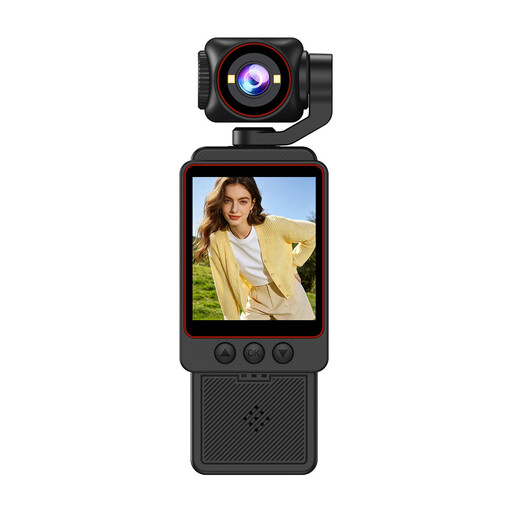 No image available
The product name describes a compact vlogging camera. If you’re considering it for landscape stills, check the specific listing for the photography and exposure features you need.
 No image available
The stated optical zoom is useful if you want to change your framing between a valley view and closer subjects. Also check whether the exposure settings suit the backlit conditions you’ll be shooting in.
The product name also lists 4K, WiFi and 64 MP; these are product specifications, not independent evidence of performance.
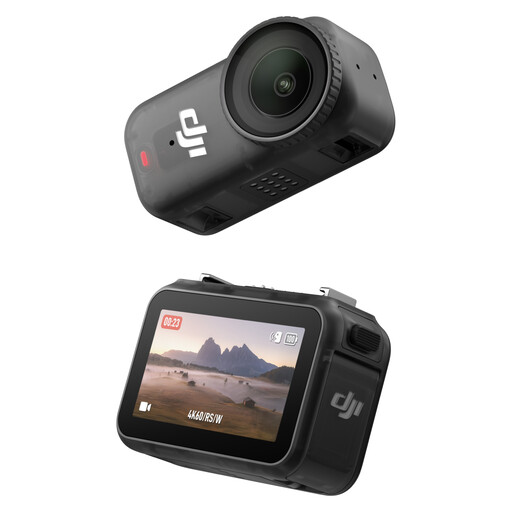 No image available
This listing describes a small vlogging and POV video camera. If your main focus is landscape photography, check before buying that its still photography and exposure controls meet your needs.
The product name lists 4K/60fps, a 1/1.3-inch sensor and a 143° angle of view for video.
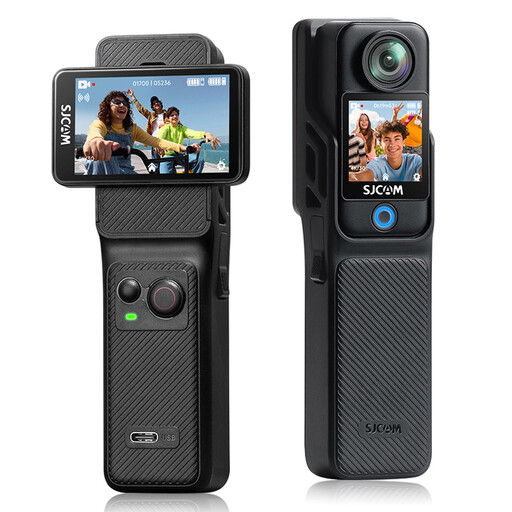 No image available
The product name presents this as an action camera for taking on the go. For wide landscape stills, the listing specifies 16 MP photos and a 154° wide-angle lens; check whether this suits the framing you want.
Other listed features include 6-axis EIS and two touchscreens. These are product specifications, not independent test results.
 No image available
The product description lists a weight of 18 g and JPG as the photo format. If you want to edit the tone range of your image files later, check before buying that the file format on offer is suitable.
Start by checking the exposure for the parts of the image whose detail matters to you. If the scene is largely still, you can take several exposures; combining them into an HDR image later is an additional step, not a standard automatic feature of every camera.
Check the specific model’s battery, storage media and the exposure settings you want to use. Ricoh, for example, lists microSD cards for the GR IV; this doesn’t tell you what type of memory card other cameras use.
If you buy from a business seller, your statutory rights are generally against the seller and apply for at least two years from the date you receive the goods. The EU’s Your Europe portal distinguishes these rights from a voluntary manufacturer’s guarantee; different rules may apply to private sales.
Not without the relevant authorisation: under the regulation on the Swabian Alb Biosphere Reserve, in the version dated 15 April 2026, visitors are prohibited from entering core zones away from designated paths. Check the current area map and path rules to see whether your shooting location is in a core zone; this restriction does not apply automatically to every valley in the Swabian Alb.
Under § 22 KunstUrhG, you generally need the subject’s consent to distribute or publicly display their likeness. § 23 lists people who are merely incidental to a landscape as one exception, but the subjects’ legitimate interests must still be considered. Whether the exception applies depends on the specific image.